

How to Identify Ethically Sourced Coffee Beans
Table of Contents
- What Makes Coffee Ethically Sourced
- Coffee Certification Labels Explained
- Direct Trade vs Fair Trade Coffee
- Why Choose Small Business Coffee Roasters
- Step-by-Step: How to Verify Ethical Claims
- Reading Coffee Labels and Packaging
- The Cost of Ethical Coffee Breakdown
- Post-Purchase Evaluation: Confirming Your Choice
Last Updated: August 27, 2026
What Makes Coffee Ethically Sourced
Ethically sourced coffee beans are produced through practices that prioritize fair compensation for farmers, environmental stewardship, and transparent supply chains from farm to cup. Unlike commodity coffee sourced through anonymous brokers, ethically sourced coffee maintains traceability, meaning you can often trace your beans back to a specific farm or cooperative.
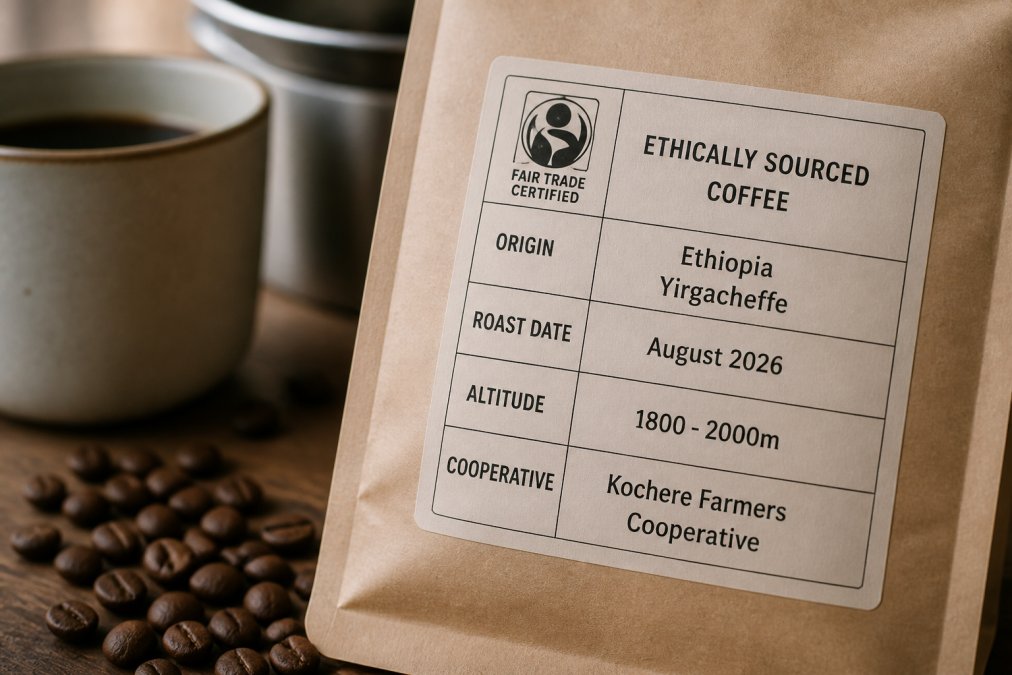
The core distinction lies in accountability. When you buy ethically sourced coffee, you're purchasing from roasters and importers who've verified their suppliers' labor practices, environmental management, and financial arrangements through third-party certifications, direct relationships, or both.
At Marilyn's Morning Brew, we prioritize sourcing from trusted farms where we understand actual conditions and compensation. Our roasted-to-order model ensures freshness because we maintain these relationships and source with confidence in the supply chain behind every batch.
The cost difference between ethically sourced and commodity coffee reflects real expenses: audits, fair wages, sustainable farming practices, and supply chain transparency. A farmer earning a living wage produces better coffee and maintains their land for future generations.
Coffee Certification Labels Explained
When you scan a coffee bag, you'll encounter multiple certification logos. Understanding what they mean prevents greenwashing and helps you make informed choices aligned with your values.
Certifications serve as third-party verification that coffee meets specific standards. A reputable certification requires audits, documentation, and ongoing compliance checks. The credibility of the certifier matters enormously.
Fair Trade Certification
Fair Trade certification ensures farmers receive a minimum price floor for their coffee, regardless of market fluctuations (fairtrade.net). This stability allows smallholder farmers to plan investments in their farms and communities. Fair Trade also mandates democratic decision-making within cooperatives and prohibits child labor.
Fair Trade operates through cooperatives where individual farmers pool their harvest and sell collectively, giving small producers negotiating power they lack individually. Fair Trade premiums fund community projects like schools, wells, or equipment.
A limitation: Fair Trade doesn't specify environmental practices as rigorously as some alternatives. A coffee can be Fair Trade certified while using conventional pesticides or monoculture farming.
Rainforest Alliance and Bird Friendly
Rainforest Alliance certification emphasizes environmental sustainability alongside worker welfare. Certified farms must maintain shade-grown practices, protect water sources, and limit pesticide use. Shade-grown coffee preserves biodiversity and creates habitat for migratory birds.
Bird Friendly certification, administered through the Smithsonian Migratory Bird Center, represents the strictest environmental standard (si.edu). Bird Friendly farms maintain dense native forest canopy, prohibit most pesticides, and undergo rigorous audits. The trade-off: Bird Friendly coffee typically costs more and has limited availability.
Direct Trade and Single-Origin Labels
Direct Trade isn't a formal certification but a relationship model where roasters purchase directly from farms, bypassing intermediaries. This arrangement allows roasters to negotiate prices, build long-term relationships, and ensure traceability. Direct Trade transactions often result in higher prices for farmers than Fair Trade minimums.
Single-origin labels indicate coffee from a specific country, region, or farm. Single-origin doesn't automatically mean ethical, but it enables traceability. When a roaster emphasizes single-origin sourcing, they're highlighting traceability as a selling point.
Direct Trade vs Fair Trade Coffee
Direct Trade and Fair Trade represent different philosophies for supporting farmers.
Fair Trade operates through established cooperatives with standardized pricing and compliance structures. This system works well for smallholder farmers who benefit from collective bargaining and guaranteed minimums. However, Fair Trade prices are set by the organization, not negotiated directly between roaster and farmer.
Direct Trade involves personal relationships between roasters and specific farms. Roasters visit farms, understand their challenges, and negotiate prices based on quality and conditions. This model often results in higher prices for exceptional farmers but lacks formal oversight, verification depends entirely on the roaster's integrity.
Many roasters use both models, sourcing Fair Trade coffee for consistency and scale while maintaining Direct Trade relationships with exceptional farms for premium offerings. For consumers, Fair Trade offers standardized assurance through third-party audits. Direct Trade requires trusting the roaster's sourcing practices. Neither is objectively superior; they serve different priorities.
Why Choose Small Business Coffee Roasters
Small business coffee roasters typically maintain closer relationships with their suppliers than large commercial operations. A roaster processing 500 pounds monthly can visit farms and make sourcing decisions based on direct knowledge.
Small roasters often roast to order, meaning your coffee is roasted days before shipping rather than weeks or months before. Fresher coffee extracts better and delivers more complex flavor.
Cost structure differs significantly. Small roasters lack the overhead of national distribution networks, warehouse storage, or massive marketing budgets. They pass some savings to customers while maintaining higher sourcing standards.
Accountability matters too. When you buy from a small roaster, you're supporting a person or small team with a reputation to maintain. That accountability creates incentive for consistent quality and ethical sourcing. Marilyn's Morning Brew, owned by a retired teacher, maintains sourcing standards because our reputation depends on it.
Small roasters also adapt more quickly, testing new origins and adjusting roast profiles based on seasonal variations within weeks.
Step-by-Step: How to Verify Ethical Claims
Verifying ethical sourcing requires moving beyond logos and asking specific questions. Greenwashing, marketing coffee as ethical without substantive practices, is common enough that skepticism is warranted.
Step 1: Check for Third-Party Certifications
Start by identifying which certifications appear on the bag. Fair Trade, Rainforest Alliance, Bird Friendly, and organic certification are legitimate third-party verifications. Verify these certifications by visiting the certifying organization's website and searching for the specific farm or importer.
Beware of vague claims like "ethically sourced" or "responsibly grown" without supporting certifications. These phrases lack verification.
Step 2: Review Supply Chain Transparency
Legitimate ethical roasters publish supply chain information. Look for details about importing partners, farm cooperatives, or specific farms. Request this information if it's not published. Roasters committed to ethical sourcing answer questions readily.
Check whether the roaster publishes pricing transparency, showing how much they pay farmers versus what they charge consumers.
Step 3: Look for Origin Story and Farm Details
Ethical roasters tell specific stories about their sources, including farm names, farmer names when possible, altitude, processing method, and challenges the farm faces.
Research the origin region independently to evaluate whether a roaster's claims are realistic. Ask whether the roaster has visited the farms they source from. Direct farm visits demonstrate commitment beyond purchasing through brokers.
Step 4: Evaluate Roaster Accountability and Impact Reporting
Roasters serious about ethical sourcing publish impact reports detailing how much coffee they sourced, what they paid farmers, what certifications they hold, and what environmental practices they support.
Check how long the roaster has maintained sourcing relationships. Established relationships spanning years suggest genuine partnership. Look for community involvement, do they fund specific projects in origin countries or support farmer education?
Step 5: Spot Greenwashing Red Flags
Watch for vague certifications ("Certified sustainable" without naming the certifier), premium pricing without justification, cherry-picked information, stock photography instead of actual farm photos, and no contact information.
Reading Coffee Labels and Packaging
Coffee labels communicate crucial information if you know what to look for. Most specialty roasters include roast date, origin, tasting notes, and processing method. Ethical roasters add supply chain details.
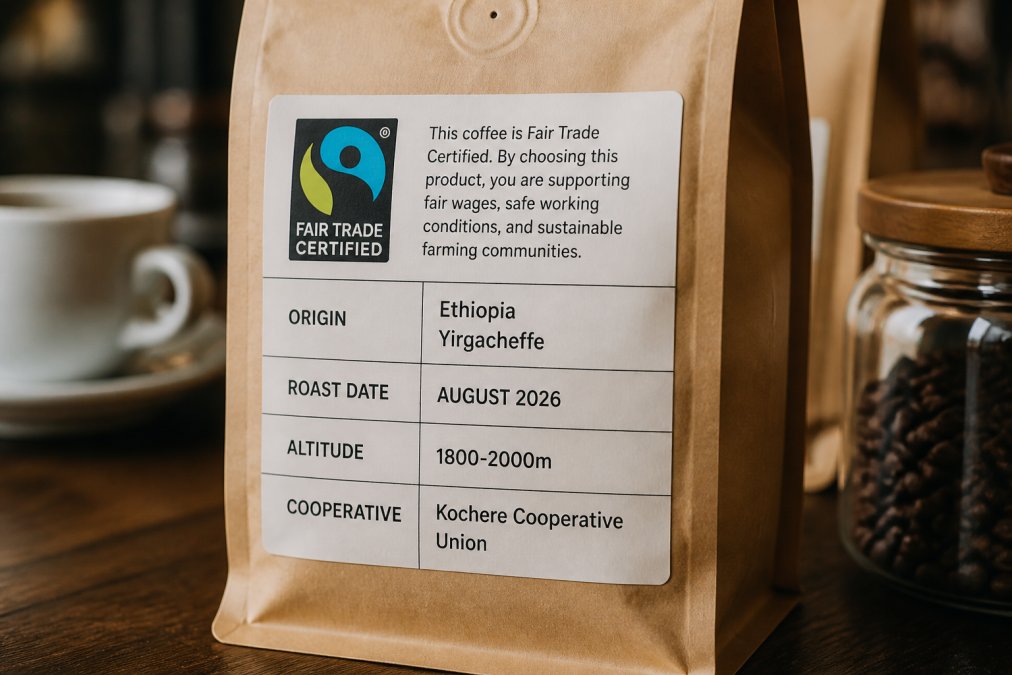
Roast date matters more than expiration date. Coffee peaks 2-14 days after roasting. A roast date tells you freshness; an expiration date is often arbitrary.
Origin information should be specific. "Brazil" is less informative than "Brazil, Minas Gerais, Fazenda São Paulo." Specificity indicates traceability.
Processing method (washed, natural, honey) affects flavor and environmental impact. Washed processing uses more water but produces consistent flavor. Natural processing uses less water but requires careful handling.
Certifications should appear as logos you can verify. Look for Fair Trade, Rainforest Alliance, organic, or Direct Trade claims.
Missing information is itself informative. If a bag lacks roast date, origin specificity, or certifications, the roaster isn't emphasizing traceability.
The Cost of Ethical Coffee Breakdown
Ethical coffee costs more than commodity coffee for specific reasons.
Farmer compensation represents the largest cost difference. Commodity coffee might pay farmers $1.20-1.50 per pound (usda.gov). Fair Trade minimums typically run $1.40-1.60 per pound. Direct Trade often reaches $2.00-3.00 per pound for exceptional quality.
Certification and auditing adds cost. Fair Trade certification requires annual audits and compliance monitoring, typically adding $0.10-0.20 per pound to the supply chain cost.
Traceability infrastructure requires investment in documentation and communication. Roasters maintaining Direct Trade relationships visit farms, which costs money.
Smaller batch sizes mean less economies of scale. A roaster sourcing from multiple small farms processes smaller volumes per origin than one buying from commodity brokers.
Freshness premium comes from roasting to order. Fresh coffee requires more frequent roasting runs, which increases overhead.
When you compare pricing, consider what you're actually paying for. Ethical coffee's premium reflects real costs: fair wages, verification, relationship maintenance, and freshness.
Post-Purchase Evaluation: Confirming Your Choice
After purchasing ethically sourced coffee, evaluate whether it actually delivers on its promises.
Taste quality matters because ethical sourcing should produce better coffee. Farmers earning fair wages invest in their crops; sustainable farming produces better flavor.
Freshness should be apparent. Coffee roasted recently tastes brighter and more complex than aged coffee.
Consistency across purchases indicates reliable sourcing. If one bag tastes excellent and the next tastes mediocre, their quality control is questionable.
Communication responsiveness reveals whether the roaster values customer relationships. Thoughtful responses to questions are a positive signal.
Transparency follow-up means checking whether promised impact materializes. Do they publish progress? Share photos?
Return policy matters if coffee doesn't meet expectations. Roasters confident in their product offer satisfaction guarantees.
Track which roasters and coffees you enjoy. Over time, you'll identify roasters whose ethical claims align with actual quality and consistency.
Finding ethically sourced coffee beans requires moving beyond logos and asking specific questions about supply chain transparency, farmer compensation, and environmental practices. The effort pays dividends in flavor, freshness, and confidence that your purchase supports your values. At Marilyn's Morning Brew, we roast to order from trusted farms where we've verified labor practices and supply chain integrity, ensuring your morning coffee reflects both exceptional quality and genuine ethical sourcing. Start by checking certifications, requesting supply chain details, and evaluating whether a roaster's claims hold up to scrutiny.
Frequently Asked Questions
Q: What certifications should I look for on ethically sourced coffee packaging?
A: Look for third-party certifications like Fair Trade, Rainforest Alliance, and Bird Friendly. Fair Trade ensures fair wages and labor conditions for smallholder farmers. Rainforest Alliance certifies sustainable farming practices that protect biodiversity. Bird Friendly verifies shade-grown coffee that preserves bird habitats. Direct Trade emphasizes price transparency and direct relationships between roasters and farms. Check the roaster's website to verify these certifications are current and not expired.
Q: How do I know if a small business coffee roaster is actually ethical?
A: Ethical small business coffee roasters provide supply chain transparency by naming specific farms, regions, and cooperatives they source from. They may publish impact reports showing fair compensation paid to farmers and environmental stewardship practices. Request their sourcing documentation or ask directly about their verification methods. Legitimate roasters welcome these questions and can explain their procurement process. Be cautious of vague claims like 'ethically sourced' without supporting details or third-party certification.
Q: What's the difference between Fair Trade and Direct Trade coffee?
A: Fair Trade uses a certification system with guaranteed minimum prices and labor standards verified by third parties, benefiting cooperatives and larger groups of farmers. Direct Trade involves roasters buying directly from farms at negotiated prices, often higher than Fair Trade minimums, with personal relationships and traceability. Fair Trade is more accessible and standardized; Direct Trade offers greater price transparency and individualized support to smallholder farmers. Both prioritize fair compensation and sustainable farming, but Direct Trade typically provides more detailed origin stories.
Q: How can I verify that a coffee brand's ethical claims are legitimate and not greenwashing?
A: Request supply chain documentation, farm audit reports, or impact statements from the roaster. Verify certifications directly on the certifying body's website rather than trusting packaging alone. Look for specific details: farm names, farmer names, cooperative information, and exact prices paid. Greenwashing uses vague language like 'responsibly sourced' without certification or specifics. Legitimate roasters provide traceability tools, farm photos, and farmer stories. Small business roasters like those focused on farm-to-cup relationships tend to offer more detailed verification than commodity coffee brands.
This article was written using GrandRanker