

Trade Coffee Alternative for Freshness
Table of Contents
- Why Freshness Matters More Than You Think
- Roast-to-Order Coffee Delivery: The Freshness Advantage
- Best Coffee Subscription for Home Office Workers
- How to Store Coffee Beans for Maximum Freshness
- Comparison: What Trade Coffee Offers vs. What You Really Need
- Troubleshooting Stale Coffee: How to Know If Your Subscription Is Actually Fresh
- Why Smaller Roasters Often Outperform Larger Subscription Services
- Conclusion
Last Updated: August 25, 2026
Why Freshness Matters More Than You Think
The difference between vibrant and flat coffee comes down to one factor: how recently the beans were roasted. A Trade Coffee alternative for freshness isn't just swapping subscription services, it's understanding why peak flavor begins closing the moment beans leave the roaster.
Premium beans sitting on shelves for weeks lose aromatic complexity and flavor depth. The oils that create brightness oxidize. Volatile compounds that produce bright, fruity notes dissipate. You're left with a duller, flatter cup.
At Marilyn's Morning Brew, freshness is the foundation of every cup. When beans are roasted to order and shipped within days, you're drinking coffee at its peak. This guide explores what separates truly fresh subscriptions from those merely claiming freshness, how to evaluate roast dates, and which subscription model actually delivers beans at their best.
Roast-to-Order Coffee Delivery: The Freshness Advantage
Roast-to-order roasters wait for your order, roast your specific beans, and ship within days. This fundamentally changes what arrives at your door.
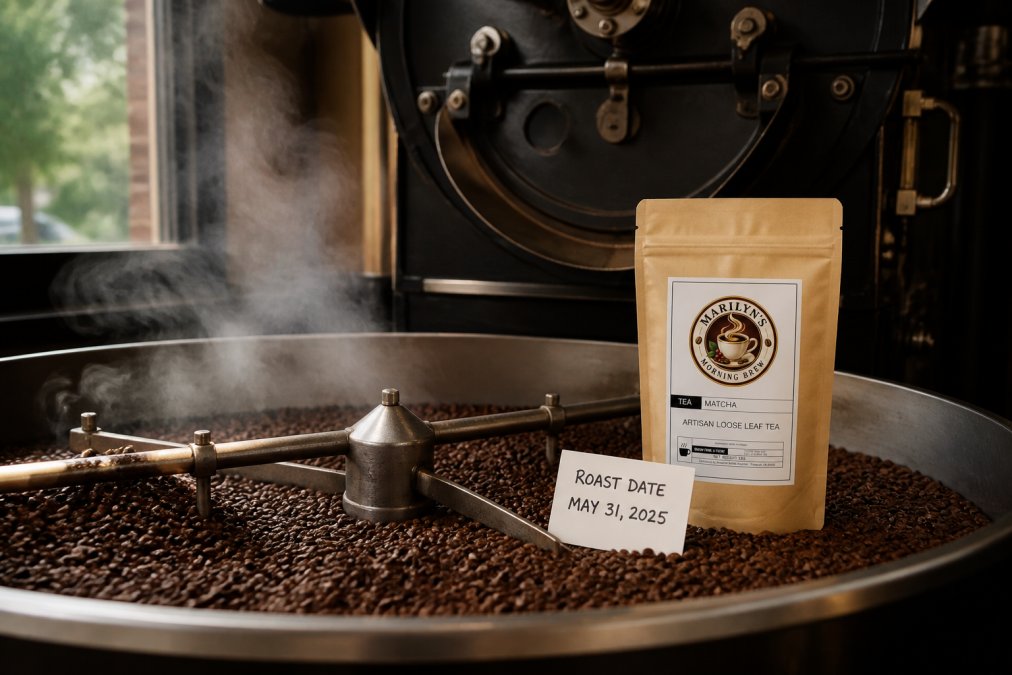
The freshness window for whole beans peaks between 5 and 30 days after roasting (peer-reviewed research). Within this window, beans have completed degassing, where carbon dioxide trapped during roasting escapes, and flavor compounds are most vibrant. After 30 days, oxidation accelerates and the cup flattens noticeably (peer-reviewed research). After 60 days, even quality beans taste stale.
Roast-to-order ensures beans arrive in this optimal window. Order Monday, beans roast Tuesday or Wednesday, ship Thursday, arrive Friday or Saturday. You're buying days-old beans, not inventory sitting for months.
Traditional subscriptions roast large batches monthly and store them in warehouses. Those beans might be 3-4 weeks old when reaching you, already past their peak. By the time you finish the bag, they're 6-8 weeks old with significantly degraded flavor.
How Degassing and Peak Flavor Windows Work
Degassing is where carbon dioxide escapes from roasted beans. During roasting, beans absorb heat and release gases. After roasting stops, beans continue off-gassing for several days. This is essential: beans that haven't fully degassed produce bitter, sour cups because CO2 interferes with water extraction.
The peak flavor window opens after degassing completes and closes as oxidation accelerates. For most specialty coffees, this window is roughly 5-30 days. Beans have released excess CO2 for clean brewing, and flavor compounds haven't yet oxidized into dullness.
After 30 days, oxidation dominates. Oils break down. Bright, fruity, floral notes fade. What remains is flatter, more muted. This isn't subjective, it's chemistry. Aromatic compounds are volatile and don't last.
Understanding this timeline is critical when evaluating subscriptions. If the roast date is more than two weeks old when it arrives, you've missed part of the peak window. If it's a month old, you're drinking coffee well into decline.
Direct-to-Roaster vs. Aggregator Models
Supply chain model matters as much as roasting method. Direct-to-roaster subscriptions ship directly from the roaster who roasted your beans. Aggregator models partner with multiple roasters but handle fulfillment themselves.
Direct-to-roaster means shorter shipping times and more control over inventory age. You order from Roaster A, Roaster A roasts and ships to you. Typical turnaround: 3-5 days. Aggregator models add a middleman. Typical turnaround: 7-10 days. By arrival, beans may already be 2-3 weeks old.
Direct-to-roaster also means less idle inventory. Aggregators must stock beans from multiple roasters to ensure variety and avoid stockouts. That inventory degrades over time. Direct roasters roast primarily to order, so less sits idle.
Marilyn's Morning Brew operates as a direct roaster: you order directly from us, we roast your order, and we ship within days. No middleman. No aged inventory. Just fresh beans.
Best Coffee Subscription for Home Office Workers
For someone working from home, coffee is infrastructure. You go through it consistently, brew multiple cups daily, and need reliable supply, convenient ordering, and beans that stay fresh throughout the subscription period.
The best subscription prioritizes frequency control and shipping speed. You need to adjust order frequency based on consumption without penalty, receive beans before the previous batch degrades, and enjoy a simple reorder process.
Marilyn's Morning Brew is built for this use case. You control frequency, order weekly, bi-weekly, or monthly. Choose your roast profile and bean selection. Shipping is fast and reliable. You're not locked into rigid terms. Cancel anytime.
What separates good subscriptions for home workers is flexibility. Some lock you into monthly shipments with cancellation penalties. Others have minimum order values forcing unnecessary purchases. The best let you adjust frequency, pause without penalty, and skip months when your stockpile is full. Marilyn's Morning Brew handles this without friction.
How to Store Coffee Beans for Maximum Freshness
Even with roast-to-order delivery, storage determines how long beans stay fresh. Light, heat, air, and moisture are enemies. Minimize exposure to all four.
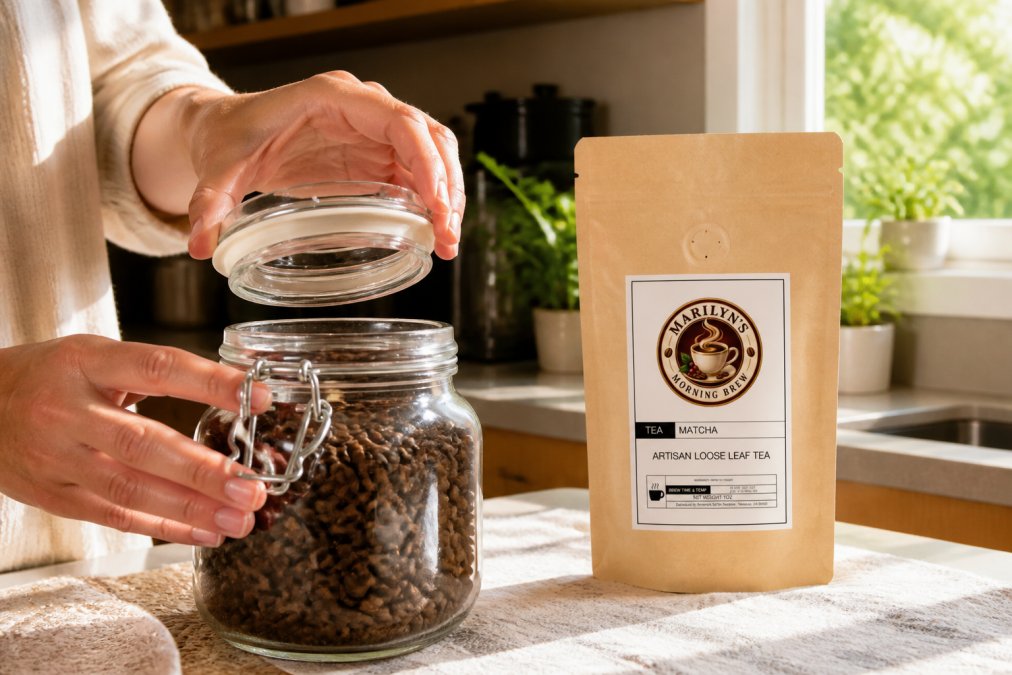
The ideal container is airtight, opaque, and cool. Glass jars with airtight seals work well in dark cabinets. Ceramic containers with rubber seals work too. Transparent containers on counters, open bags, or freezers don't work.
Keep beans in a cool, dark place, ideally between 50-70°F (usda.gov). A kitchen cabinet away from the stove is perfect. Not above the refrigerator, near sunny windows, or in the freezer unless storing for months.
The one-way valve on coffee bags lets CO2 escape during degassing without letting oxygen in. Once beans arrive, transfer to an airtight container if keeping longer than two weeks.
Buy whole beans, not pre-ground. Ground coffee has exponentially more surface area exposed to oxygen and stales much faster. Grind immediately before brewing. Whole beans stay fresh 4-6 weeks in proper storage. Pre-ground lasts 1-2 weeks.
| Storage Method | Duration Fresh | Best For | Notes |
|---|---|---|---|
| Airtight container, cool dark place | 4-6 weeks | Whole beans, regular consumption | Ideal setup for home use |
| Original bag with one-way valve | 2-3 weeks | First few weeks after arrival | Works well initially |
| Pre-ground in airtight container | 1-2 weeks | Emergency only | Much shorter window than whole beans |
| Freezer in airtight bag | 3-4 months | Long-term storage | Introduce moisture; use sparingly |
Comparison: What Trade Coffee Offers vs. What You Really Need
Trade Coffee has built a successful subscription around curation and convenience. They partner with multiple roasters, offer a taste profile quiz, and ship nationwide. But "well enough" isn't the same as "fresh."
Trade Coffee is an aggregator. They source beans from partners, store them in fulfillment centers, and ship to you. This prioritizes variety and scale over freshness. Beans in their warehouse are older than fresh-roasted alternatives.
What you need depends on priorities. If you want the widest roaster selection and don't mind 2-3 week old beans, an aggregator works. If you prioritize freshness, a direct roaster is better.
Marilyn's Morning Brew prioritizes freshness first. We roast to order. Beans ship within days of roasting. You get peak flavor in every cup. The trade-off is our selections rather than choosing from dozens of roasters. But you're getting beans that are 5-10 days old instead of 25-30 days old. That difference is tasted in every cup.
The real question isn't "Is Trade Coffee good?" It is. The question is: "Do you want good coffee, or the freshest coffee possible?" If freshness is your priority, roast-to-order from a direct roaster beats aggregator models every time.
Troubleshooting Stale Coffee: How to Know If Your Subscription Is Actually Fresh
Many coffee drinkers can't tell if beans are stale because they've never tasted truly fresh coffee. Here's how to recognize stale beans.
Fresh beans taste bright with fruity or floral notes. The cup has clarity and complexity. Stale beans taste flat and dull, one-dimensional, with no brightness. If your subscription beans taste like grocery store coffee, they're stale.
Check the roast date. If more than three weeks old, beans are past their peak. If more than six weeks old, flavor degradation is significant. If there's no roast date, that's a red flag. Reputable roasters print roast dates because they're proud of freshness.
Fresh beans release CO2, so the bag should feel slightly puffy. If completely flat, beans have been sitting for weeks. The CO2 has escaped, meaning weeks of oxidation.
Brew a cup and pay attention to aroma. Fresh coffee smells vibrant and complex. Stale coffee smells muted and flat. Your nose knows. If the aroma doesn't make you want to drink it immediately, the beans are stale.
If your current subscription consistently arrives with old roast dates, it's time to switch. Freshness is non-negotiable.
Why Smaller Roasters Often Outperform Larger Subscription Services
Scale creates distance from freshness. Large services must maintain inventory to handle demand spikes, ship from centralized fulfillment centers, and manage relationships with dozens of roasters. All add days to the supply chain.
Smaller roasters, especially those roasting to order, eliminate friction. When you order, your order triggers a roasting batch. The roaster roasts your beans, packages, and ships directly. No middleman. No warehouse. No aged inventory. The entire process takes days instead of weeks.
Small roasters also take their craft more seriously. A roaster roasting 100 bags weekly and roasting to order cares deeply about freshness as their competitive advantage. Large services roasting thousands of bags monthly can't prioritize freshness the same way. It's operationally impossible at that scale.
Smaller roasters also offer traceability. You know where beans come from, when they were roasted, and can contact the roaster directly. Large services abstract these details. You're buying from a platform, not a roaster. That distance matters when freshness is your priority.
Freshness is the foundation of great coffee. If your current subscription arrives with weeks-old beans, you're not experiencing what those beans can taste like. Marilyn's Morning Brew roasts to order and ships fast because freshness should be non-negotiable. Every batch is roasted specifically for your order, ensuring peak flavor window beans. Our Moroccan Mint and Hojicha teas deliver the same freshness commitment, carefully sourced, prepared with precision, and shipped within days. Start with Marilyn's Morning Brew and taste the difference that true freshness makes.


Frequently Asked Questions
How does roast-to-order coffee delivery actually keep beans fresher than pre-roasted options?
Roast-to-order means beans are roasted only after you order, then shipped immediately. Coffee begins oxidizing and losing flavor the moment it cools from roasting. Pre-roasted inventory, even from larger subscription services, may sit for weeks before reaching you. Roast-to-order eliminates this delay. Beans peak in flavor 5-14 days after roasting, depending on roast level. Direct roasters ship within 1-2 days, keeping you within that optimal window. Aggregator services that curate from multiple roasters cannot match this speed.
What is the best coffee subscription for home office workers who order frequently?
Home office professionals need consistent, reliable delivery and the ability to adjust frequency without penalties. Look for subscriptions offering weekly or bi-weekly shipping, pause options, and flexible quantity selection. Roast-to-order services excel here because they batch roasts around your order schedule rather than forcing you into fixed shipment cycles. Smaller roasters often provide faster turnaround and personalized customer service. Avoid subscription models that lock you into monthly cycles or charge restocking fees for frequency changes.
How can I tell if my coffee subscription is actually fresh when it arrives?
Check the roast date on the bag first, it should be within 2-3 days of delivery. Smell the coffee: fresh beans have a vibrant, complex aroma; stale coffee smells flat or musty. When you open the bag, listen for a hiss, that's CO2 escaping from degassing, a sign of recent roasting. Brew a small cup and taste for brightness and clarity in the flavor profile. If the coffee tastes muted, bitter, or lacks the tasting notes described, it's likely past its peak. A quality roaster will always list the roast date prominently on the packaging.
How should I store coffee beans for maximum freshness between orders?
Store whole beans in an airtight container away from light, heat, and moisture. A dark cupboard or pantry is ideal; avoid windowsills and countertops near appliances. Keep beans at room temperature, refrigerators introduce condensation that degrades flavor. Use containers with one-way valves that let CO2 escape without letting oxygen in. Vacuum-sealed bags work well if unopened. Buy only what you'll use within 2-4 weeks; beans gradually lose aroma and flavor after that window. Grind immediately before brewing to preserve volatile compounds.
Is Trade Coffee worth the price compared to roast-to-order alternatives?
Trade Coffee uses an aggregator model, curating beans from multiple roasters and storing pre-roasted inventory. This convenience comes at a cost, you're paying for curation but sacrificing peak freshness. Roast-to-order alternatives ship fresher beans directly from the source, often at similar or lower prices. You lose the pre-selected variety but gain control over roast dates and flavor profiles. For home office workers ordering frequently, roast-to-order models often provide better value because freshness directly impacts daily coffee quality. Smaller roasters typically offer faster shipping and more transparent sourcing at competitive pricing.
This article was written using GrandRanker