

Why Choose Small Business Coffee Roasters
Table of Contents
- What Small Business Coffee Roasters Do Differently
- The Real Benefits of Small Batch Coffee
- Freshness of Roasted to Order Coffee Explained
- How to Identify Ethically Sourced Coffee
- Small Business Coffee Roasters vs. Mass-Market Brands
- How to Start Buying From a Small-Batch Roaster
- Conclusion
Last Updated: August 23, 2026
What Small Business Coffee Roasters Do Differently
Small business coffee roasters operate on a fundamentally different philosophy than large commercial operations. At Marilyn's Morning Brew, every bag is roasted to order, sourced from trusted farms, and shipped directly to your door while the beans are still at peak freshness. Mass-market roasters prioritize volume and shelf stability, roasting weeks or months in advance and optimizing for distribution chains rather than flavor. Small business coffee roasters flip that model entirely. The roastmaster controls every variable: roast time, drum temperature, airflow, and bean development. The result is a cup that tastes like someone cared about it.
Roast Profiles Built for Flavor, Not Shelf Life
A roast profile is the precise temperature and time curve applied to green coffee beans during roasting. It determines everything: acidity, sweetness, body, and the clarity of origin flavors. Small-batch roasters build profiles specifically for each bean's characteristics. A Peru single origin gets a different curve than a Brazilian Santos. Large roasters use standardized profiles designed to produce acceptable results across inconsistent bean lots. When a new harvest arrives from a trusted farm, the roastmaster cup-tests it, adjusts the profile, and dials in the result before a single bag ships.

Direct Trade and Supply Chain Transparency
Many small business coffee roasters source through direct trade relationships, meaning they buy directly from the farm or cooperative rather than through commodity brokers. This matters because the farmer gets paid more, and the roaster knows exactly what they're buying. According to the Specialty Coffee Association's sourcing resources, direct trade and relationship-based sourcing consistently produce higher-quality green coffee because farmers have financial incentive to invest in careful harvesting and processing. When you buy from a small roaster with direct farm relationships, you're often buying from a supply chain with fewer than three links between the grower and your cup.
The Real Benefits of Small Batch Coffee
Small-batch roasting means the roaster works with smaller quantities at a time, typically between two and fifteen kilograms per roast. That constraint forces precision. There's no hiding a bad roast inside a 500-kilogram blend. Every batch is accountable. The roaster tastes it, evaluates it, and either ships it or doesn't. This accountability produces a consistency that feels counterintuitive, small-batch roasters who know their equipment and their beans produce remarkably repeatable results because they're paying close attention to every variable.
Flavor Clarity You Can Taste in Every Cup
Flavor clarity is how distinctly a coffee's origin characteristics come through in the cup. A well-roasted single origin from Bali should taste different from one grown in Mexico. That clarity collapses when beans are over-roasted, blended indiscriminately, or aged on a shelf. Small business coffee roasters protect flavor clarity by roasting in small quantities, shipping quickly, and sourcing beans with known flavor profiles.
Quality Control That Mass Roasters Cannot Match
Quality control in small-batch roasting is hands-on in a way that industrial operations cannot match. A roastmaster working a small drum roaster monitors color development visually, listens for the first and second crack of the beans, and adjusts airflow in real time. Mass commercial roasting relies on automated systems calibrated to throughput, which are poor at adapting when a new harvest comes in slightly drier or denser than expected. Small roasters adapt. They have to.
| What You Get | Small Business Roasters | Mass-Market Brands |
|---|---|---|
| Roast-to-order freshness | Yes, typically within days | No, weeks to months old |
| Direct farm sourcing | Common, relationship-based | Commodity brokers |
| Roast profile customization | Per-origin, hand-adjusted | Standardized across blends |
| Batch size | 2-15 kg, accountable | Hundreds of kg per run |
| Flavor clarity | High, origin-forward | Blended for shelf stability |
| Supply chain transparency | Usually documented | Often opaque |
Freshness of Roasted to Order Coffee Explained
The freshness of roasted to order coffee is the single biggest practical advantage of buying from a small-batch roaster. Coffee begins degassing carbon dioxide immediately after roasting, and the most complex aromatic compounds start oxidizing within days. By the time grocery store coffee reaches your shelf, much of that volatile complexity is gone.
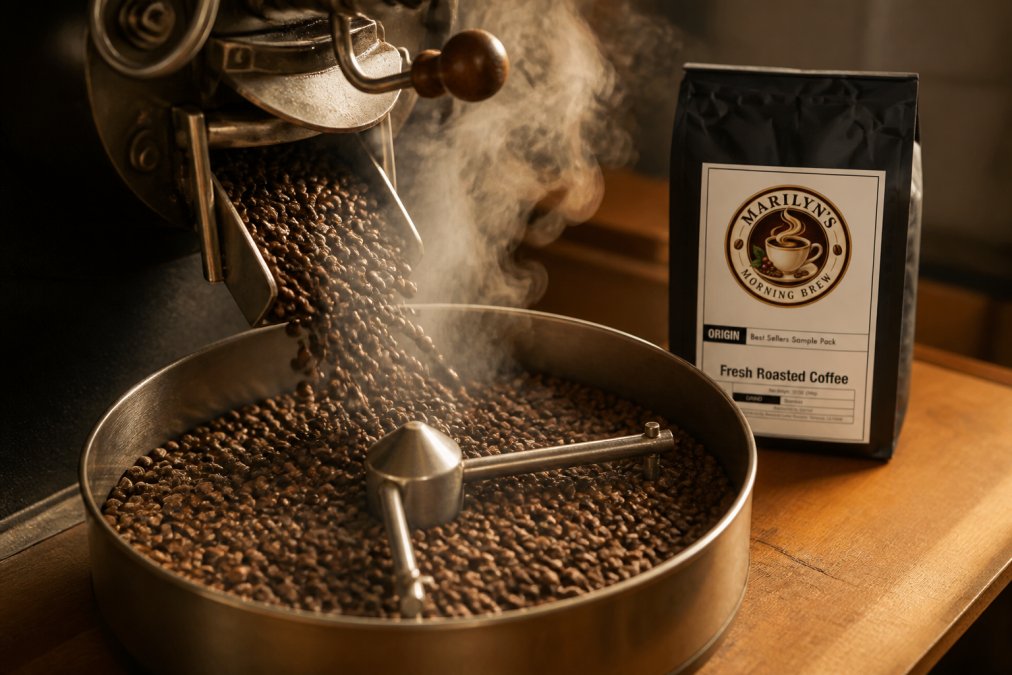
Roasted to order means your bag was roasted after you placed your order, not weeks earlier. Fresh beans produce a better bloom when you pour hot water over them. The crema on an espresso shot is richer. The aroma when you open the bag is immediate and full. The standard recommendation from most roasters is to brew coffee between four and fourteen days after roasting for optimal flavor. Roasted-to-order models make that window achievable for home brewers.
How to Identify Ethically Sourced Coffee
Ethically sourced coffee is coffee produced under conditions that fairly compensate farmers, protect workers, and minimize environmental harm. A common mistake is assuming that a premium price guarantees ethical sourcing. Price and ethics are related but not identical.
Certifications and Third-Party Verification
Several third-party certification systems exist to verify ethical sourcing claims. According to USDA's National Organic Program guidelines, USDA Organic certification requires that coffee is grown without synthetic pesticides or fertilizers and that the farm meets specific soil and water protection standards. Fair Trade certification, as documented by Fair Trade USA's certification standards, focuses on minimum price guarantees and community development premiums paid to farmer cooperatives. These certifications are meaningful, but many excellent small farms operate ethically without pursuing formal certification because the process is expensive and administratively burdensome for small growers.
Questions Worth Asking Your Roaster
A roaster who sources ethically should be able to answer these questions without hesitation: Where specifically does this coffee come from, and can you name the farm or cooperative? What price did you pay for this green coffee relative to commodity market rates? How long have you worked with this farm or supplier? Do you visit the farms you source from? What processing method was used, and who performed it?
Small Business Coffee Roasters vs. Mass-Market Brands
Mass-market coffee is priced to move through retail distribution chains. The cost accounts for packaging, warehousing, retailer margins, and shelf time. What it does not account for is freshness, because freshness is structurally incompatible with that distribution model. By the time a bag reaches your cart, it may have been roasted three to six months ago.
Small business coffee roasters price their coffee to reflect actual production cost, direct farm relationships, and the labor of careful small-batch work. The per-ounce price is often higher, but the value calculation changes when you factor in what you're actually getting: fresher beans, more transparent sourcing, and a roast profile designed for the specific beans in the bag. For home brewers who drink coffee daily, the difference in cup quality is noticeable within the first week.
How to Start Buying From a Small-Batch Roaster
Starting with a small-batch roaster is easier than most people expect.
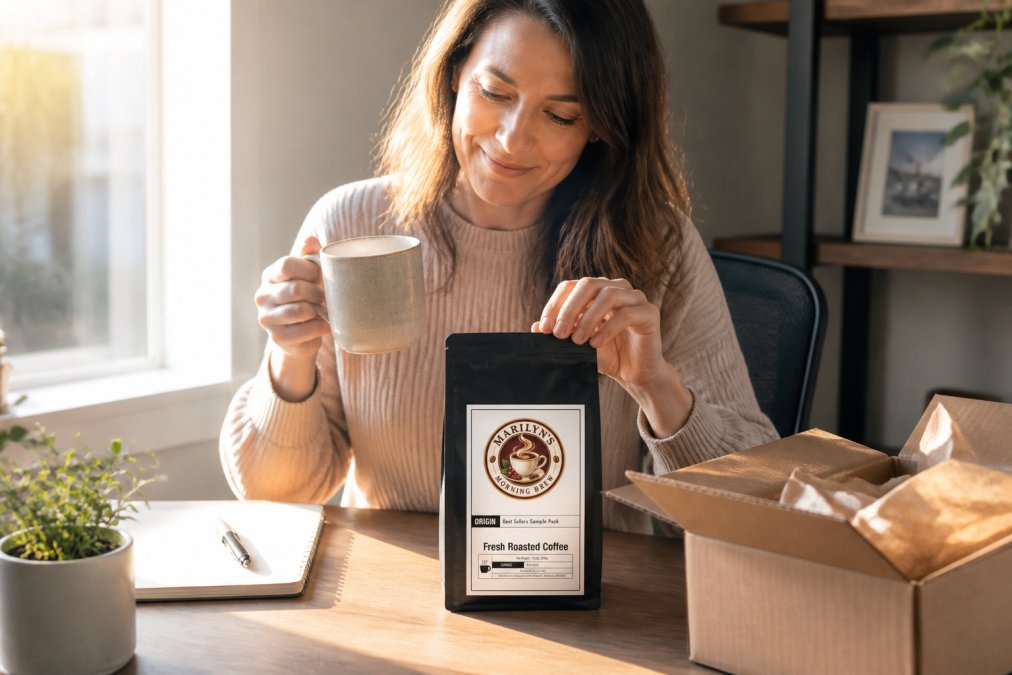
Step 1: Start with a sample pack. Marilyn's Morning Brew offers three sample packs at $24.99 each: the Best Sellers Sample Pack covering six signature blends including the dark-roast 6Bean espresso blend, the Single Origin Favorites Sample Pack featuring six origins including a Brazil Santos with cocoa notes and a smooth medium body, and the Flavored Coffees Sample Pack for those who prefer a sweeter profile. Each pack contains six 2oz portions, enough to identify what you actually like before buying in larger quantities.


Step 2: Note your roast date. When your order arrives, check when it was roasted. This tells you where you are in the optimal brewing window and helps you calibrate your ordering frequency going forward.
Step 3: Adjust your grind. Fresh beans behave differently than stale ones. They produce more CO2, which can cause over-extraction if you're using the same grind setting you used with older coffee. Start slightly coarser and adjust from there.
Step 4: Set a reorder schedule. Most home coffee drinkers go through a 12oz bag in one to two weeks. Build a reorder schedule that keeps you inside the fresh window.
Step 5: Ask questions. A good small-batch roaster welcomes questions about origin, processing, and roast profiles. That conversation is part of the value.
| Step | Action | Why It Matters |
|---|---|---|
| 1 | Order a sample pack | Find your preferred roast level before committing |
| 2 | Check the roast date | Confirms you're in the fresh brewing window |
| 3 | Adjust your grind | Fresh beans extract differently than stale ones |
| 4 | Set a reorder schedule | Maintains consistent freshness throughout the month |
| 5 | Ask about the origin | Verifies supply chain transparency and sourcing ethics |
Match your order size to your actual consumption rate. For daily drinkers, a 12oz bag ordered every ten to fourteen days keeps you in the optimal window consistently. The House Blend at $23.99 is a practical starting point for anyone transitioning from grocery store coffee. It's a medium roast from Central and South American origins, smooth and clean with chocolate and mild citrus notes.
Most people assume the barrier to buying from small business coffee roasters is complexity. It isn't. The barrier is habit. Once you've tasted coffee roasted within the last two weeks, sourced from a farm with a name, and shipped directly to your door, the grocery store aisle starts to look like a different category of product entirely. Marilyn's Morning Brew was built around this idea: that great coffee should be simple to order, fast to arrive, and genuinely better in the cup. With roasted-to-order fulfillment, carefully sourced beans, and a straightforward ordering process, getting started takes about five minutes. The difference in your morning cup is immediate.
Frequently Asked Questions
What are the benefits of buying from small-batch coffee roasters?
Small-batch roasters roast green coffee beans in smaller quantities, which means each batch gets more attention and precision. The result is better flavor clarity, more consistent roast profiles, and coffee that reaches you days after roasting rather than months. Small-batch roasters also tend to source directly from farms, so you get more transparency about where your beans come from and how growers are treated. For everyday drinkers, the difference shows up immediately in the cup.
How does roasted-to-order coffee stay fresh during shipping?
When a small business coffee roaster roasts your order after you place it, the beans are at peak freshness when they ship. Freshly roasted coffee releases CO2 for several days, which actually protects the beans from oxidation. Sealed bags with one-way valves lock in aroma and slow staling further. Compared to grocery store coffee that may have been roasted months earlier, roasted-to-order coffee typically arrives within days of roasting, which makes a noticeable difference in flavor and aroma.
How can I tell if a coffee roaster is ethically sourcing their beans?
Look for specific farm or cooperative names, growing regions, and altitude details on the bag or product page. Certifications like Fair Trade, Rainforest Alliance, or USDA Organic provide third-party verification. Direct trade relationships, where the roaster buys directly from growers at above-commodity prices, are another strong signal. If a roaster cannot tell you where their green coffee beans come from or who grew them, that is worth noting before you buy.
Is small-batch coffee worth the higher price compared to grocery store brands?
The price difference reflects real cost differences: higher-quality green coffee beans, smaller production runs, more labor-intensive quality control, and direct trade premiums that pay farmers fairly. Mass-market coffee is priced for volume and shelf stability, not flavor. For someone drinking one or two cups a day at home, the per-cup cost increase from small-batch coffee is usually small, and the improvement in taste is immediate. Sample packs, like those starting at $24.99, make it easy to compare before committing to a full bag.
This article was written using GrandRanker