

Why Grocery Store Coffee Tastes Stale
Table of Contents
- The Oxidation Problem Behind Stale Grocery Store Coffee
- How to Tell If Coffee Is Fresh
- Coffee Roast Date vs. Best By Date: What Actually Matters
- Why Supermarket Packaging Accelerates Staleness
- How to Store Coffee Beans for Maximum Freshness
- Dark Roast vs. Light Roast: Which Stays Fresh Longer
- What to Do With Stale Coffee Beans
- Fresh, Roasted-to-Order Coffee Makes the Difference
Last Updated: August 24, 2026
The Oxidation Problem Behind Stale Grocery Store Coffee
Coffee begins releasing carbon dioxide and volatile compounds the moment it's roasted. In a sealed grocery store bag for weeks or months, those aromatics escape while oxygen seeps in, triggering chemical breakdown that flattens the taste into something bitter and hollow.
Most grocery store coffee sits in standard bags with minimal protection, often just a paper pouch with a one-way valve that lets CO2 out but doesn't prevent oxygen from entering over time. By the time you brew it, much of what made it delicious is already gone.
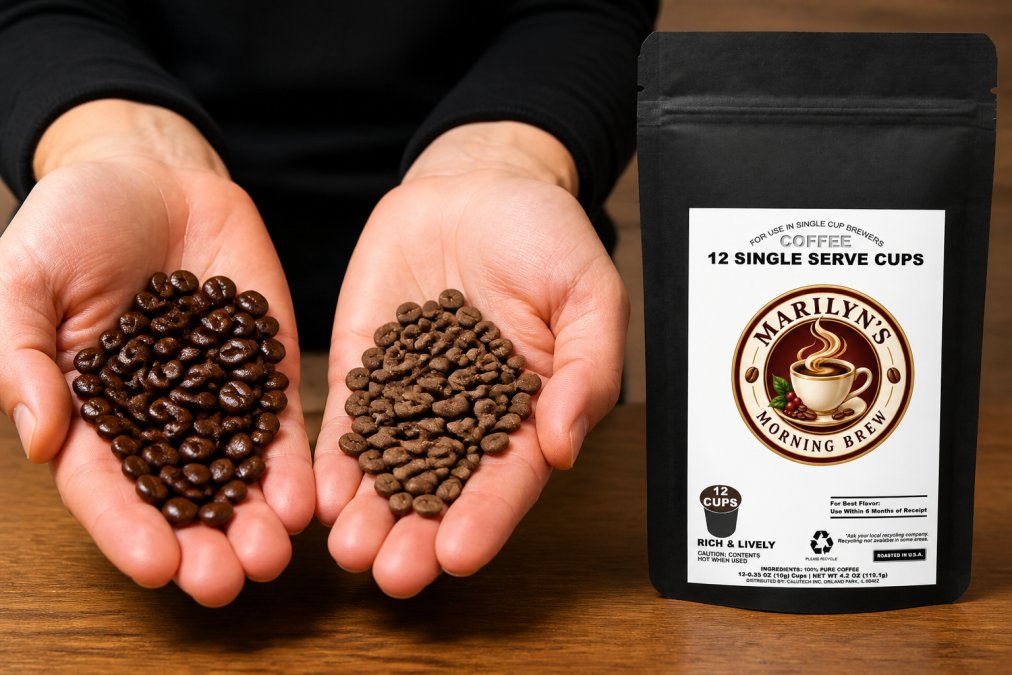
Oxidation and moisture loss degrade flavor compounds and aromatic molecules. When oxygen breaks down the oils on the bean surface, the result is rancidity: that unpleasant, chemical taste that masks origin characteristics.
The roast date matters more than most people realize. A light roast degrades faster than a dark roast because the lighter roasting process leaves more soluble compounds intact and exposed to oxidation. A dark roast has already undergone more thermal breakdown during roasting, leaving fewer volatile compounds to lose.
How to Tell If Coffee Is Fresh
Fresh coffee announces itself through three clear signals: appearance, aroma, and taste.
Visual and Aroma Cues
Fresh coffee beans have a subtle sheen on their surface, a light coating of oils that reflects light. This is the sign that volatile compounds are still present. Stale beans look dull and flat, almost chalky, because those oils have oxidized away.
Smell the beans directly from the bag. Fresh coffee has an intense, complex aroma, fruity, floral, nutty, or chocolatey depending on origin and roast. The smell should be vivid from a few inches away. Stale coffee smells muted, sometimes musty or cardboard-like, because volatile aromatic molecules have escaped or degraded.
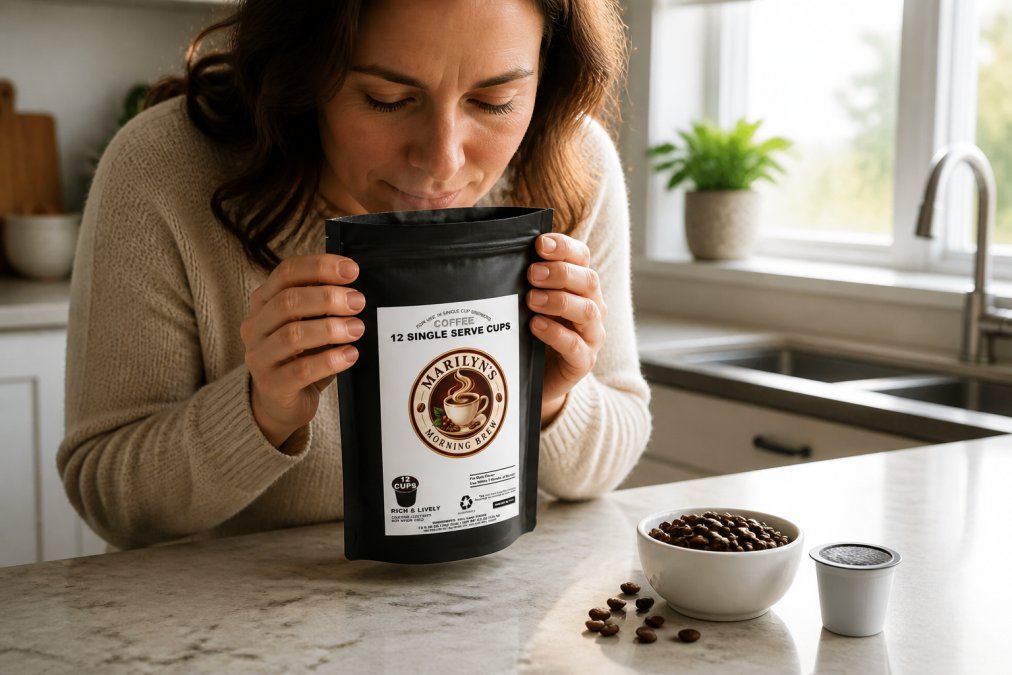
If the beans smell like old paper or have almost no smell, oxidation has advanced too far.
The Taste Test
Fresh coffee tastes bright, balanced, and complex. You can taste specific origin characteristics, clean acidity, and sweetness that develops as the coffee cools.
Stale coffee tastes flat and one-dimensional. Acidity becomes harsh or disappears. Bitterness dominates because flavor compound breakdown leaves behind astringent compounds. The coffee may taste thin, lacking the body and richness that fresh beans deliver.

Coffee Roast Date vs. Best By Date: What Actually Matters
The "Best By" date printed on most grocery store bags is misleading. It's a legal label, not a freshness guarantee. Many bags show a best-by date six months or even a year after roasting.
The roast date is what matters. Coffee is at its best between 5 and 30 days after roasting (peer-reviewed research). During this window, the beans have finished degassing and the flavor profile is fully developed. After 30 days, the decline accelerates. By 60 days, most coffee has lost enough character that the difference is noticeable. By three months, it's noticeably stale.
The "Best By" date is a conservative legal standard that gives retailers more time to stock and sell inventory, not a guarantee of quality. When you buy coffee, look for the roast date first. If it's not printed on the bag, that's a red flag. If it's more than two weeks old, the coffee has likely already lost some of its peak character.
Why Supermarket Packaging Accelerates Staleness
Grocery store coffee packaging is designed for shelf life and cost, not freshness.
One-Way Valves vs. Vacuum Sealing
Most grocery store bags use a one-way valve that lets CO2 escape after roasting but doesn't create an airtight seal. Oxygen can still enter slowly through the valve and seams. Over time, the air inside becomes progressively richer in oxygen and poorer in the compounds that keep coffee fresh.
Vacuum-sealed bags are better but rare in supermarkets because they cost more. When you vacuum-seal coffee immediately after roasting, you remove almost all oxygen. Coffee in a standard one-way valve bag loses noticeable flavor within 4-6 weeks (peer-reviewed research). Vacuum-sealed coffee can maintain acceptable freshness for 8-12 weeks.
The Role of Light and Temperature
Light exposure degrades coffee by accelerating the breakdown of flavor compounds. Many grocery store bags are translucent or light-colored, allowing light to reach the beans. Beans sitting under fluorescent supermarket lighting for weeks experience cumulative light damage.
Temperature fluctuations also matter. Coffee stored in a warm environment degrades faster because heat accelerates oxidation. Supermarket shelves are far from ideal.
How to Store Coffee Beans for Maximum Freshness
Once you have fresh beans, storage determines how long they stay that way. The goal is to minimize oxygen exposure, light, and temperature fluctuations.
Use airtight containers, glass jars with rubber seals or stainless steel containers designed for coffee storage. Transfer your beans immediately after opening the original bag.
Store containers in a cool, dark place away from direct sunlight and heat sources. Room temperature between 60-70°F is optimal (usda.gov). Avoid the refrigerator or freezer unless storing beans long-term, because temperature fluctuations introduce moisture.
Grind only what you'll use in the next few days. Ground coffee stales much faster than whole beans because of increased surface area exposure to oxygen.
Buy in quantities you'll use within 2-3 weeks. Fresher, smaller purchases beat bulk buying.
Dark Roast vs. Light Roast: Which Stays Fresh Longer
Dark roasts hold their flavor longer than light roasts, but not by much. A light roast has more volatile compounds intact, giving it bright, complex flavor but also more compounds available to oxidize. Light roasts typically show noticeable staleness after 4-6 weeks.
A dark roast has undergone more thermal breakdown during roasting. The remaining flavor compounds are slightly more stable. Dark roasts typically stay acceptable for 6-8 weeks.
However, a dark roast roasted eight weeks ago will taste stale compared to a light roast roasted one week ago. The roast date matters far more than roast level. A fresh light roast beats a stale dark roast every time.
What to Do With Stale Coffee Beans
Stale coffee is still usable for cold brew. The long steeping time extracts flavor compounds that might not come through in hot brewing, and the cold water process masks some staleness.
Stale beans work for coffee-based recipes: baked goods, desserts, smoothies, or coffee-rubbed meat. You can also use stale grounds as a natural deodorizer or mild abrasive for cleaning.
The lesson is simpler: buy fresh, use it quickly, and you won't face this problem.
Fresh, Roasted-to-Order Coffee Makes the Difference
The reason grocery store coffee tastes stale is structural. The supply chain, roasting weeks in advance, shipping to distribution centers, sitting on shelves under lights, introduces delays and conditions that degrade coffee inevitably.
Roasted-to-order coffee eliminates this problem. Beans are roasted only after you order, then shipped directly to you. You receive coffee that's typically 3-7 days old, right in the peak freshness window. The difference in taste is dramatic. The aromatics are vivid, the flavor profile is clear and complex.
At Marilyn's Morning Brew, every batch is roasted to order from carefully sourced beans. You get coffee at its peak, maximum flavor, aroma, and freshness, delivered directly to you with fast shipping so it arrives in that critical freshness window.
Once you've experienced truly fresh coffee, grocery store beans taste like what they are: oxidized, stale, and a reminder of how much the supply chain matters.
| Storage Method | Freshness Window | Best For | Oxygen Protection |
|---|---|---|---|
| Grocery store bag (one-way valve) | 4-6 weeks | Convenience only | Low |
| Airtight glass container, cool pantry | 6-8 weeks | Home storage | High |
| Vacuum-sealed bag, unopened | 8-12 weeks | Long-term storage | Very high |
| Ground coffee, any container | 1-2 weeks | Immediate use | Lowest |
The difference between stale and fresh coffee comes down to freshness at the source and protection during storage. Grocery store coffee tastes stale because it's already weeks old before you buy it, and the packaging doesn't prevent oxidation. Buying roasted-to-order coffee from a source like Marilyn's Morning Brew ensures you're getting beans at their peak, roasted fresh, shipped fast, and arriving in your kitchen during that critical window when flavor and aroma are at their best. Our 12 Pack Single Serve Coffee Capsules are sealed with no oxygen inside, preserving that freshness from roast to cup. Start with fresh beans, store them properly in an airtight container, and you'll taste the difference immediately.

Frequently Asked Questions
How long does coffee stay fresh after roasting?
Coffee peaks in flavor 3-7 days after roasting, when degassing is complete and aromatics are at their best. Peak freshness lasts roughly 2-4 weeks with proper storage. After 4 weeks, oxidation and moisture loss noticeably degrade the flavor profile and brightness. Roast date matters far more than best-by date, check the roast date on your bag, not just an expiration label.
Why does grocery store coffee taste ashy or bitter?
Stale coffee develops rancidity and loses volatile compounds that create brightness and complexity. What remains tastes flat, ashy, or overly bitter. This happens because oxidation breaks down the bean's oils and acids. Commodity coffee sitting on supermarket shelves for weeks or months loses its sensory experience entirely. Roasted-to-order beans avoid this by reaching you while aromatics are still vibrant.
Does the roast date on coffee bags actually matter?
Yes, roast date is the single most reliable indicator of freshness. Best-by dates are marketing labels; roast dates tell you exactly when degassing and flavor development began. Coffee roasted within the past 7-14 days delivers the best extraction and crema. After 4 weeks, even properly stored beans lose significant brightness. Always prioritize roast date over best-by date when choosing coffee.
Is stale coffee safe to drink?
Stale coffee is safe to drink but tastes noticeably worse, flat, ashy, or bitter. It won't make you sick, but the flavor degradation is dramatic. Ground coffee exposed to oxygen loses surface area compounds faster than whole beans. If your coffee tastes off, it's likely old, not spoiled. Repurposing stale beans in cold brew, cooking, or compost is smarter than forcing down a poor cup.
This article was written using GrandRanker