

How to Tell If Coffee Is Fresh: 7 Reliable Tests
Table of Contents
- Step 1: Check the Roast Date (Not the Expiration Date)
- Step 2: Run the Bloom Test to Confirm Coffee Is Fresh
- Step 3: Use Aroma and Visual Inspection to Spot Stale Beans
- Signs of Stale Coffee Beans in the Cup (Taste Test)
- How Long Do Coffee Beans Last by Roast Level
- Coffee Storage Best Practices That Actually Preserve Freshness
- Troubleshooting 'Fake' Freshness: When Packaging Misleads You
- How to Tell If Coffee Is Fresh When Buying Online
Last Updated: August 20, 2026
Knowing how to tell if coffee is fresh is the single most important skill a home brewer can develop. Stale coffee looks fine and smells vaguely okay, but the vibrant acidity, floral aroma, and creamy body you paid for are gone. Below are seven reliable tests, from checking the roast date to diagnosing "fake" freshness in sealed packaging, so you never waste a bag again.
Coffee is fresh when it still contains active CO2 trapped inside the bean from the roasting process. That CO2 produces bloom, drives aroma, and creates the extraction conditions needed for a balanced, flavorful cup. Once it dissipates through oxidation, what remains is flat and dull.
Step 1: Check the Roast Date (Not the Expiration Date)
The roast date is the only number on a coffee bag that actually matters. Expiration or "best by" dates are legally required but tell you almost nothing about flavor quality. A bag can be well within its best-by window and still be months past its peak.
Fresh whole bean coffee is generally at its best between 7 and 21 days after the roast date. During the first few days post-roast, the beans off-gas CO2 so aggressively that extraction becomes uneven. After three weeks, oxidation accelerates and the aroma profile flattens noticeably.
Here's what to look for on the bag:
- Roast date printed clearly (month, day, year, not a vague "roasted fresh" claim)
- No roast date at all, a red flag that the coffee sat in a warehouse before packaging
- Best-by date only, calculate backward; most roasters set best-by dates 6 to 12 months out, meaning the coffee could have been roasted months ago
According to [the Specialty Coffee(/collections/coffee) Association's guidance on coffee freshness | sca.coffee], transparency about roast dates is a hallmark of quality-focused roasters. If a bag doesn't show a roast date, assume the worst.
Step 2: Run the Bloom Test to Confirm Coffee Is Fresh
The bloom test is the most reliable physical confirmation that coffee is fresh and takes about 30 seconds. Pour a small amount of hot water (around 200°F) over your grounds and stop. Watch what happens in the next 30 to 45 seconds.
Fresh coffee will bloom: the grounds swell and rise, forming a dome, with visible CO2 bubbles breaking through the surface. Stale coffee does the opposite. The grounds absorb water flatly, with little or no rise, no dome, and no visible bubbling.
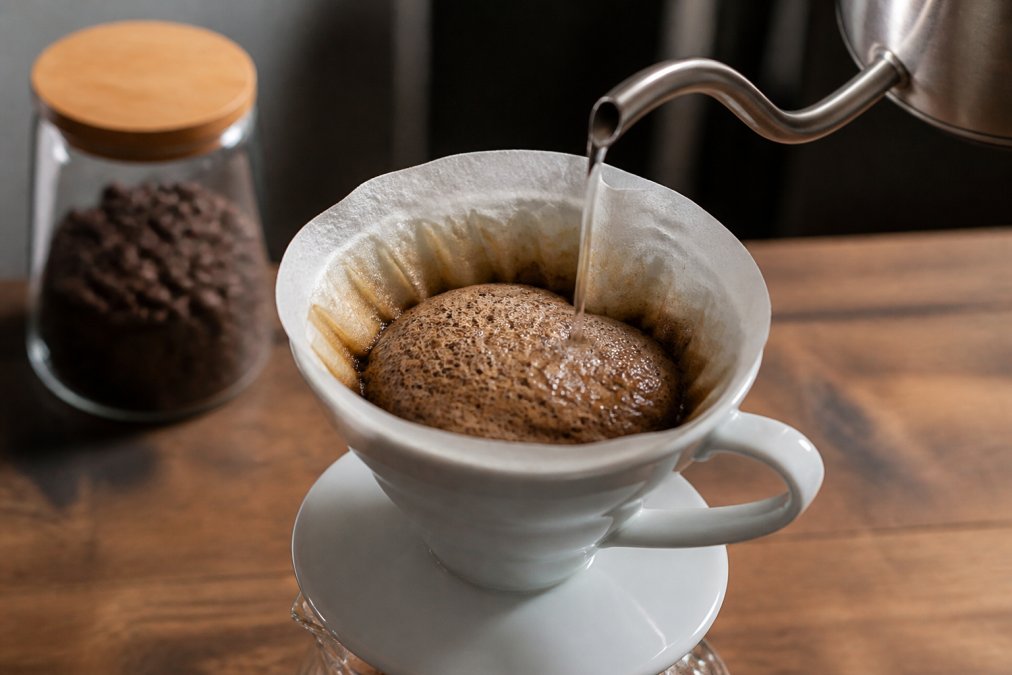
A few practical notes: use a pour-over or French press setup (espresso machines don't give you a clear visual), let the bloom phase last 30 to 45 seconds before continuing, and note that a very aggressive bloom on beans roasted fewer than 5 days ago can over-carbonate your extraction; a 7 to 14 day rest post-roast is ideal.
Step 3: Use Aroma and Visual Inspection to Spot Stale Beans
Open the bag and trust your nose before your eyes. Aroma is the fastest freshness indicator available.
What Fresh Coffee Smells Like vs. Stale Coffee
Fresh coffee has a complex, layered aroma, floral notes, bright fruitiness, sweet caramel, or rich chocolate depending on roast and origin. The smell is assertive and fills the room within seconds of opening the bag.
Stale coffee smells flat, papery, or faintly rancid. The volatile aromatic compounds have oxidized and dissipated. If you have to bury your nose in the bag to smell anything, the coffee has lost most of its aroma profile. Fresh specialty coffee should smell punchy enough that someone nearby notices you've opened a bag.
Visual Signs of Stale Coffee Beans
Whole beans tell a visible story:
- Excessive oiliness on dark roasts: Some surface oil is normal, but a heavy, wet sheen indicates oxidizing oils producing rancid flavors
- Dull, matte appearance on light or medium roasts: Fresh light roasts have a slight luster; stale ones look chalky
- Visible cracks or fractures: Fresh beans hold their structure; very old beans develop hairline cracks as internal moisture escapes
- Uniform color throughout the bag: Inconsistency may indicate uneven roasting or mixed batches
Signs of Stale Coffee Beans in the Cup (Taste Test)
The taste test is where stale coffee reveals itself completely. Fresh coffee delivers a layered experience: initial aroma, bright or sweet entry, developed body, and clean aftertaste that shifts as the cup cools.
Stale coffee collapses this experience:
- Flat entry: No brightness, sweetness, or recognizable tasting notes
- Hollow body: Thin and watery mouthfeel even at correct brew ratio
- Bitter or sour aftertaste without complexity: Blunt and unpleasant, distinct from pleasant bitterness of well-extracted fresh dark roast
- No change as it cools: Fresh coffee evolves; stale coffee just gets worse
If your coffee tastes like hot brown water with a bitter finish, the beans are almost certainly past their peak.
How Long Do Coffee Beans Last by Roast Level
Coffee shelf life depends significantly on roast level, because darker roasts are structurally more porous with more surface oil exposure than lighter ones. Stored in an airtight container away from light and moisture:
| Roast Level | Peak Flavor Window | Acceptable Range | Noticeably Stale After |
|---|---|---|---|
| Light | 10-21 days post-roast | Up to 4 weeks | 5-6 weeks |
| Medium | 7-21 days post-roast | Up to 5 weeks | 6-7 weeks |
| Dark | 5-14 days post-roast | Up to 3 weeks | 4 weeks |
| Pre-ground (any roast) | 1-3 days post-grind | Up to 1 week | 10 days |
Light roasts retain nuanced acidity and floral notes longer because the denser bean structure slows oxidation. Dark roasts, with their open, porous cell structure and exposed oils, degrade faster. Pre-ground coffee has vastly more surface area exposed to oxygen, which is why it goes stale much faster than whole bean.
Freshness Indicators for Pre-Ground Coffee
Pre-ground coffee loses the bloom test and visual inspection. The aroma test becomes your primary tool and is more urgent: pre-ground coffee that smells flat is almost certainly past its useful window.
Specific indicators: strong and immediate aroma on opening, free-flowing grounds (stale coffee clumps from absorbed moisture), visible bloom even in a pour-over, and a grind date within 7 to 10 days.
As the National Coffee Association's brewing guide notes, grinding immediately before brewing is the single most effective way to preserve flavor.
Coffee Storage Best Practices That Actually Preserve Freshness
Most people store coffee wrong. The three enemies of fresh coffee are oxygen, moisture, and light exposure. A standard paper grocery bag addresses none of them adequately.
Coffee storage best practices that actually work:
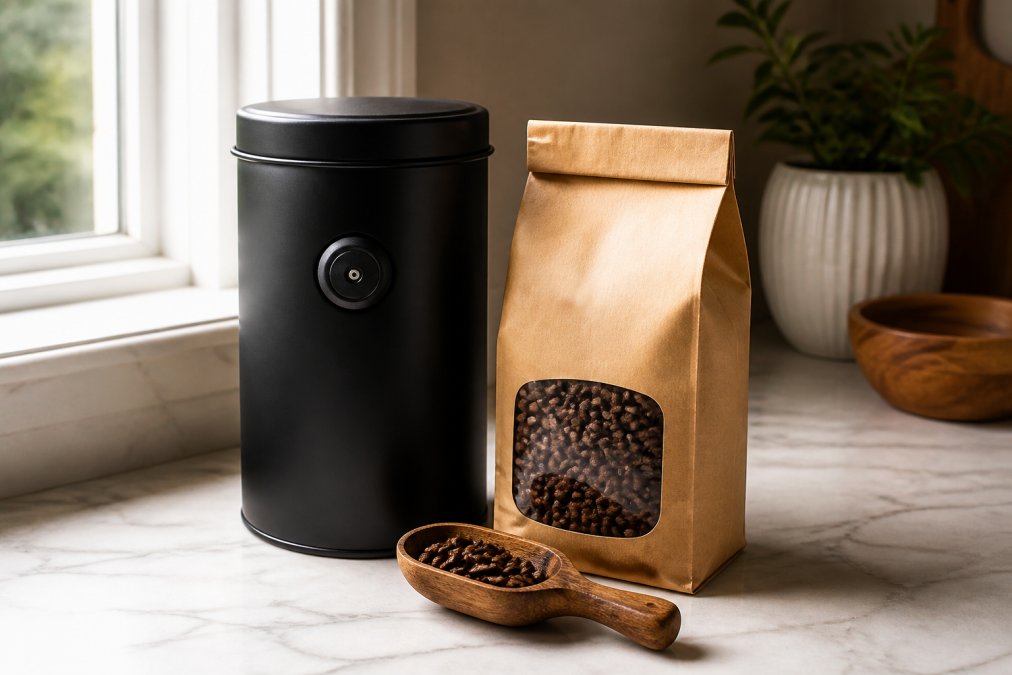
- Store whole beans in an opaque, airtight container at room temperature
- Keep away from the stove, dishwasher, or any heat source
- Never store coffee in the refrigerator: moisture and odor absorption ruin flavor faster than room-temperature air
- Freezing is acceptable only for long-term storage of sealed, unopened bags; once opened, freeze-thaw cycles cause condensation
- Use coffee within 2 to 3 weeks of opening any bag
Choosing the Right Storage Container
| Container Type | Oxygen Protection | Light Protection | Best For |
|---|---|---|---|
| Valve-sealed bag (original) | Good (if resealed) | Good (opaque) | Short-term, 1-2 weeks |
| Ceramic airtight canister | Excellent | Excellent | Daily use, up to 3 weeks |
| Glass airtight jar | Excellent | Poor (clear) | Only if stored in a dark cabinet |
| Plastic clip-top container | Poor | Varies | Not recommended |
| One-way valve canister | Best | Excellent | Ideal for freshly roasted beans |
The one-way valve canister is the gold standard for specialty coffee storage. It allows CO2 from freshly roasted beans to escape without letting oxygen in, preventing pressurized off-gassing from creating moisture buildup.
Troubleshooting 'Fake' Freshness: When Packaging Misleads You
Packaging can make stale coffee look and smell fresh, at least briefly. Nitrogen-flushed bags displace oxygen and extend shelf life, but when you open one, check the roast date. If that bag was roasted four months ago and nitrogen-flushed at the facility before shipping, the coffee was already past its peak.
A puffed bag can indicate freshness because CO2 from degassing causes expansion, but a bag can also be artificially inflated at packaging. Always cross-reference the physical bag feel with the actual roast date.
According to the Coffee Quality Institute's resources on post-harvest processing, packaging technology preserves; it doesn't restore.
Signs you're dealing with "fake" freshness:
- Strong initial aroma that fades within minutes of opening
- Weak or short-lived bloom
- Roast date more than 30 days old despite a puffed, sealed bag
- No roast date listed, only a best-by date
How to Tell If Coffee Is Fresh When Buying Online
Buying coffee online adds complexity because you can't smell or inspect before it arrives. A roast-to-order model makes a concrete difference: coffee roasted after your order arrives within its optimal window rather than sitting in a distribution warehouse.
When evaluating any online coffee purchase:
- Is the roast date printed on the bag? If the retailer won't tell you when the coffee was roasted, that's a signal.
- What's the typical ship time after roasting? Coffee roasted Monday and shipped Wednesday arrives fresher than bulk-roasted inventory coffee.
- Does the roaster describe a degassing period? A roaster who mentions a 48- to 72-hour rest before shipping understands freshness science.
- What packaging is used? Valve-sealed, opaque bags are the standard for specialty coffee shipped by mail.
- What's the return or replacement policy? A roaster confident in their freshness will stand behind the product.
At Marilyn's Morning Brew, every bag is roasted to order specifically to avoid the warehouse problem. Beans are sourced from trusted farms, roasted after your order, and shipped fast so the coffee arrives well within its peak window.
Stale coffee is one of the most common and most avoidable problems in home brewing. If you've ever brewed a technically correct cup that still tasted flat and disappointing, the beans were almost certainly the issue. Check the roast date, run the bloom test, and trust your nose. Then get started with Marilyn's Morning Brew and taste what freshly roasted coffee is actually supposed to taste like.
Frequently Asked Questions
Does the roast date matter more than the expiration date?
Yes, the roast date is far more useful than an expiration date. Expiration dates on coffee bags are set for food safety, not flavor. Coffee is technically safe to drink long after that date, but it loses its vibrant aroma, acidity, and body within weeks of roasting. A bag with a roast date lets you know exactly how fresh the coffee is. Always look for a roast date printed on the bag and aim to brew within two to four weeks of that date for the best cup.
How long does coffee stay fresh after it's ground?
Pre-ground coffee goes stale much faster than whole beans because grinding dramatically increases the surface area exposed to oxygen. Ground coffee stored in an airtight container at room temperature stays acceptably fresh for about one to two weeks, though the most vibrant flavor notes fade within the first few days. For the best results, grind only what you need right before brewing. Whole beans sealed in a valve-sealed bag hold their aroma profile and flavor notes significantly longer than pre-ground coffee.
What is the freshest coffee you can buy?
The freshest coffee available is whole bean coffee roasted to order and shipped within a day or two of roasting. Buying from a small-batch roaster that prints the roast date on every bag gives you full transparency. Grocery store coffee, even premium brands, is typically roasted weeks or months before it reaches the shelf. Specialty coffee roasted to order and shipped directly to your door removes that lag entirely, meaning the CO2 degassing process is still active when the beans arrive.
Is 2-year-old coffee still good?
Two-year-old coffee is safe to drink but will taste flat, dull, and possibly rancid. Most of the volatile compounds that create floral, sweet, and tart flavor notes have long since oxidized. The bloom test will likely produce little to no CO2 activity, confirming the beans are spent. If the coffee smells musty or like cardboard rather than roasted, that is a clear sign it is past its best. For daily drinking, stick to beans used within four to six weeks of the roast date.
This article was written using GrandRanker