

Why Roasted to Order Coffee Tastes Better
Table of Contents
- Why Roasted to Order Coffee Tastes Better Than Store-Bought
- The Coffee Degassing Process: What Happens After the Roast
- How to Tell If Coffee Is Fresh: 5 Signs to Check
- The Peak Flavor Window: Timing Your Best Cup
- The Best Way to Store Coffee Beans for Lasting Freshness
- Why Oxidation and Staling Ruin Grocery Store Coffee
- Home Roasting vs. Roasted to Order: Which Delivers Better Flavor?
- Frequently Asked Questions
Last Updated: September 18, 2026
Why Roasted to Order Coffee Tastes Better Than Store-Bought
Coffee begins losing its best qualities within days of roasting, which is why roasted to order coffee tastes noticeably better than beans that have sat on a shelf for months. At Marilyn’s Morning Brew, every batch is roasted only after you order it, so the beans reach your door close to their peak rather than past it. This guide explains the chemistry behind that difference, how to spot stale beans, and how to store what you buy so the flavor holds up.
The Coffee Degassing Process: What Happens After the Roast
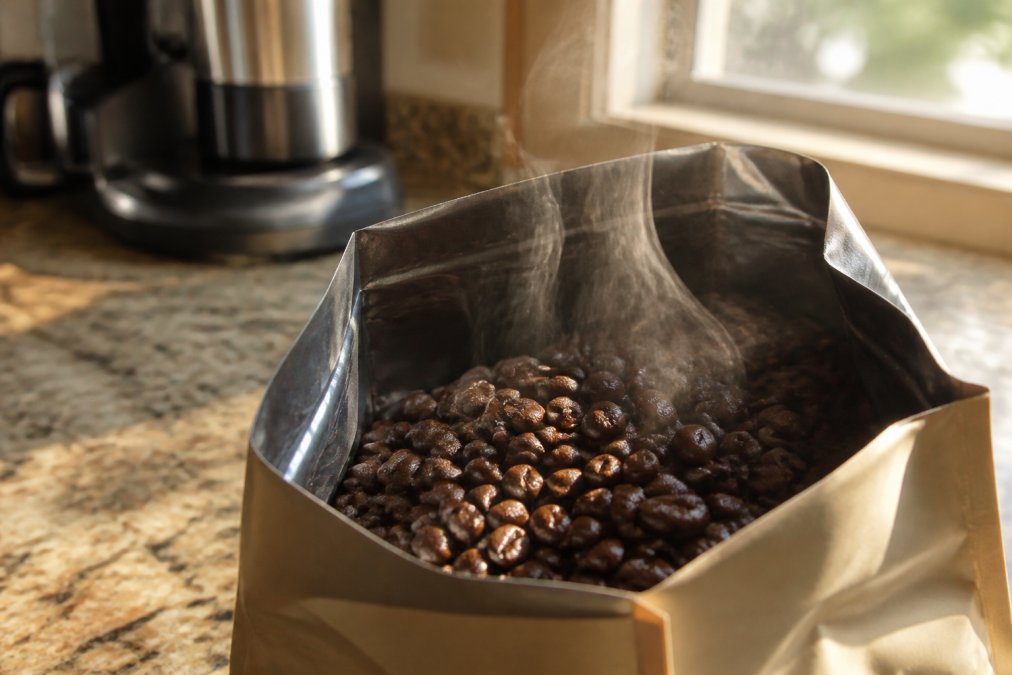
The coffee degassing process is the release of carbon dioxide trapped inside beans during roasting, and it continues for days or weeks after the roast finishes. Freshly roasted beans are still actively venting gas. That is why a sealed bag of just-roasted coffee puffs up, and why roasters add a one-way valve: it lets carbon dioxide escape without letting oxygen in.
Why Carbon Dioxide Matters for Flavor
Carbon dioxide protects flavor while it lasts. As long as a bean is still degassing, the escaping gas pushes oxygen away from the bean's surface, slowing the oxidation that dulls aroma and sweetness. Once degassing slows, oxygen moves in and staling begins. This is the core tension of coffee freshness: the same gas that preserves the bean also interferes with brewing if you grind too soon.
How Roast Level Changes Degassing Speed
Darker roasts degas faster than lighter ones. The longer, hotter roast builds up more internal pressure, so darker beans release their carbon dioxide quickly and are often ready to brew within a few days. Lighter roasts hold onto gas longer and frequently need a longer post-roast resting period before they hit their best. This is why a single "wait X days" rule never fits every bag.
How to Tell If Coffee Is Fresh: 5 Signs to Check
You can tell if coffee is fresh by checking the roast date, the smell, the bloom, and how the beans look and feel. Here are the five signals worth checking before you brew:
- A printed roast date, not just a "best by" date. A best-by date tells you nothing about when the beans were actually roasted.
- A strong, sweet aroma when you open the bag. Stale beans smell flat, papery, or faintly like cardboard.
- A lively bloom when hot water hits the grounds. Fresh coffee swells and foams as trapped carbon dioxide releases.
- Visible surface oils on darker roasts. Those oils carry aroma compounds and fade as beans age.
- Beans that feel dense and smell sweet when you bite one. Old beans taste hollow and dry.
The Peak Flavor Window: Timing Your Best Cup
Every roast has a peak flavor window, a stretch of days when aroma, sweetness, and acidity line up at their best. Brew too early and the beans are still releasing so much carbon dioxide that water channels past the grounds unevenly, producing a thin, sour cup. Brew too late and oxidation has already muted the volatile compounds that make the coffee taste alive.
| Day After Roast | What Is Happening in the Bean | What You Taste |
|---|---|---|
| Day 0-1 | Peak carbon dioxide pressure; degassing is at its most aggressive | Gassy, sharp, sometimes sour; bloom is explosive and hard to control |
| Day 2-4 | Degassing slows; oxygen begins displacing carbon dioxide near the surface | Aroma opens up; acidity is bright but can still taste unsettled |
| Day 5-12 | Degassing and oxidation reach a rough balance | Peak clarity: sweetness, acidity, and aroma line up; this is the target zone for most medium roasts |
| Day 13-21 | Oxidation starts to outpace degassing | Flavors soften; delicate top notes fade first; still good, less vivid |
| Day 22-30 | Volatile aromatic compounds are noticeably depleted | Flat, papery, or cardboard-like notes appear; sweetness drops |
| Day 30+ | Oxidation dominates | Stale, hollow, and bitter; no brewing adjustment recovers it |
The Best Way to Store Coffee Beans for Lasting Freshness
The best way to store coffee beans is in an airtight, opaque container kept in a cool, dark place, ideally used within a few weeks of the roast date. The enemies are consistent: oxygen, light, heat, and moisture. The goal is to slow oxygen exposure without trapping the carbon dioxide that still needs to escape. Most articles stop there. The harder question is which container actually does that, because the popular options are not equivalent.
One-Way Valve Bags vs. Vacuum Sealing vs. Hard Containers
The bag your coffee arrives in is usually better than people assume. A one-way valve lets carbon dioxide out while blocking oxygen in, which is exactly what a freshly roasted bean needs during the first week or two. The weakness is the reseal: once you open the bag, a rolled or clipped top is not airtight, and the valve no longer helps because oxygen can enter through the opening.
| Storage Method | Blocks Oxygen | Allows Degassing | Best For |
|---|---|---|---|
| Original valve bag, resealed | Partial | Yes | First 1-2 weeks of daily use |
| Vacuum-sealed portions | High | No | Long-term storage of unopened portions |
| Opaque hard container with valve | High | Yes | Daily-use beans through the peak window |
| Clear airtight jar | High | No | Short-term only; light exposure degrades oils |
What to Avoid When Storing Coffee
A few common storage habits actively speed up staling:
- The freezer, for daily-use beans. Repeated thawing introduces moisture and condensation. Freezing works only for long-term storage of unopened bags or vacuum-sealed portions, and even then the beans should be thawed sealed and used without re-freezing.
- The refrigerator. It is humid, and coffee absorbs odors from everything around it. A bag of beans next to leftover onions will taste like leftover onions.
- A clear glass jar on the counter. Light degrades coffee lipids and aroma compounds. If you can see the beans, they can see the light.
- The original bag, rolled shut. A one-way valve helps, but a rolled bag is not airtight once opened. Fold and clip it, or transfer to a valve container.
- Grinding ahead of time. Whole beans keep their flavor far longer than pre-ground coffee because grinding multiplies the surface area exposed to air. Grind right before you brew, and the aroma stays where it belongs, in the cup.
Why Oxidation and Staling Ruin Grocery Store Coffee
Oxidation is the reaction between oxygen and the oils in roasted coffee, and it is the main driver of staling. As oxygen exposure continues, the volatile compounds responsible for flavor clarity and aroma break down, acidity flattens, sweetness fades, and the aftertaste turns bitter or papery. None of this is reversible.
Home Roasting vs. Roasted to Order: Which Delivers Better Flavor?
Roasted to order wins for most drinkers, because it delivers fresh coffee without the equipment, smoke, and learning curve of home roasting. Home roasting gives you total control over roast level and timing, and some enthusiasts love that. The trade-offs are real: you need a roaster or a reliable stovetop method, you deal with chaff and smoke, and you still wait through the post-roast resting period before the beans taste right.
| Approach | Time to First Cup | Equipment Needed | Consistency |
|---|---|---|---|
| Roasted to order | A few days after roast | None | High, handled by the roaster |
| Home roasting | Same day to several days | Roaster or stovetop setup | Varies with skill |
| Grocery store beans | Immediate | None | Low, roast date often missing |
Frequently Asked Questions
How does roasting affect coffee flavor?
Roasting transforms green coffee beans through heat, triggering hundreds of chemical reactions that create aroma and flavor compounds. Light roasts keep more of the bean's natural acidity and fruity notes, while darker roasts develop deeper caramel and chocolate tones. The roast date matters because those volatile compounds begin fading within days. Coffee roasted to order captures peak flavor because it reaches you shortly after roasting, not months later.
How long does coffee stay fresh after roasting?
Most coffee reaches its best flavor between 4 and 14 days after roasting, depending on the roast level and how it's stored. After about 3 to 4 weeks, oxidation and staling noticeably dull the flavor profile. Whole beans stored in an airtight container away from light and heat hold their quality longer than pre-ground coffee. Buying roasted to order means your beans arrive within that freshness window instead of sitting on a shelf for months.
What is the difference between store-bought and roasted to order coffee?
Grocery store coffee often carries a 'best by' date rather than a roast date, which means it could have been roasted months before you buy it. Roasted to order coffee ships within days of roasting, so the degassing process is still unfolding when it reaches you. That difference shows up in the cup: brighter acidity, clearer aroma, and a sweeter aftertaste. You can try this with a single-origin option like the Whiskey Barrel Aged, which is roasted to order after 30 days in a bourbon barrel.
Does freshly roasted coffee taste better?
Yes, when you drink it during the peak flavor window, typically 4 to 14 days post-roast. Before that, the coffee degassing process releases carbon dioxide that can interfere with extraction, causing uneven or sour results. After the window closes, oxidation takes over and the flavor flattens. The sweet spot is drinking it fresh but past the initial rest period. Roasted to order coffee lets you control that timing instead of guessing when it was roasted.
The hardest part of better coffee is not technique. It is getting beans that were roasted recently enough to still have something worth brewing, and most store shelves cannot promise that. Marilyn’s Morning Brew roasts to order, sources beans from trusted farms, and ships fast so your coffee arrives near its peak instead of past it. Order a bag and taste the difference a short roast-to-brew gap makes.