

How to Store Coffee Beans for Freshness
Table of Contents
- Why Proper Storage Matters for Coffee Bean Freshness
- What You'll Need Before You Start
- Best Coffee Storage Containers to Preserve Flavor
- Step-by-Step: Storing Whole Bean Coffee at Room Temperature
- Does Freezing Coffee Beans Ruin Them?
- How Long Does Roasted Coffee Stay Fresh?
- How to Tell If Coffee Is Fresh
- Common Mistakes to Avoid
- Frequently Asked Questions
Last Updated: September 2, 2026
Why Proper Storage Matters for Coffee Bean Freshness
Coffee begins to lose its flavor the moment it's roasted. Oxygen exposure, light, heat, and moisture degrade the volatile compounds that create aroma and taste. At Marilyn's Morning Brew, we roast beans to order because freshness is non-negotiable, but that freshness only lasts as long as your storage method protects it.
Beans stored in airtight containers in a cool, dark place maintain peak flavor for 2-4 weeks (peer-reviewed research). The same beans left exposed lose their character within days. This isn't just preference, it's about getting value from premium, carefully sourced beans. Proper storage minimizes oxygen exposure while protecting against heat, light, and moisture.
What You'll Need Before You Start
Before storing coffee beans, gather these essentials:
- An airtight container with a seal that actually works
- A cool, dark storage location away from direct sunlight and heat sources
- Optional: a freezer if storing beans longer than 4 weeks
- A marker or label to track the roast date
- Whole beans, not pre-ground (ground coffee loses freshness in days)
If you're ordering from Marilyn's Morning Brew, your beans arrive in resealable bags designed to slow oxidation. The original packaging is often your best option. For longer storage, a dedicated container gives you more control. The key insight: the container matters less than the seal. A mason jar with a poor seal is worse than a paper bag because it creates false security.
Best Coffee Storage Containers to Preserve Flavor
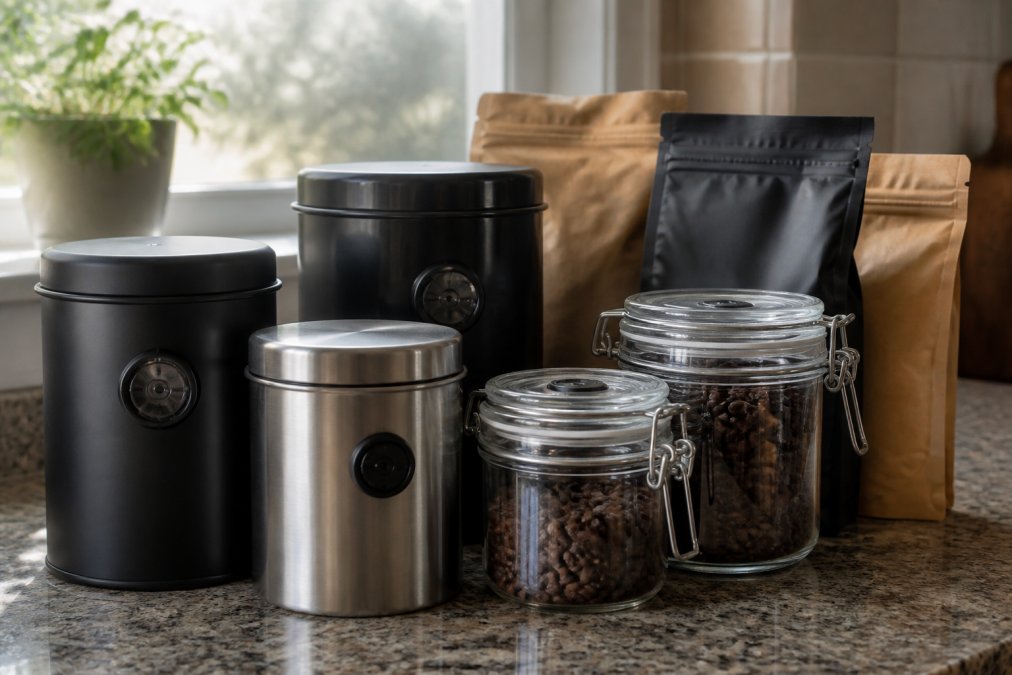
The ideal storage container is airtight, opaque (blocks light), and made from material that doesn't absorb odors or oils.
Airtight Containers with One-Way Degassing Valves
One-way degassing valves allow carbon dioxide (which freshly roasted beans naturally release) to escape without letting oxygen back in (peer-reviewed research). These valves are crucial for fresh roasted beans because CO2 buildup inside a completely sealed container can compromise the seal.
Containers with degassing valves are designed specifically for coffee storage. They're typically made from opaque plastic or stainless steel, which blocks UV light while maintaining an airtight seal. Look for containers where the valve is clearly visible and functional.
Original Packaging vs. Transfer Containers
The original packaging from a quality roaster like Marilyn's Morning Brew is often better than what you'll transfer to at home. Premium coffee bags come with a resealable zipper and often include a degassing valve. Once sealed, they protect your beans effectively.
Transfer to a dedicated container only if you're opening the original bag frequently or storing beans longer than 4 weeks. If you're using coffee within 2-3 weeks, leaving it in the original bag with the zipper sealed tight works perfectly. When you do transfer, choose an opaque, airtight container and fill it as full as possible to minimize headspace.
Step-by-Step: Storing Whole Bean Coffee at Room Temperature
Step 1: Keep beans in an airtight container. Transfer to a container with a secure seal, or keep beans in their original packaging if it has a good zipper and degassing valve. Remove as much air as possible before sealing.
Step 2: Store in a cool location. Find a spot away from direct sunlight, heat sources (like the oven or stovetop), and temperature fluctuations. A pantry or cabinet works better than a countertop.
Step 3: Maintain consistent temperature. Avoid areas where temperature swings significantly. Temperature fluctuations cause condensation inside the container, introducing moisture to the beans.
Step 4: Keep away from moisture. Don't store coffee in humid environments like bathrooms or near the sink.
Step 5: Label with the roast date. Write the roast date on your container so you know when to use the beans by. Peak freshness typically lasts 2-4 weeks from the roast date.
Step 6: Use whole beans and grind fresh. Grind immediately before brewing. Pre-ground coffee loses its flavor profile within days because grinding exponentially increases surface area exposed to oxygen.
Room temperature storage keeps your beans accessible while maintaining the flavor profile roasters developed. You'll get the best results if you use beans within 4 weeks.
Does Freezing Coffee Beans Ruin Them?
Freezing doesn't ruin coffee beans, but it introduces a specific risk: condensation during thawing. When frozen beans warm up, moisture condenses on their surface and can seep into the beans, degrading flavor. The solution isn't that freezing failed, it's that the thaw process must be done correctly.
When Freezing Makes Sense
Freezing is worth considering when you buy coffee in bulk and want to preserve beans for months, or when you live in a hot climate where room temperature storage doesn't work well. Freezing extends shelf life from 4 weeks at room temperature to 3-4 months in the freezer (peer-reviewed research).
How to Freeze and Thaw Properly
Freezing:
- Keep beans in their original airtight packaging or transfer to an airtight container.
- Place the container in a freezer-safe bag to add an extra barrier.
- Label with the roast date and freeze date.
- Store at 0°F or below.
Thawing (critical):
- Remove the container from the freezer and leave it sealed.
- Let it sit at room temperature for 1-2 hours before opening. This allows temperature to equalize gradually, minimizing condensation.
- Once thawed, use the beans within 1-2 weeks. Don't refreeze.
The key mistake is opening the container immediately after removing it from the freezer. By waiting for the container to reach room temperature while still sealed, you prevent condensation from forming.
How Long Does Roasted Coffee Stay Fresh?
Peak freshness for roasted coffee typically lasts 2-4 weeks from the roast date. After 4 weeks, coffee doesn't become unsafe, it just becomes less vibrant. The volatile compounds that create nuance and brightness oxidize, leaving a flatter cup. By 8 weeks, most specialty coffee has lost enough character to be noticeably different.
This timeline assumes proper storage in an airtight container away from heat, light, and moisture. Coffee stored poorly will decline faster. Coffee stored in the freezer can extend this timeline to 3-4 months because freezing dramatically slows oxidation.
The roast date matters more than the "best by" date. If a bag doesn't show the roast date, you have no way to know how fresh the beans are. When you order from Marilyn's Morning Brew, every bag includes the roast date.
How to Tell If Coffee Is Fresh
Freshness shows up in multiple ways: appearance, aroma, and how the beans behave when you brew.
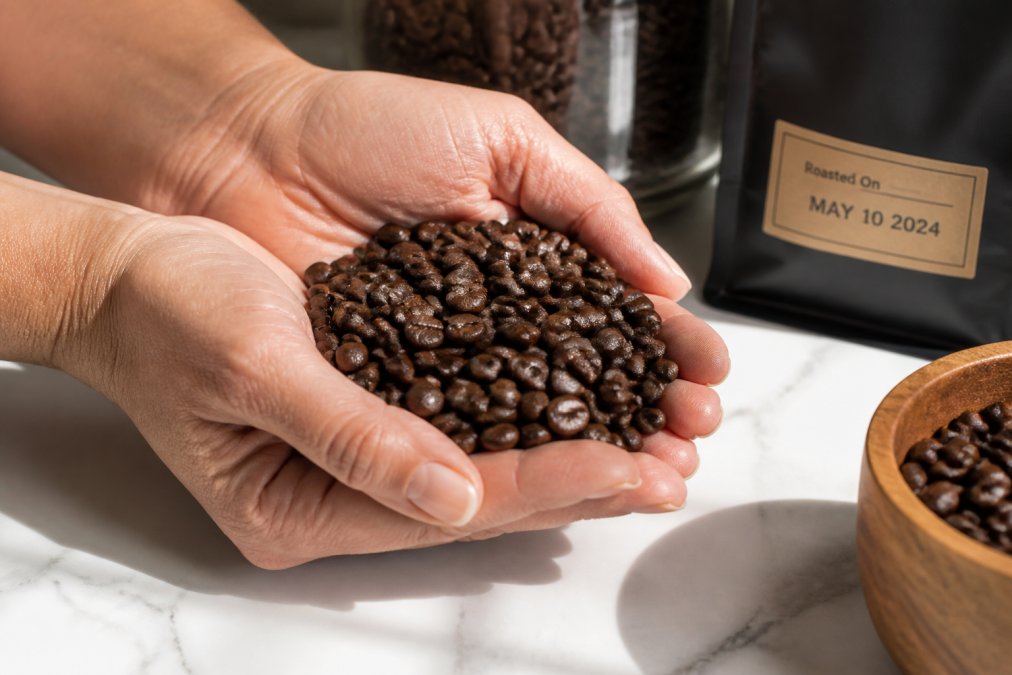
Visual cues: Fresh beans have a rich, deep color with visible oils on the surface. They look glossy and vibrant. Stale beans look dull and dry, with a lighter color.
Aroma: Fresh coffee has a strong, complex aroma when you open the bag or grind the beans. Stale coffee smells flat and one-dimensional.
Behavior during brewing: Fresh beans produce a visible bloom when you pour hot water over them, a burst of bubbles as CO2 escapes. This bloom is dramatic with fresh beans and minimal with stale ones.
Grind consistency: Fresh whole beans grind with a satisfying crunch. Stale beans grind more easily because they're drier.
Taste: Fresh coffee tastes bright and complex. Stale coffee tastes flat, with less sweetness and more bitterness.
If unsure whether your beans are still fresh, the roast date is your reference point. Check the date on the bag and count forward 4 weeks. This is why ordering from a roaster like Marilyn's Morning Brew that includes the roast date is valuable.
Common Mistakes to Avoid
Storing in clear containers: Light degrades coffee faster than almost anything else. Opaque containers, stainless steel, or the original bag protect much better.
Leaving bags open or loosely sealed: Every time you open the bag, you introduce oxygen. Seal tightly after every use.
Storing near heat sources: The kitchen counter above the oven or near a sunny window accelerates oxidation. A cool pantry is far better.
Grinding in advance: Pre-grinding your coffee is a major mistake. Ground coffee loses flavor within days. Grind immediately before brewing.
Buying pre-ground coffee: Pre-ground coffee has already lost much of its character by the time you buy it. Whole beans stay fresher far longer.
Storing in the refrigerator: The refrigerator is humid and introduces condensation every time you open the door. Room temperature storage or the freezer (with proper thawing) is better.
Ignoring the roast date: Always check the roast date. If a bag doesn't have one, that's a signal the roaster isn't prioritizing freshness.
Buying more than you can use: Even perfect storage can't overcome time. Buy in quantities you'll use within 4 weeks at room temperature, or freeze the rest. Consider a subscription model for fresh beans on a schedule that matches your consumption.
Storing coffee beans for freshness is straightforward once you understand the core principle: minimize oxygen exposure while protecting against heat, light, and moisture. When you get it right, every cup tastes noticeably better, which is exactly why premium, roasted-to-order beans from Marilyn's Morning Brew are worth the care. Fresh storage means fresh coffee, and fresh coffee means the flavor and aroma you paid for actually make it into your cup. Start with an airtight container, a cool dark location, and the roast date as your guide.
Frequently Asked Questions
Q: Is it okay to store coffee beans in a Ziploc bag?
A: A Ziploc bag is not ideal for long-term storage. While it provides some protection from air exposure, it lacks the opacity to block light and doesn't have a one-way degassing valve to release carbon dioxide buildup. For short-term storage (1-2 weeks), a sealed Ziploc bag works, but for peak freshness beyond that, transfer to an airtight, opaque container with a degassing valve to prevent oxidation and flavor loss.
Q: How long do coffee beans stay fresh in a sealed bag?
A: Roasted coffee beans maintain peak freshness for about 2-4 weeks when stored in a sealed bag with a one-way degassing valve at room temperature. After 4 weeks, the beans begin to lose their volatile compounds and aroma. The roast date on the bag is your reference point, coffee is freshest within the first 2 weeks after roasting. Freezing can extend shelf life to 3-4 months if sealed properly.
Q: What are the four enemies of coffee freshness?
A: The four main threats to coffee freshness are oxygen exposure (causes oxidation and rancidity), light (UV exposure breaks down coffee oils and flavor compounds), heat (accelerates degradation and moisture loss), and moisture (promotes mold and condensation, damaging the beans). Airtight, opaque containers stored in a cool, dry place protect against all four. Avoid countertops near windows or heat sources, and keep beans away from humidity.
Q: Should you store coffee beans in the freezer or pantry?
A: A cool, dark pantry is best for regular use within 2-4 weeks. The freezer extends shelf life to 3-4 months but requires careful thawing to prevent condensation and freezer burn. Freezing works well for bulk buying or long-term storage, but frequent freezing and thawing degrades flavor. Use an airtight container with a one-way valve in the pantry for daily coffee, and reserve freezing for beans you won't use within a month.
This article was written using GrandRanker