

What Makes Coffee Beans Specialty Grade: A 2026 Guide
Table of Contents
- Definition of Specialty Grade Coffee
- The 100-Point Grading Scale and SCA Coffee Grading Standards
- Visual Inspection and Defect Standards
- Single-Origin and Terroir: Why Origin Matters
- How to Tell If Coffee Is Fresh
- Best Practices for Storing Coffee Beans
- Specialty vs. Commercial Grade: The Real Difference
- Processing Methods That Define Specialty Coffee
- Frequently Asked Questions
Last Updated: September 4, 2026
Definition of Specialty Grade Coffee
Specialty grade coffee is coffee that scores 80 points or higher on the 100-point cupping scale established by the Specialty Coffee Association (SCA). This grading system evaluates green coffee beans for visual perfection, aroma, flavor, acidity, body, and aftertaste, separating exceptional lots from everyday commodity coffee. At Marilyn’s Morning Brew, we source beans that meet this rigorous standard, and we roast them to order so you experience the full potential of the harvest.
The term "specialty" was first used in 1974 to describe beans with distinctive flavor profiles grown in unique microclimates. Today, it represents the top tier of coffee production, accounting for only a fraction of global output. Most coffee sold in grocery stores falls into the commercial category, which we will contrast later.
Specialty grade coffee is the result of careful farming, precise harvesting, and meticulous processing. When you understand what makes coffee beans specialty grade, you can identify quality before you brew.
The 100-Point Grading Scale and SCA Coffee Grading Standards
The SCA coffee grading standards form the backbone of specialty certification worldwide. Licensed Q graders evaluate samples through a process called cupping, which involves steeping ground coffee in hot water and tasting it systematically.
The 80-Point Threshold
The 80-point threshold is the dividing line between specialty and non-specialty coffee. Beans scoring 80 to 84.75 are classified as "specialty grade," while those scoring 85 to 89.75 earn "reserve" status. Scores of 90 or above are considered "premium" or "experimental" lots, often commanding significantly higher prices at auction.
What Q Graders Do
Q graders are certified tasters who undergo rigorous training and annual calibration exams. They evaluate coffee across multiple dimensions, including fragrance, flavor, aftertaste, acidity, body, and balance. According to the Specialty Coffee Association's certification program, fewer than 5,000 Q graders exist worldwide, making them a rare and essential link between farmers and buyers.
Visual Inspection and Defect Standards
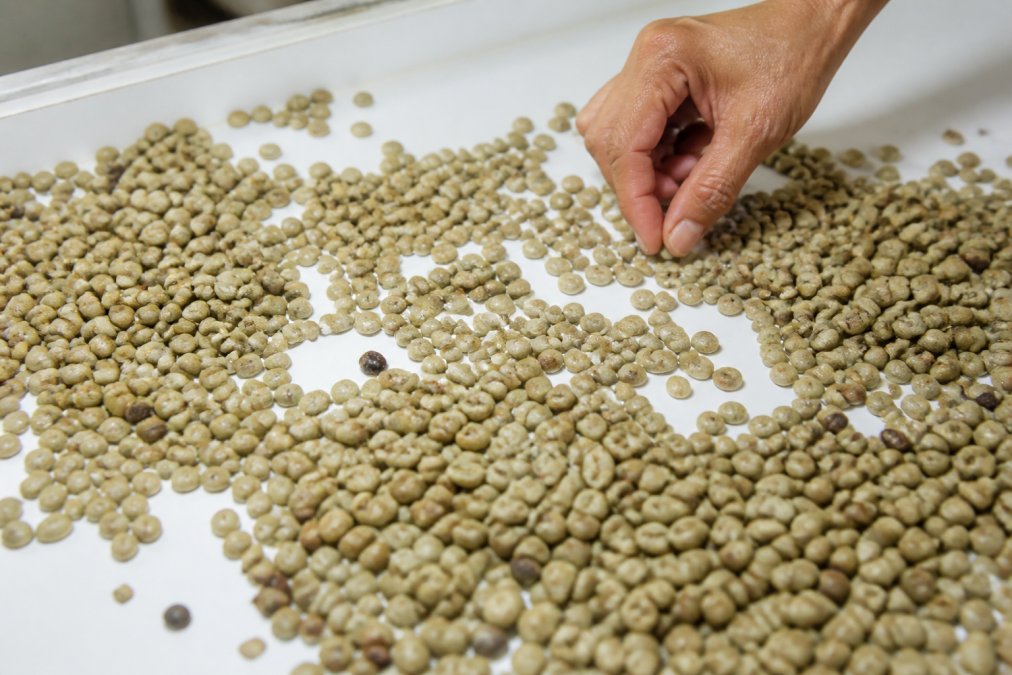
Before cupping begins, every sample undergoes visual inspection to count defects. This step determines whether a lot can even qualify for the grading process. The SCA green coffee grading protocols require a 350-gram sample of green coffee beans for analysis.
Primary and Secondary Defects
Primary defects include severe issues like black beans, sour beans, and insect damage. A single primary defect can disqualify an entire lot. Secondary defects, such as broken beans or slight discoloration, are counted with a weighted system. Specialty grade coffee must have zero primary defects and no more than five secondary defects per sample.
The defect count directly impacts what makes coffee beans specialty grade. Clean, uniform beans produce a more consistent cup, which is why graders scrutinize physical appearance before ever tasting the coffee.
Single-Origin and Terroir: Why Origin Matters
Single-origin coffee comes from one farm, cooperative, or region, allowing the terroir to shine through. Terroir encompasses altitude, soil composition, rainfall, and temperature, all of which shape the flavor profile of the beans. High-altitude arabica grown at 1,500 meters or more develops denser beans with brighter acidity and more complex tasting notes.
Most specialty coffee is arabica, though some roasters blend in high-quality robusta for crema and body. The Coffee Quality Institute's research on altitude and cup quality confirms that elevation correlates strongly with perceived quality in blind tastings. When you buy single-origin coffee, you taste a specific place, not a generic blend.
How to Tell If Coffee Is Fresh
Freshness is the single most important factor after grade. Coffee begins losing volatile aroma compounds within minutes of roasting, and the decline accelerates after grinding. However, specialty coffee also needs time to degas after roasting, a process that typically takes three to five days. Understanding this window is essential to identifying truly fresh specialty beans.
The Roast Date Window
The best way to tell if coffee is fresh is to check the roast date on the bag, not the "best by" date. Specialty roasters print the roast date because they expect you to care. Whole beans are at their peak between three and fourteen days after roasting. Beans roasted fewer than three days ago may still be releasing carbon dioxide, which can interfere with extraction and produce a flat or muted cup. Beans older than two weeks begin losing brightness noticeably, with the most dramatic decline occurring after the four-week mark.
If you are buying coffee that does not list a roast date, you are likely buying stale inventory. Many specialty roasters now include both the roast date and a "best by" date to help consumers understand this window. Commercial coffee rarely displays either, which is a red flag.
Visual and Sensory Indicators
Beyond the roast date, several physical cues signal freshness. Freshly roasted beans often have a slight sheen or oily appearance on the surface, especially in medium and dark roasts, this is the emergence of oils that carry flavor compounds. As beans age, they lose this sheen and become duller. When you open a fresh bag, the aroma should be immediately noticeable and complex. If the bag smells flat or muted, the beans have likely been sitting for weeks.
The packaging itself matters. Specialty roasters use bags with one-way valves that allow carbon dioxide to escape without letting oxygen in. This valve is a sign the roaster understands degassing and freshness. Transparent bags are a warning sign; light exposure degrades the oils and flavors rapidly. The best specialty bags are opaque kraft paper with a valve and a resealable closure.
Storage and Grinding Timing
Whole beans stay fresh for two to four weeks after roasting when stored properly in an airtight container away from light, heat, and moisture. Ground coffee loses its character within days, often within 24 to 48 hours for specialty beans, since grinding exponentially increases surface area exposed to oxygen. If you are buying pre-ground coffee, it is almost certainly past its prime, regardless of the roast date.
The most reliable way to ensure freshness is to buy whole beans with a recent roast date and grind only what you need for each brew. This single habit preserves the tasting notes that define specialty coffee and is the reason many specialty roasters recommend purchasing smaller quantities more frequently rather than stockpiling large bags.
Best Practices for Storing Coffee Beans
Proper storage extends freshness and protects the delicate oils that carry flavor. Keep beans in an airtight container away from light, heat, and moisture. Do not refrigerate or freeze beans you use daily, as temperature fluctuations cause condensation that degrades quality.
A common mistake is leaving beans in the original bag without sealing it properly. Transfer them to a ceramic or glass container with a one-way valve, which lets carbon dioxide escape without letting oxygen in. Buy whole beans and grind only what you need for each brew. This simple habit preserves the tasting notes that define specialty coffee.
Specialty vs. Commercial Grade: The Real Difference
The gap between specialty and commercial grade is not subtle. Commercial coffee, often called commodity coffee, scores below 80 points and typically comes from large-scale farms that prioritize yield over flavor. It is frequently roasted dark to mask defects and sold pre-ground, which accelerates staleness.
Specialty grade coffee, by contrast, is grown with intention, harvested selectively, and processed carefully. Farmers receive higher prices for better quality, creating a positive cycle that supports sustainable practices. The World Coffee Research on variety development highlights how investment in quality benefits the entire supply chain, from farm to cup.
| Factor | Specialty Grade | Commercial Grade |
|---|---|---|
| Cupping score | 80 points or higher | Below 80 points |
| Defect allowance | Zero primary, max 5 secondary | Up to 86 secondary defects |
| Harvest method | Selective hand-picking | Often strip-picked |
| Roast date | Printed on bag | Rarely disclosed |
| Price to farmer | Premium paid | Commodity market rate |
Processing Methods That Define Specialty Coffee
Processing is the post-harvest step that removes the cherry flesh from the bean, and it dramatically shapes the final flavor. Specialty producers choose methods based on their climate, resources, and desired flavor profile. The three dominant approaches each yield distinct characteristics and directly influence the cupping score a lot receives.
Washed (Wet) Processing
Washed processing removes the fruit immediately after harvest, then dries the bean in the sun or mechanical dryers. This method produces a clean, bright cup with pronounced acidity and clarity of origin flavors. Because the fruit is removed quickly, there is less time for fermentation, and the cup tends to highlight the bean's inherent characteristics and terroir.
Washed coffees typically score higher on acidity and flavor clarity during cupping, which is why they dominate specialty auctions. The process requires significant water resources, making it most common in regions with reliable rainfall or access to irrigation. Defect rates in washed coffees are often lower because the rapid processing reduces the risk of fermentation defects. However, washed processing demands more infrastructure and labor, which is why it is associated with more established, quality-focused farms.
Natural (Dry) Processing
Natural processing dries the entire cherry on the bean for two to four weeks before removing the dried fruit. This extended contact between bean and fruit creates fermentation, producing a heavier body with fruity, wine-like, and sometimes fermented notes. Natural coffees often score higher on body and sweetness during cupping but may score lower on clarity if fermentation is not carefully controlled.
Natural processing requires less water and infrastructure, making it common in water-scarce regions like Ethiopia and parts of Brazil. The trade-off is higher variability and more defects if fermentation goes wrong. Beans that ferment too long or unevenly can develop off-flavors, and specialty graders penalize these heavily. When a natural coffee scores 85 or above, it represents exceptional skill in managing fermentation, which is why natural lots often command premium prices at auction.
Honey (Pulped Natural) Processing
Honey processing removes the outer cherry skin but leaves some or all of the sticky mucilage (called "honey" in coffee terminology) on the bean during drying. This creates a middle ground: more fermentation than washed, less than natural. The result is a cup with balanced sweetness, moderate body, and fruit-forward notes without the heaviness of full natural processing.
Honey processing is increasingly popular among specialty producers because it allows fine-tuning of flavor. By controlling how much mucilage remains (white honey, yellow honey, red honey, or black honey, depending on mucilage percentage), farmers can dial in the exact level of fermentation they want. During cupping, honey-processed coffees often score well on balance and complexity. The method requires skill and careful monitoring but less water than washed processing, making it sustainable in diverse climates.
How Processing Impacts Specialty Grading
Q graders evaluate how well a coffee's processing method was executed. A washed coffee that shows fermentation defects will score lower. A natural coffee with uneven fermentation will be penalized. A honey-processed coffee that was dried too quickly or too slowly will lack the intended balance. The processing method itself is not a grading criterion, but the execution of that method directly affects the final cupping score.
When you see "washed Ethiopia" or "natural Brazil" on a bag, you are seeing the processor's craft on display. The choice of method is intentional, and the resulting flavor profile is a direct result of that decision. Understanding these differences helps you predict what you will taste before you brew, and it deepens your appreciation for the skill required to produce specialty coffee.
Frequently Asked Questions
What does specialty grade coffee mean?
Specialty grade coffee is a classification assigned by the Specialty Coffee Association (SCA) to beans that score 80 points or higher on a 100-point scale during cupping evaluation. This designation indicates superior flavor complexity, origin characteristics, and minimal defects compared to commercial-grade coffee. Specialty beans undergo rigorous sensory analysis by certified Q Graders who assess aroma, acidity, body, balance, and overall flavor profile. The SCA's strict standards ensure consistency and quality across the specialty coffee market.
How are coffee beans graded by the SCA?
The SCA grading process involves trained Q Graders conducting a blind cupping, a standardized tasting where beans are brewed and evaluated against specific criteria. Graders assess fragrance, aroma, flavor, aftertaste, acidity, body, balance, uniformity, clean cup, and defects. Each attribute receives a numerical score. Beans must also pass visual inspection, where defects are counted and categorized as primary or secondary. A score of 80 or above qualifies beans as specialty grade. This systematic approach ensures objective, repeatable evaluation across different origins and roasters.
How can you tell if coffee beans are high quality?
High-quality specialty grade coffee shows consistent bean size and color, lacks visible defects, and delivers complex flavor notes when brewed. Check the roast date on the package, beans roasted within two weeks are fresher and more flavorful. Look for single-origin or clearly labeled blends from known origins, which indicate transparency in sourcing. Specialty coffee often includes tasting notes (e.g., 'notes of chocolate and berry') that reflect careful roasting and origin characteristics. Marilyn's Morning Brew roasts to order, prioritizing freshness, ensuring you receive beans at peak flavor within days of roasting.
What is the difference between specialty and commercial grade coffee?
Specialty grade coffee scores 80 points or higher and contains minimal defects, while commercial grade scores below 80 and allows more defects. Specialty beans are sourced from specific origins with documented terroir and processing methods, offering distinct flavor profiles. Commercial coffee is often a blend of lower-grade beans from multiple origins, optimized for price and consistency rather than flavor complexity. Specialty coffee commands higher prices due to careful sourcing, quality control, and traceability. Commercial coffee is what you typically find in grocery stores; specialty is what coffee enthusiasts seek for superior taste and origin character.
How should I store specialty grade coffee beans to keep them fresh?
Store beans in an airtight container away from light, heat, and moisture. A sealed glass jar or specialized coffee canister in a cool, dark cupboard works well. Avoid refrigerators and freezers, which expose beans to temperature fluctuations and moisture. Keep beans in their original bag with the valve intact if unopened. Once opened, transfer to an airtight container and consume within 2-4 weeks for optimal flavor. Whole beans stay fresher longer than ground coffee. Roasted-to-order beans from Marilyn's Morning Brew arrive at peak freshness, so proper storage ensures you enjoy that quality throughout your use.
What are primary and secondary defects in specialty grade coffee?
Primary defects are significant flaws that impact cup quality: black beans, sour beans, fungus-damaged beans, and foreign material. Secondary defects are minor imperfections: broken beans, discolored beans, and slight insect damage. Specialty grade allows zero primary defects and no more than a few secondary defects per sample. Visual inspection occurs before cupping, and defect counts directly influence the final score. This strict standard ensures that every bean in a specialty-grade batch meets quality expectations. Commercial grade permits far more defects, which explains why specialty coffee delivers superior and more consistent flavor.
Does specialty grade coffee have to be organic?
No, specialty grade and organic certification are independent. A coffee can be specialty grade without organic certification, and some organic coffees do not achieve specialty grade status. Specialty grading focuses on flavor, origin, and defects; organic certification addresses farming practices and pesticide use. Many specialty coffee producers use sustainable farming methods and ethical sourcing practices that align with organic principles, but formal organic certification requires third-party verification and documentation. If organic status matters to you, look for both specialty grade designation and organic certification on the label. Marilyn's Morning Brew sources from trusted farms with attention to quality and responsible practices.
What is the 15-15-15 rule for coffee?
The 15-15-15 rule is a guideline for coffee freshness and storage: consume beans within 15 days of roasting for optimal flavor, store them at temperatures below 15°C (59°F) when possible, and keep humidity below 15% to prevent moisture absorption. While home storage at room temperature is practical, understanding these targets helps explain why roasted-to-order beans deliver superior taste. Beans roasted and shipped quickly, like those from Marilyn's Morning Brew, reach you within the ideal freshness window, allowing you to enjoy peak flavor even with standard home storage conditions.
This article was written using GrandRanker