

Does Shipping Speed Affect Coffee Quality?
Table of Contents
- How Shipping Speed Affects Coffee Freshness
- The Coffee Degassing Process During Transit
- Green Coffee vs. Roasted Coffee Shipping Requirements
- How to Tell If Coffee Is Fresh When It Arrives
- Environmental Factors: Temperature and Humidity Control
- Best Way to Store Coffee Beans After Delivery
- Air Freight vs. Sea Freight for Specialty Coffee
- Why Roasted-to-Order Coffee Stays Fresher Longer
Last Updated: August 28, 2026
How Shipping Speed Affects Coffee Freshness
Does shipping speed affect coffee quality? The answer is unequivocal: yes. The faster your coffee reaches you after roasting, the better it will taste. This isn't theoretical, it's chemistry. The moment roasted beans leave the roaster, they begin losing aromatic compounds and volatile oils that define their flavor profile. Every day in transit is a day those compounds escape into the air.
At Marilyn's Morning Brew, we've made roasted-to-order coffee central to our promise because we understand that freshness is non-negotiable. When coffee sits in a warehouse or warehouse-to-warehouse supply chain for weeks, you're not getting the coffee the roaster intended. You're getting what's left after oxidation has done its work.
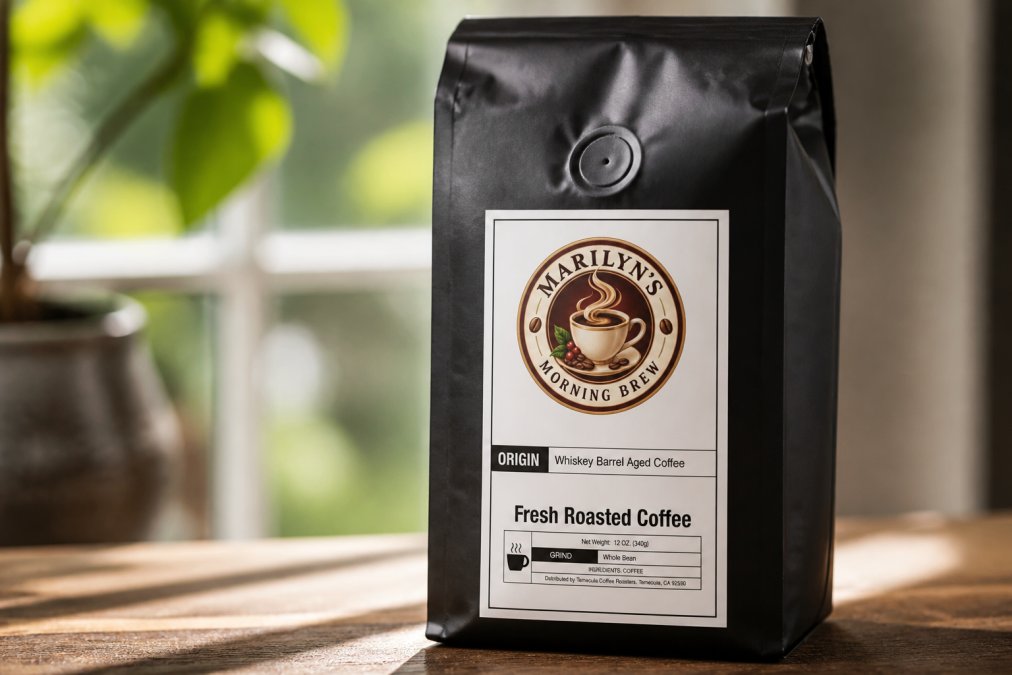
The difference between coffee that ships in two days versus ten days is measurable in the cup. Fast shipping preserves the delicate balance of flavor compounds that make specialty coffee worth buying. Slow shipping doesn't ruin coffee entirely, it just flattens it. The brightness fades. The complexity mutes. What should taste vibrant tastes muted and one-dimensional.
This is where the supply chain becomes personal. When you order from a local roaster with fast shipping, you're not just paying for convenience. You're paying to actually taste what the roaster roasted. Everything else is compromise.
The Coffee Degassing Process During Transit
Degassing is the silent killer of coffee freshness during shipping. Immediately after roasting, coffee beans release carbon dioxide, a lot of it. This process continues for days and weeks. The beans need to degas, but how they degas and where they degas determines what flavor you eventually experience.
Coffee bags include one-way valves specifically to manage degassing during transit. These valves let CO2 escape without letting oxygen in. Without them, pressure would build inside the bag and split the seams. But here's what most people don't understand: the degassing window is where coffee develops its optimal flavor.
What Happens in the First 24-48 Hours
The first 24 to 48 hours after roasting are critical (peer-reviewed research). This is when the beans are actively releasing CO2 and still volatile, literally. The aromatic compounds are at their peak. If your coffee ships during this window and arrives quickly, you're capturing coffee at its most expressive.
Roasters know this. Some deliberately hold coffee for a few days post-roast before shipping, allowing the initial aggressive degassing to subside. This prevents stale air from entering the bag during transit. But the trade-off is time. Every day you wait for the roaster to hold the beans is a day you're not drinking them.
Fast shipping solves this problem. If coffee ships within 48 hours of roasting, it arrives while still in the prime degassing window. The one-way valve does its job. You open the bag, and the coffee still has most of its aromatic compounds intact. This is the experience Marilyn's Morning Brew prioritizes, getting coffee to you while it's still expressing itself fully.
Extended Transit and Flavor Loss
When coffee takes 7 to 14 days to arrive, the degassing process is largely complete by the time you open the bag. The beans have already released most of their CO2. More importantly, oxidation has progressed significantly. The volatile oils that create brightness and complexity have begun to oxidize and break down.
Extended transit doesn't just delay freshness. It actively degrades it. Oxidation is a chemical process that accelerates over time, especially if temperature and humidity fluctuate during shipping. A two-week journey through various warehouses and distribution centers is far worse for coffee than a two-day direct shipment.
This is why sea freight, while economical for bulk commercial coffee, isn't ideal for specialty coffee destined for home consumption. The journey takes weeks. By the time the coffee reaches a distributor, then a retailer, then your home, it's already lost significant flavor. Air freight costs more, but for specialty coffee, the speed preservation is worth it.
Green Coffee vs. Roasted Coffee Shipping Requirements
Green coffee and roasted coffee have completely different shipping needs, and understanding this distinction clarifies why speed matters differently for each.
Green coffee, unroasted beans, is stable. It can sit in warehouses for months without significant degradation. Green beans have low moisture content and haven't undergone the chemical changes that roasting triggers. They're dormant, essentially. This is why green coffee can be shipped via sea freight without concern. The journey takes weeks or months, but the beans arrive essentially unchanged.
Roasted coffee is the opposite. Roasting fundamentally alters the bean's chemistry. It creates the flavor compounds, the oils, the complexity you're paying for. But it also activates oxidation. The clock starts ticking the moment roasting finishes. Roasted coffee needs to reach you quickly, or you're drinking degraded product.
This is why roasted-to-order coffee is a game-changer for home consumers. The roaster roasts, ships immediately, and the coffee arrives while still fresh. There's no distributor holding it. There's no retailer's shelf time. There's no mystery about how old it is.
How to Tell If Coffee Is Fresh When It Arrives
Freshness is visible and tangible. When coffee arrives fresh, you'll notice it immediately.
Fresh roasted coffee has visible oils on the bean surface, a glossy sheen that indicates volatile compounds are still present. If beans look dull and dry, oxidation has progressed. The color also matters. Fresh coffee has a rich, uniform brown color. Older coffee develops a grayish cast as oxidation dulls the surface.
When you open a fresh bag, you'll smell it before you see it. The aroma should be intense and complex, not musty or flat. If the smell is muted, the aromatic compounds have already escaped or oxidized. This is the most reliable indicator. Your nose knows freshness better than any label.
Degassing also signals freshness. A fresh bag will feel slightly puffy if it arrived within a few days of roasting. This is normal and good, it means CO2 is still being released. If the bag feels completely flat and limp, degassing is complete and oxidation has progressed further than ideal.
The roast date matters, but it's not the whole story. Coffee roasted three weeks ago that shipped via air freight and arrived in two days is fresher than coffee roasted one week ago that sat in a warehouse for ten days. Speed of delivery matters as much as the roast date itself.
Environmental Factors: Temperature and Humidity Control
Temperature and humidity during transit directly impact how fast coffee oxidizes. These aren't minor variables, they're the difference between coffee that tastes bright and coffee that tastes flat.
Heat accelerates oxidation dramatically. Coffee exposed to temperatures above 75°F during transit degrades faster than coffee kept cool (peer-reviewed research). Humidity does the opposite, high humidity can cause moisture to enter the bag if the seal isn't perfect, which accelerates staling and can even introduce mold risk. Low humidity is safer, but temperature control is the priority.
Professional coffee shippers understand this. Quality roasters use insulated packaging and, for longer journeys, temperature-controlled shipping. This costs more than standard shipping, but it's the only way to preserve coffee quality over extended distances. If a roaster is shipping via standard ground shipping without temperature control, they're accepting significant quality loss.
Marilyn's Morning Brew prioritizes fast shipping specifically because speed eliminates the need for extensive temperature management. Two-day delivery means coffee doesn't sit in hot trucks or warehouses. It goes from roaster to your door quickly, before environmental exposure can do serious damage.
Best Way to Store Coffee Beans After Delivery
Once coffee arrives, storage becomes your responsibility. How you store it determines how long it stays fresh.
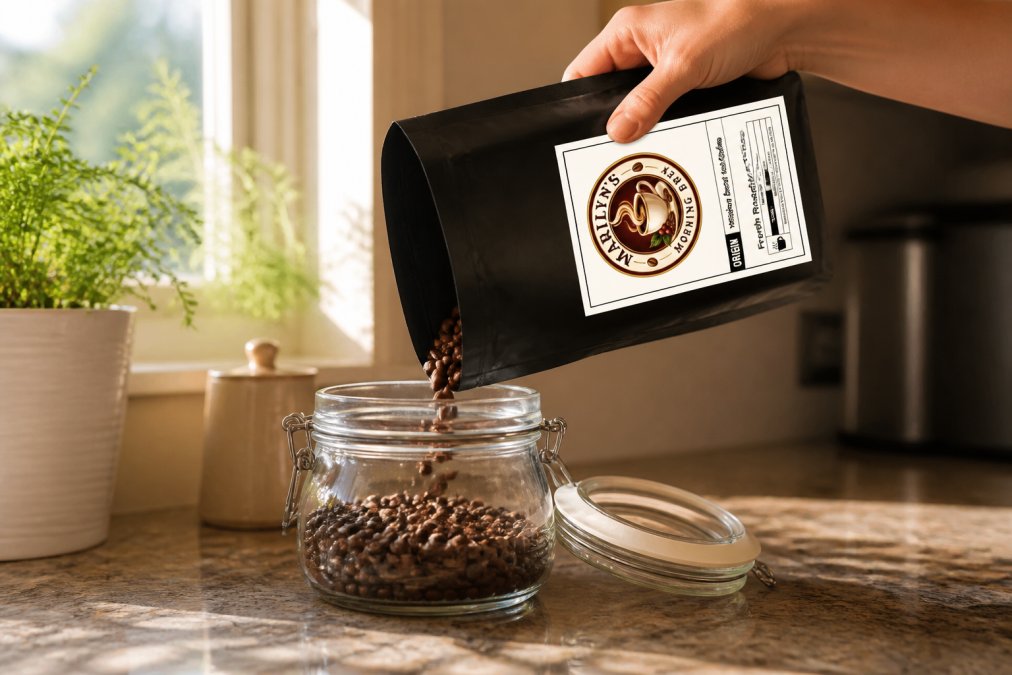
The enemy of stored coffee is air, light, and heat, in that order. Oxygen causes oxidation. Light degrades flavor compounds through photodegradation. Heat accelerates both processes. An airtight container in a cool, dark place is the gold standard.
Don't store coffee in the freezer unless you're storing it for months. Freezing and thawing create condensation that introduces moisture, which accelerates staling faster than room-temperature storage. Room temperature in a dark cabinet is ideal. An airtight container, glass or opaque plastic, keeps oxygen out and light out. Some people use the original bag if it has a good seal and you fold it tightly, but a dedicated container is more reliable.
Whole beans stay fresh longer than ground coffee (peer-reviewed research). If you grind before storage, you've exponentially increased surface area exposed to oxygen. Grind immediately before brewing. This simple step preserves more flavor than almost anything else you can do.
Buy only what you'll drink in two to four weeks. This is the real secret. Coffee doesn't stay optimally fresh forever, no matter how well you store it. Buying smaller quantities more frequently ensures you're always drinking relatively fresh coffee. This is why subscriptions work, they keep you on a regular cadence of fresh deliveries.
Air Freight vs. Sea Freight for Specialty Coffee
The choice between air and sea freight fundamentally determines coffee quality for long-distance shipments.
Sea freight is economical. A container ship takes 3 to 4 weeks to cross the ocean, but it costs a fraction of air freight. For bulk commercial coffee destined for large roasters or distributors, sea freight makes sense. The volume justifies the time. But for specialty coffee destined for individual consumers, sea freight is a quality killer.
Air freight gets coffee across the country or across the world in days. It costs more per pound, but for specialty coffee, the cost is justified. Coffee that ships air freight arrives while still in the prime flavor window. It hasn't spent weeks in a container exposed to temperature fluctuations, salt air, and the general chaos of ocean shipping.
This is why specialty coffee roasters increasingly use air freight for direct-to-consumer shipments. They're not doing it for fun, they're doing it because they know their coffee will taste better when it arrives quickly. The roaster's reputation depends on the coffee tasting good when you open the bag.
For anyone ordering specialty coffee, understanding this distinction matters. If a roaster is using sea freight or standard ground shipping for roasted coffee, they're either cutting costs at the expense of quality or they don't fully understand how quickly roasted coffee degrades. Fast, direct shipping is the only way to preserve the investment you're making in premium beans.
Why Roasted-to-Order Coffee Stays Fresher Longer
Roasted-to-order is the antidote to every freshness problem in the coffee supply chain.
When you order coffee and it's roasted after you order it, the timeline is compressed. There's no inventory sitting in a warehouse. There's no distributor's shelf time. There's no guessing about how old the coffee is. The roaster roasts on demand, ships immediately, and you receive coffee at peak freshness.
This model eliminates the middle steps that degrade quality. Traditional coffee, even premium coffee, passes through multiple hands before reaching you. Roaster to distributor to retailer to your home. Each step adds time. Each day of time adds oxidation. Roasted-to-order skips those steps entirely.
The freshness advantage is measurable. Coffee roasted to order and shipped within 48 hours tastes noticeably brighter, more complex, and more alive than coffee that's been sitting in a supply chain for weeks. The difference isn't subtle. It's the difference between tasting what the roaster intended and tasting what's left after oxidation has done its work.
This is why Marilyn's Morning Brew roasts every order to specification. It's not a marketing gimmick. It's the most direct path to the freshest coffee possible. When you order, we roast. When we roast, we ship. When you receive it, it's still expressing itself fully. This is the promise of roasted-to-order, and it's why shipping speed matters so profoundly.
| Shipping Method | Transit Time | Temperature Control | Oxidation Risk | Best For |
|---|---|---|---|---|
| Air Freight (Direct) | 1-3 days | Minimal | Low | Specialty coffee, home consumers |
| Ground Shipping (Standard) | 5-10 days | None | High | Budget-conscious buyers accepting quality trade-off |
| Sea Freight | 21-35 days | Limited | Very High | Bulk commercial orders, not specialty |
| Roasted-to-Order + Fast Shipping | 2-4 days | Minimal | Lowest | Maximum freshness, premium experience |
When you open a bag of coffee, you're opening the result of weeks or months of work, from farming to roasting. Shipping speed determines whether you're tasting that work or tasting what's left after oxidation has claimed it. At Marilyn's Morning Brew, we roast to order and ship fast because we know that freshness isn't negotiable. Our roasted-to-order coffee process preserves the flavor compounds that make specialty coffee worth drinking. Order today and experience coffee at its peak.
Frequently Asked Questions
Q: Does shipping speed affect coffee quality?
A: Yes, significantly. Faster shipping preserves aromatic compounds and volatile oils that degrade during transit. Coffee begins losing flavor immediately after roasting as oxidation occurs. Slower shipments expose beans to temperature fluctuations, humidity, and extended oxygen exposure, all of which accelerate flavor degradation. Roasted-to-order coffee shipped within a few days retains noticeably more brightness and complexity than coffee that spends weeks in transit.
Q: How can I tell if coffee is fresh when it arrives?
A: Fresh roasted coffee should feel slightly oily to the touch and smell intensely aromatic, this indicates volatile oils are still present. Check the roast date on the bag; coffee is at peak flavor within a few days after roasting. Listen for a faint crackling sound when you open the bag, which signals active degassing. Stale coffee appears dull and dry, smells flat, and produces a weak, thin cup. If your coffee arrived more than a few weeks after roasting, freshness has already declined.
Q: What is the coffee degassing process and why does it matter during shipping?
A: Degassing is the release of carbon dioxide from freshly roasted beans, a natural process that begins immediately after roasting and peaks within the first 24-48 hours. This is why specialty coffee bags have one-way valves: they let gas escape without letting oxygen in. During shipping, degassing happens continuously, and if beans are exposed to external oxygen or temperature swings, oxidation accelerates alongside degassing, destroying aromatic compounds. Fast shipping minimizes this window, preserving the volatile oils that define specialty coffee flavor.
Q: How should I store coffee beans after they arrive to keep them fresh?
A: Store beans in an airtight container away from heat, light, and moisture. A sealed glass jar or opaque airtight canister works best. Keep it at room temperature, not in the refrigerator or freezer, which introduces moisture when beans are removed and resealed. Avoid clear containers that expose beans to light, which degrades flavor. Use beans within a few weeks of the roast date for peak quality. If ordering multiple times monthly, buy smaller quantities more frequently rather than stockpiling, which ensures you always have fresh beans on hand.
This article was written using GrandRanker