

Best Coffee Beans for Quiet Mornings
Table of Contents
- Best Coffee Beans for Quiet Mornings: Top Picks
- Best Coffee Beans for Home Workers
- How to Brew Coffee Quietly at Home
- Low Acidity Coffee Beans for Sensitive Stomachs
- Understanding Roast Levels for a Smooth Morning Cup
- How to Store Coffee Beans for Maximum Freshness
- Conclusion
Last Updated: August 26, 2026
Best Coffee Beans for Quiet Mornings: Top Picks
A peaceful morning doesn't have to mean sacrificing great coffee. Many remote workers and early risers face a real tension: they want premium, flavorful coffee but need to brew it without waking others or disrupting their own quiet routine. The solution isn't finding silence, it's choosing the right beans paired with quiet brewing methods.
At Marilyn's Morning Brew, we understand that the best coffee beans for quiet mornings aren't just about flavor. They're about the entire experience: smooth extraction that doesn't demand aggressive brewing, low acidity that won't jolt your stomach, and beans fresh enough to brew predictably without experimentation. Below, we'll show you exactly which beans work best for a silent morning ritual, how to brew without noise, and why freshness matters more than roast level when quiet is your priority.

Quick Comparison Table
| Coffee | Roast Level | Best For | Tasting Notes | Price |
|---|---|---|---|---|
| House Blend | Medium | All brewing methods | Nutty, chocolate, citrus | $23.99 |
| Brazil Santos | Medium | Smooth morning cups | Cocoa, elegant finish | $23.99 |
| Peru | Medium | Balanced flavor | Salted caramel, citrus | $23.99 |
| Costa Rica | Medium | Sweet, approachable | Apple, raisin, honey | $23.99 |
| Peru Decaf | Medium | Evening or sensitive stomachs | Caramel, citrus | $23.99 |
Best Coffee Beans for Home Workers
The ideal coffee for home workers strikes a balance between quality and consistency. You need beans that brew reliably without demanding your full attention, deliver smooth flavor that sustains focus, and stay fresh long enough to get through your week without staling.
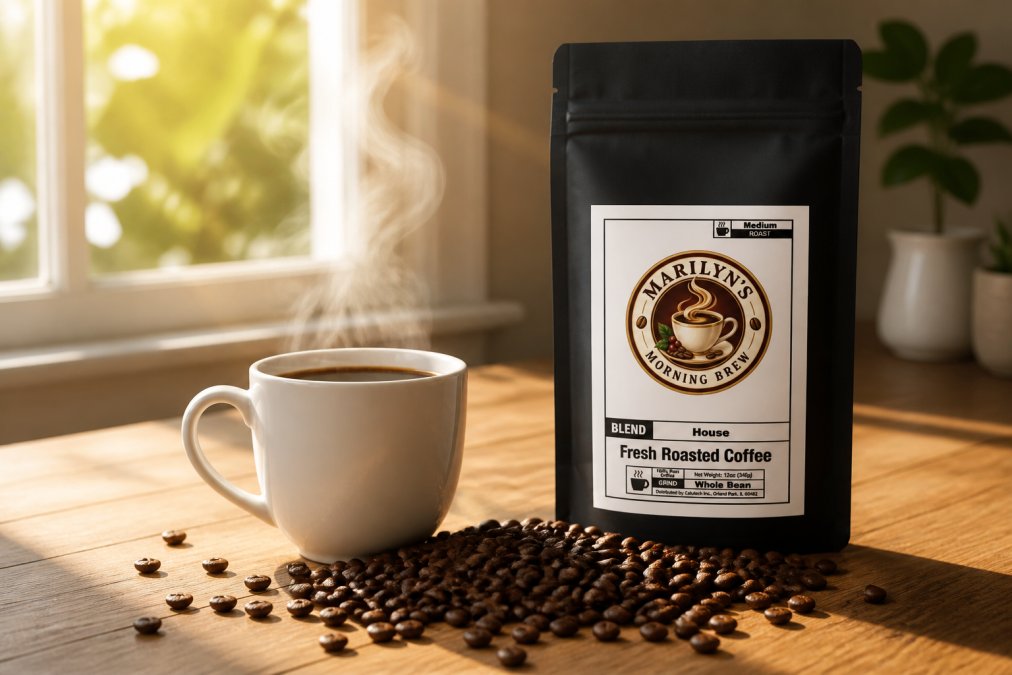
Marilyn's Morning Brew's House Blend ($23.99) is specifically designed for this scenario. A medium-roast blend of Central and South American coffees, it delivers a smooth, clean cup with nutty and chocolate notes balanced by mild citrus. The medium roast level means it works equally well in a drip maker, French press, or pour-over without requiring precise technique. Home workers appreciate that this blend tastes consistent day after day, no surprises, no weak batches.
For those seeking a single-origin option, Brazil Santos ($23.99) offers an elegant, smooth cup with cocoa notes. Grown in volcanic loam at moderate altitude, this coffee has a naturally lower acidity than many African origins, which means it won't cause afternoon stomach discomfort even if you're on your third cup by noon. The pulped-natural processing adds subtle sweetness without overwhelming the palate.

Colombia ($23.99) appeals to home workers who want more complexity. Smallholder farmers from Medellin grow these beans at higher altitude, creating a coffee with dried orange, berry, and chocolate notes. The fully washed process and solar drying create a clean, bright finish that feels refined without being pretentious. It's the kind of coffee that makes a 2 PM slump feel less inevitable.
How to Brew Coffee Quietly at Home
Quiet brewing isn't about the beans alone, it's about matching your brewing method to your need for silence. A few techniques make a measurable difference.
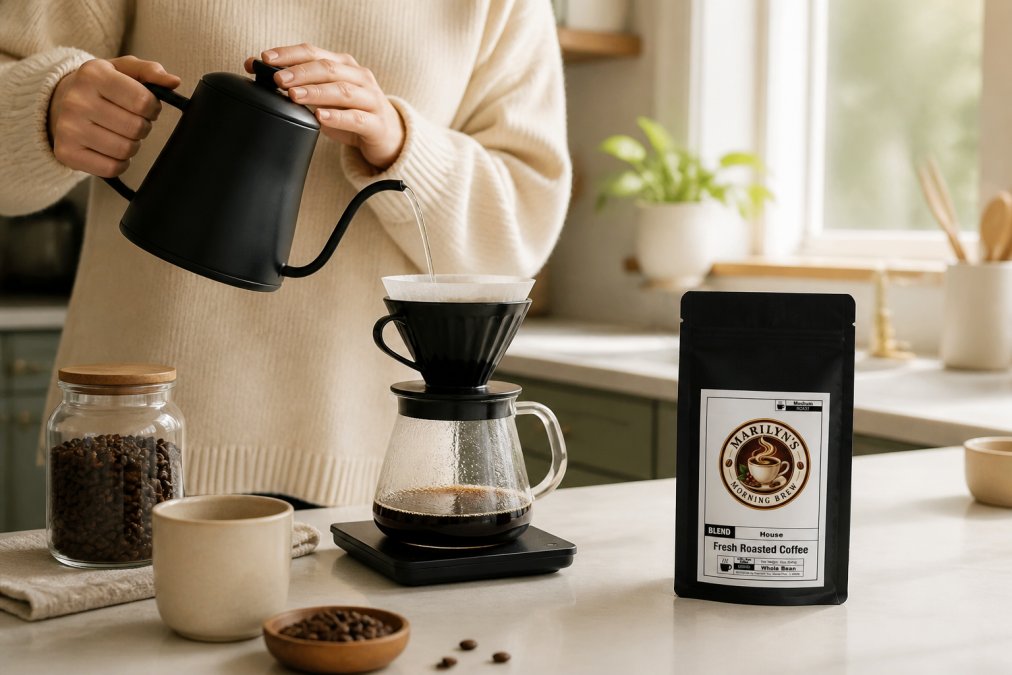
Pour-over brewing is the quietest method for most home setups. Unlike drip machines with their gurgling reservoirs and cycling pumps, a pour-over involves simply pouring hot water over grounds in a filter. The water flows silently through the coffee, and the only sound is the gentle pour itself. Use a gooseneck kettle with a slow, controlled pour, and you'll hear almost nothing. The Marilyn's Morning Brew medium-roast beans work beautifully here because they don't require aggressive water temperature or extended brewing time.
French press brewing ranks second for quiet operation. The immersion method, steeping grounds in hot water, produces no mechanical noise. The only sounds are the initial pour and the final plunge, both of which you control completely. A medium roast like the House Blend or Brazil Santos brews smoothly in a French press without over-extracting, which keeps the cup clean and prevents bitterness that comes from aggressive pressing.
Avoid these loud methods if quiet mornings matter:
- Automatic drip machines (pump noise, water cascading, heating element cycling)
- Espresso machines (pump pressure, steam wand hissing, grinder noise if grinding fresh)
- Moka pots on stovetops (heat cycling, pressure building, steam release)
Grind timing matters more than you'd think. Grinding fresh beans immediately before brewing creates the most noise, a burr grinder can run for 30-60 seconds at high volume. If quiet mornings are non-negotiable, grind your beans the night before and store them in an airtight container. Yes, you lose some aromatic volatility, but the quietness trade-off is worth it for many home workers. Alternatively, order pre-ground coffee if your supplier offers it. Marilyn's Morning Brew can grind your beans to your preferred coarseness before shipping, eliminating the morning noise entirely.
Water temperature and timing affect noise indirectly. Water just below boiling (195-205°F) extracts smoothly without producing aggressive steam or bubbling sounds (peer-reviewed research). Let your kettle cool for 30 seconds after boiling before pouring. This small pause reduces hissing and prevents the violent bubbling that occurs when boiling water hits cold grounds.
Low Acidity Coffee Beans for Sensitive Stomachs
Not everyone can tolerate high-acidity coffee, especially on an empty stomach or during back-to-back meetings. Low-acidity beans don't just taste smoother, they're gentler on digestion and won't cause the afternoon stomach upset that derails focus.
Acidity in coffee comes from chlorogenic acid and other compounds that develop during roasting. Medium roasts naturally have lower acidity than light roasts because the longer roasting time breaks down these acids (peer-reviewed research). Dark roasts have even lower acidity, but many people find them taste flat or bitter. A well-executed medium roast hits the sweet spot: lower acidity without sacrificing flavor.
Brazil Santos stands out for sensitive stomachs. Brazilian coffees grown in volcanic loam soil tend to have inherently lower acidity than coffees from other regions. The pulped-natural processing, where the fruit is partially dried before removal, adds body and sweetness while reducing sharp, acidic notes. A cup of Brazil Santos tastes smooth and cocoa-forward without the citrus bite that triggers acid reflux in many people.
Peru ($23.99) is another excellent choice for acid-sensitive drinkers. Grown at altitudes between 1,100 and 1,700 meters in volcanic clay minerals, this coffee develops salted caramel and silky sweetness with just a hint of citrus. The gully-washed, sun-dried process creates a balanced cup that won't sit heavy in your stomach. Many people who've switched from acidic light roasts to Peru report that afternoon discomfort simply disappears.
For those avoiding caffeine altogether, Peru Decaf ($23.99) delivers the same low-acidity profile using the Swiss Water Process, which removes caffeine without stripping flavor. The decaffeination process actually reduces acidity further, making this the gentlest option available. You get salted caramel and citrus notes without the digestive consequences.
Understanding Roast Levels for a Smooth Morning Cup
Roast level determines more than just color, it shapes flavor development, acidity, body, and how the coffee behaves during brewing. For quiet mornings, medium roast is the clear winner.
Light roasts preserve origin characteristics and retain higher acidity. The beans finish roasting before sugars fully caramelize, so you taste bright, fruity, sometimes floral notes. Light roasts also demand precise brewing: water temperature, grind size, and contact time all matter significantly. This precision is fine for coffee enthusiasts on weekends, but it's friction for weekday mornings when you need reliability. Light roasts also taste sharp and acidic, which disrupts quiet mornings if you're acid-sensitive.
Medium roasts balance origin flavor with smooth, approachable taste. The roasting process develops sugars into caramel and chocolate notes while reducing harsh acidity. Medium roasts are forgiving, they brew well across a range of temperatures and grind sizes. A medium roast from Marilyn's Morning Brew tastes consistent whether you brew it in a pour-over or French press, whether you use water at 195°F or 205°F. This consistency is invaluable for home workers who need the same reliable cup every morning.
Dark roasts push caramelization further, creating bold, smoky, sometimes bitter flavors. The extended roasting time reduces acidity to its lowest point, making dark roasts the gentlest option for sensitive stomachs. However, dark roasts can taste one-dimensional, heavy on smoke or char, light on origin character. Many people find them less interesting than medium roasts. Dark roasts also tend to release oils on the bean surface, which can leave residue in your brewer and require more frequent cleaning.
For quiet mornings specifically, medium roast wins because it requires no technique adjustment, tastes smooth without being boring, and pairs well with silent brewing methods. The House Blend, Brazil Santos, Colombia, Costa Rica, and Peru are all medium roasts for exactly this reason.

How to Store Coffee Beans for Maximum Freshness
Freshness determines whether your beans taste vibrant or stale, and stale beans require longer brewing time, which increases noise and extraction problems. Proper storage is the difference between a great cup and a disappointing one.
Store beans in an airtight container away from light, heat, and moisture. Oxygen, light, and temperature fluctuations all degrade coffee rapidly. A sealed, opaque container in a cool, dark cabinet is ideal. Avoid clear glass jars on open shelves, the freezer, or the refrigerator. Cold temperatures cause condensation when you open the container, introducing moisture that accelerates staling.
Buy whole beans and grind just before brewing. Ground coffee stales within hours because grinding dramatically increases surface area exposed to oxygen. Whole beans stay fresh for 2-4 weeks after roasting if stored properly. Marilyn's Morning Brew roasts to order and ships immediately, so your beans arrive at peak freshness. This freshness advantage is why ordering online makes sense, grocery store beans have already lost 1-2 weeks of their peak window by the time you buy them.
Use the roast date, not the expiration date. Coffee doesn't "expire", it gradually loses flavor and aroma. Peak flavor occurs 3-7 days after roasting, when CO2 has settled but volatile compounds remain intact (peer-reviewed research). Beans are still excellent for 2-4 weeks. After 4 weeks, they're drinkable but noticeably flatter. Marilyn's Morning Brew includes the roast date on every bag, so you know exactly where you are in the freshness window.
Buy in quantities you'll use within 3-4 weeks. A 12-ounce bag brewed daily lasts about 2 weeks, keeping you in the optimal freshness range. Buying larger quantities saves money per ounce but risks staling before you finish the bag. For home workers brewing multiple cups daily, a weekly or bi-weekly order makes more sense than a monthly bulk purchase.
Choosing the best coffee beans for quiet mornings comes down to three factors: selecting medium-roast beans that brew smoothly without demanding technique, matching your brewing method to your noise constraints, and keeping beans fresh from roast to cup. Marilyn's Morning Brew's House Blend, Brazil Santos, and Peru deliver on all three fronts, they arrive roasted to order, taste consistently excellent across brewing methods, and work beautifully in silent pour-over or French press setups. Start with the House Blend if you want a reliable, approachable daily coffee, or try the Best Sellers Sample Pack to explore single-origin options before committing. Fresh, thoughtfully roasted beans make the difference between a quiet morning that feels rushed and one that feels intentional.
Frequently Asked Questions
What makes the best coffee beans for quiet mornings?
The best coffee beans for quiet mornings combine smooth flavor profiles with low acidity and minimal noise during brewing. Medium-roast arabica beans with balanced body and mouthfeel create a rich cup without harshness. Freshly roasted whole beans ground just before brewing deliver maximum aroma and flavor. Single-origin beans from regions like Brazil and Costa Rica offer naturally smooth, chocolate-forward tasting notes ideal for a peaceful morning ritual.
Why are low acidity coffee beans better for sensitive stomachs?
Low acidity coffee beans produce less stomach irritation because they have a naturally lower pH level. Brazilian and Peruvian beans tend to be gentler on sensitive digestive systems compared to highly acidic African or Asian varieties. The pulped natural and sun-dried processing methods used for beans like Peru and Brazil Santos further reduce acidity. Choosing medium-roast beans also helps, as darker roasts can break down acids during roasting, creating a smoother, less acidic final cup.
How does roast level affect the flavor profile of morning coffee?
Medium-roast coffee beans preserve the origin's natural flavor characteristics while developing balanced sweetness and body. Light roasts retain more acidity and bright, fruity notes; dark roasts emphasize bold, smoky flavors and reduce perceived acidity. For quiet mornings, medium roasts strike the ideal balance, delivering smooth chocolate, nutty, and caramel tasting notes without overwhelming bitterness. Fresh-roasted medium beans maintain optimal extraction when brewed with the right grind size and water temperature.
What's the difference between whole bean and pre-ground coffee for home workers?
Whole beans stay fresher longer and deliver superior aroma and flavor when ground just before brewing. Pre-ground coffee loses volatile aromatics within days of grinding, resulting in a flat, stale cup. For home workers who brew multiple times daily, whole beans maintain consistency and richness across all cups. Grinding whole beans does create noise, but using a burr grinder set to coarse settings and brewing quietly with methods like pour-over or French press minimizes disruption while maximizing flavor.
This article was written using GrandRanker