

Buy Freshly Roasted Coffee Beans Online: 2026 Guide
Table of Contents
- Why Freshness Decides Everything When You Buy Coffee Beans Online
- Roasted-to-Order Coffee Benefits: What Changes After the Roast Date
- How to Choose Coffee Roast Profiles for Your Brew Method
- Single Origin vs. Blends: Which Should You Order?
- How to Store Coffee Beans for Maximum Freshness
- Shipping Speed vs. Degassing Time: What Fast Delivery Really Means
- What to Look For in a Fresh Coffee Subscription
- Sourcing, Sustainability, and Small Batch Roasting
- Frequently Asked Questions
Last Updated: September 15, 2026
Why Freshness Decides Everything When You Buy Coffee Beans Online
When you buy freshly roasted coffee beans online, the roast date matters more than origin, price, or packaging. Coffee loses its best flavors within days of roasting, so a bag that sat on a shelf for months can never match one shipped straight from the roaster. This guide explains how to spot genuinely fresh beans, how roast profiles change what you taste, and how to store coffee well.
Freshly roasted coffee is roasted within days, not months, of reaching your door. The window between roast and grind is where flavor lives or dies.
Freshness is a measurable chemical process. Right after roasting, beans release carbon dioxide in a phase called degassing. Too soon and your brew tastes flat and gassy; too late and the aromatics have faded. The sweet spot sits in the days just after the roast date.
That reshapes how you shop: instead of hunting for the fanciest label, you hunt for a date. Below, we’ll show you how to read that date, match a roast to your brewer, and choose a subscription that keeps the good stuff arriving fresh.
Roasted-to-Order Coffee Benefits: What Changes After the Roast Date
Roasted-to-order coffee is roasted only after you order, so it reaches you near peak flavor rather than after weeks in a warehouse. The difference shows up in aroma first, then in the cup.
Most supermarket coffee carries a "best by" date, which tells you almost nothing. A roast date tells you everything. A common mistake is trusting that "best by" stamp and assuming the coffee is fresh; in practice, those dates are often set a year or more after roasting.
Degassing: Why the First 72 Hours Matter
After roasting, beans need roughly 72 hours to release enough carbon dioxide to brew well (Coffee Decoded: What is “freshly roasted” coffee?). Brew too early and the gas interferes with extraction, producing a thin, uneven cup; wait a few days and flavors settle into balance.
This is why the freshest possible coffee isn't always the best cup: a bag roasted yesterday may taste flatter than one roasted five days ago. Good roasters ship at the right moment, not the fastest one.
How to Read a Roast Date Before You Buy
Look for a printed roast date, not just a "best by" date. If a seller only shows the latter, ask when the coffee was roasted.
How to Choose Coffee Roast Profiles for Your Brew Method
The right roast profile depends on your brewing method and taste, not on which roast sounds most premium. Light, medium, and dark roasts extract differently, so matching them to your equipment determines whether the bag tastes good at home.
Light, Medium, and Dark: Taste and Caffeine Differences
Roast profile refers to how long and how dark a roaster develops the beans, shaping acidity, body, and flavor. A light roast keeps more origin character, with brighter acidity and fruitier notes. A medium roast balances sweetness and body, suiting most brewers. A dark roast leans bold, smoky, and chocolatey.
Caffeine barely changes across roast levels, despite the belief that darker means stronger. A dark and a light roast bean of the same green coffee contain nearly identical caffeine by weight; the darker bean just weighs less after losing moisture.
Brewing Method Compatibility: Match the Bean to Your Equipment
Each brewer extracts differently, so the same bean can taste bright in one and muddy in another.
| Brew Method | Best Roast Level | Typical Dose | Water Temp | Grind | Why It Works |
|---|---|---|---|---|---|
| Pour-over (V60, Chemex) | Light to medium | 15-18 g per 250 ml | 195-205°F | Medium-fine | Highlights acidity and clarity; light roasts shine |
| Drip machine | Medium | 1-2 tbsp per 6 oz | 195-205°F | Medium | Forgiving; medium roasts stay balanced |
| French press | Medium to dark | 30 g per 500 ml | 195-205°F | Coarse | Full immersion rewards body and sweetness |
| Espresso | Medium to dark | 18-20 g in, 36-40 g out | 200-205°F | Fine | Pressure needs developed sugars; light roasts can taste sour |
| Moka pot | Medium to dark | Fill basket, do not tamp | Just off boil | Fine | Similar to espresso but lower pressure |
| Cold brew | Medium to dark | 1:5 concentrate ratio | Room temp | Coarse | Long steep favors chocolate and caramel notes |
If your coffee tastes sour or thin, the roast is likely too light for your brewer or your grind too coarse. If it tastes bitter or ashy, the roast is likely too dark or your water too hot. Adjust one variable at a time.
Whole Bean vs. Pre-Ground for Shipping and Shelf Life
Whole bean coffee stays fresh far longer than pre-ground because the protective oils and aromatics stay sealed inside the bean. Once ground, coffee stales within days. If you can grind at home, buy whole bean. If convenience wins, buy pre-ground in smaller amounts and use it quickly.
| Roast Level | Flavor Profile | Best Brew Method |
|---|---|---|
| Light | Bright, fruity, higher acidity | Pour-over, drip |
| Medium | Balanced, sweet, nutty | Drip, espresso, French press |
| Dark | Bold, smoky, chocolatey | Espresso, moka pot |
Single Origin vs. Blends: Which Should You Order?
Single origin coffee comes from one region and highlights that place's character, while blends combine beans from multiple regions for balance and consistency. Neither is better; they solve different problems.
Choose single origin when you want to taste what makes a specific farm or region unique. The Specialty Coffee Association's guide to origin and flavor explains how growing region, altitude, and processing shape the cup. Choose a blend when you want a dependable, well-rounded flavor you can count on every morning.
Marilyn’s Morning Brew carries both. The Colombia single origin brings dried orange, berry, and chocolate notes from smallholder farms near Medellín, while the House Blend delivers a smooth, consistent medium roast with nutty and sweet chocolate tasting notes. For anyone new to single origin, the Best Sellers Sample Pack lets you try six coffees in small packs before committing.

How to Store Coffee Beans for Maximum Freshness
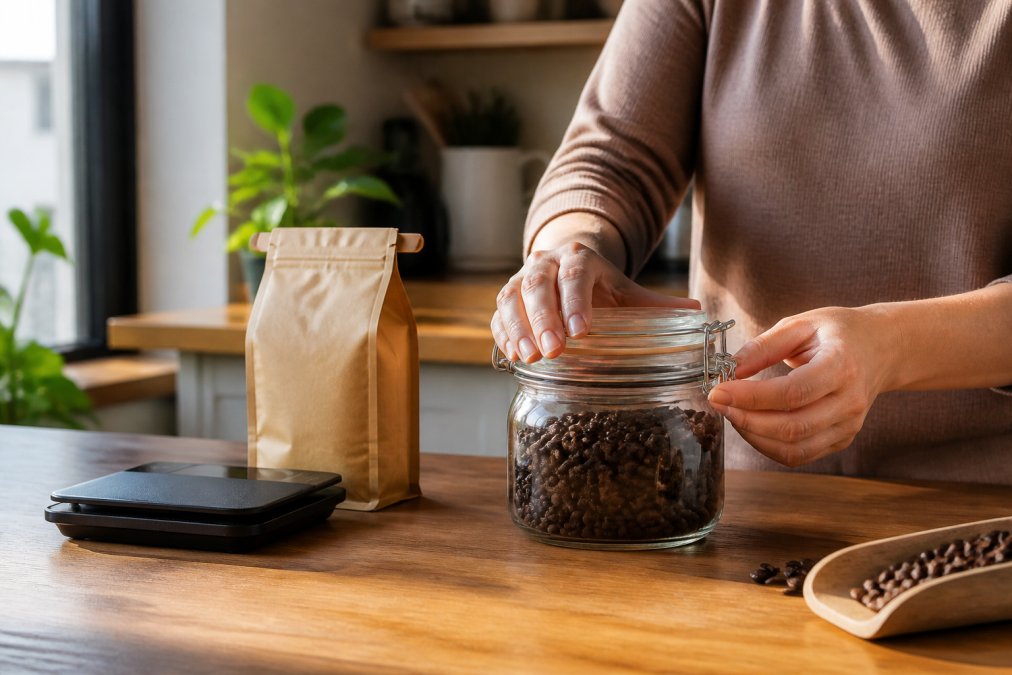
Store coffee beans in an airtight, opaque container at room temperature, away from light, heat, and moisture. Skip the fridge and freezer for daily-use beans; both introduce moisture and odors that ruin flavor.
Roast Date Transparency: Decode the Stamp Before You Store Anything
Most supermarket coffee carries a "best by" date, which tells you almost nothing. A roast date tells you everything. A common mistake is trusting that "best by" stamp and assuming the coffee is fresh; in practice, those dates are often set a year or more after roasting.
Here is how to read what roasters actually print:
- "Roasted on" date, the gold standard. Tells you exactly when the clock started.
- "Best by" date, usually roast date plus 6-12 months. Useless for freshness math.
- Julian or batch codes (e.g., "2345"), day 234 of year 2025. Ask the roaster to decode it.
- No date at all, assume the coffee is old and buy elsewhere.
A trustworthy roaster prints the roast date on every bag and answers questions about it without hesitation.
The Freshness Timeline: What Happens Week by Week
Freshness is a curve, not a moment. For properly stored whole bean coffee:
- Days 0-3, heavy degassing.
Sensory Profile Glossary: What the Tasting Notes Actually Mean
The Storage Checklist
How to store coffee beans for maximum freshness:
Shipping Speed vs. Degassing Time: What Fast Delivery Really Means
What to Look For in a Fresh Coffee Subscription
Look for these features before you subscribe:
Sourcing, Sustainability, and Small Batch Roasting
Frequently Asked Questions
How can you tell if coffee beans are freshly roasted?
The roast date on the bag is the only reliable signal. Look for a printed date rather than a vague "best by" stamp, and aim for beans roasted within the last 7 to 21 days. Freshly roasted coffee also smells bright and complex when you open the bag, and whole beans feel slightly oily or matte depending on the roast level. If a bag lists no roast date at all, assume the coffee is older than you want.
How long do freshly roasted coffee beans stay fresh?
Peak flavor usually falls between 4 and 21 days after roasting. After about 4 to 6 weeks, aroma and acidity fade noticeably even in a sealed bag. Whole bean coffee holds up longer than pre-ground because less surface area is exposed to oxygen. Store beans in an airtight container away from light, heat, and moisture, and buy in quantities you will finish within a few weeks.
Is it better to buy whole bean or pre-ground coffee online?
Whole bean is the better choice for freshness, because grinding exposes the coffee to oxygen and speeds up staling. If you order pre-ground, ask for a grind size matched to your brewing equipment, such as a coarse grind for a French press or a fine grind for espresso. Whole bean gives you the flexibility to adjust grind size as your beans age and to switch brewing methods without reordering.
Does buying coffee online actually result in a fresher cup?
It can, because roasted-to-order sellers ship within days of roasting rather than weeks. The advantage depends on two things: a transparent roast date and shipping speed that gets the bag to you before the degassing window closes. Grocery store beans often sit on shelves for months, so an online order with a recent roast date and fast delivery typically lands in better condition.