

Tips for Maintaining Coffee Bean Flavor Profile
Table of Contents
- Why Coffee Freshness Affects Your Flavor Profile
- How to Store Coffee Beans for Maximum Freshness
- How Long Do Coffee Beans Stay Fresh After Roasting
- Choosing Whole Beans Over Pre-Ground Coffee
- Buying Recently Roasted Coffee and Reading Roast Dates
- Coffee Brewing Tips for Better Flavor Extraction
- Grinding Timing and Common Mistakes to Avoid
- Frequently Asked Questions
Last Updated: October 10, 2026
Why Coffee Freshness Affects Your Flavor Profile
Coffee beans begin losing vibrant flavors immediately after roasting as oxidation and moisture loss break down the compounds that create fruity, chocolatey, or caramel notes. Understanding how freshness impacts your cup is essential to protecting the flavor profile you're investing in, which is why tips for maintaining coffee bean flavor profile are so important.
A bean roasted last week tastes dramatically different from one roasted three months ago. Stale coffee tastes flat, bitter, or dull, while fresh coffee tastes alive.
Tips for maintaining coffee bean flavor profile matter because you can buy the world's best beans, but improper storage will prevent you from tasting what makes them special.
How to Store Coffee Beans for Maximum Freshness
Effective storage keeps oxygen, light, and heat/moisture out. The best container depends on your buying frequency, climate, and storage duration.
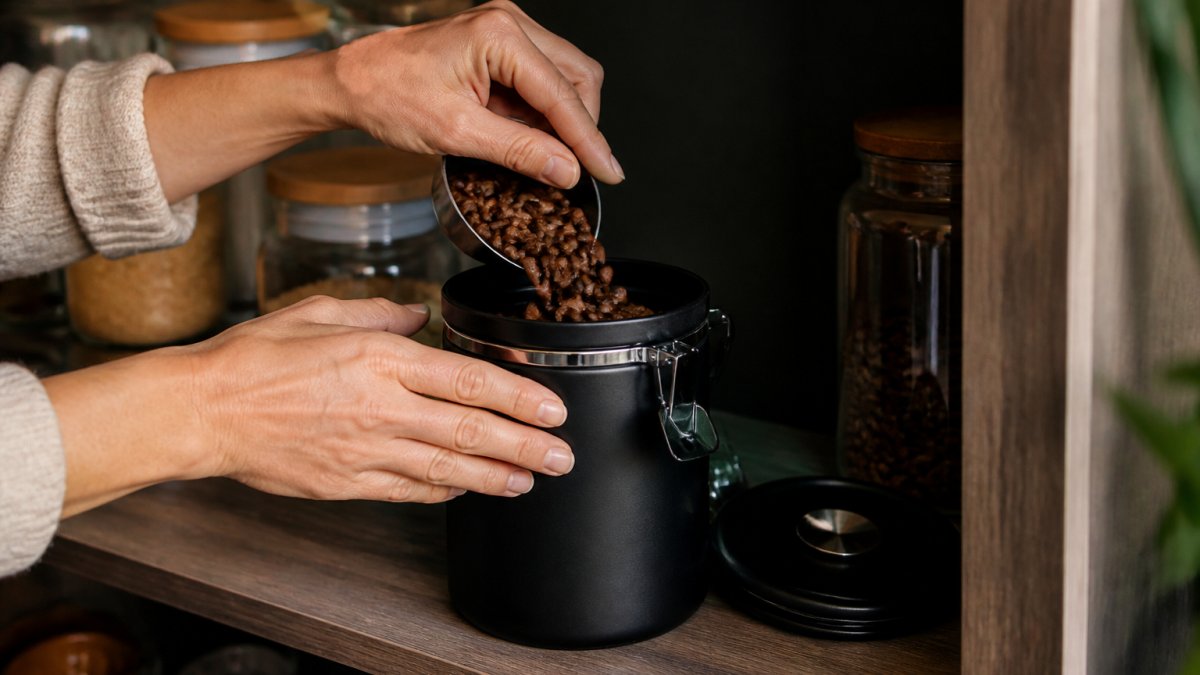
Storage Container Comparison: Trade-Offs and Use Cases
Original one-way-valve bag (from roaster)
- Pros: Designed for coffee storage; one-way valve prevents oxygen entry; opaque; free with purchase.
- Cons: Degrades with repeated opening; valve can fail if damaged; limited durability.
- Best for: Daily drinkers consuming a half-pound within 2-3 weeks.
- Lifespan: Days 5-30 with proper care.
Airtight opaque canister (glass, ceramic, or stainless steel)
- Pros: Durable, reusable, blocks light, creates airtight seal.
- Cons: Upfront cost ($15-40); loses one-way valve (CO₂ builds pressure); not ideal for very long storage.
- Best for: Regular drinkers wanting a permanent solution.
- Lifespan: Days 5-28 at room temperature; days 5-35 in cool storage.
Vacuum-seal bag or container
- Pros: Removes oxygen mechanically; extends freshness; portable.
- Cons: Requires vacuum sealer; can crush beans; more expensive.
- Best for: Occasional drinkers extending freshness without freezing.
- Lifespan: Days 5-45.
Freezer storage (airtight container or bag)
- Pros: Extends freshness 120+ days; stops oxidation; ideal for bulk or infrequent drinkers.
- Cons: Requires proper portioning and thawing; condensation risk; repeated temperature changes damage beans.
- Best for: Bulk purchases or people drinking fewer than 3 cups weekly.
- Lifespan: Days 5-120 when frozen immediately after roasting.
Freezing Beans Safely: Portioning, Packaging, and Thawing
Portioning: Divide beans into 1-2 week portions before freezing. Repeated thawing exposes beans to temperature changes that damage flavor. Use small airtight containers or vacuum-seal bags and label with the roast date.
Packaging: Use airtight containers or vacuum-sealed bags, not regular freezer bags. Minimize headspace in containers and remove excess air from bags.
Thawing: Remove one portion and let it reach room temperature in its sealed container (30-60 minutes). Don't open while cold, condensation will form. Once warm, open and use immediately.
Temperature, Light, and Humidity Control for Room-Temperature Storage
If you're not freezing, these three factors are non-negotiable:
Temperature: Heat speeds up staling. Keep beans at room temperature (65-75°F) away from stoves, ovens, and direct sunlight. A pantry or cabinet away from appliances works well.
Light: Light breaks down flavor compounds. Use opaque containers. If your container is clear, store it in a dark cabinet or drawer.
Humidity: Moisture damages flavor and promotes mold. Keep beans dry. In very humid climates (above 60% relative humidity), prioritize freezing.
How Long Do Coffee Beans Stay Fresh After Roasting
Coffee peaks between 5-14 days after roasting. After two weeks, flavor declines noticeably. By 4-6 weeks, beans taste stale. This timeline depends on storage conditions.
Freshness Timeline by Storage Condition
The roast date matters most. If a bag doesn't show it, that's a red flag, you can't know the beans' age.
Storage conditions change the timeline significantly:
| Storage Condition | Flavor Peak | Still Acceptable | Noticeably Stale |
|---|---|---|---|
| Airtight, cool, dark | Days 5-14 | Days 14-28 | After day 35 |
| Sealed original bag | Days 5-14 | Days 14-30 | After day 40 |
| Open container, room temp | Days 5-10 | Days 10-20 | After day 25 |
| Freezer, airtight | Days 5-14 | Days 14-120 | After day 120 |
How to Diagnose Flavor Loss and Distinguish It from Brewing Problems
Freshness loss shows up in specific, observable ways. Learning to recognize them helps you know whether your beans have actually staled or whether your brewing method needs adjustment.
Aroma test: Freshly roasted beans release a strong, complex aroma when you open the bag. As beans age, that aroma flattens and becomes muted. If you open a bag and smell almost nothing, the beans are likely past their peak.
Crema and bloom: When you brew, fresh beans produce a thick, persistent crema (espresso) or vigorous bloom (pour-over). Stale beans produce thin crema or a weak bloom.
Taste profile shift: Fresh beans taste bright, with distinct tasting notes, fruity, sweet, acidic, or chocolatey depending on origin. As beans age, these notes flatten into a generic, dull taste. Stale beans often taste slightly bitter or papery, even when brewed correctly.
Mouthfeel: Fresh coffee has body and texture. Stale coffee tastes thin and hollow, even at the same brew ratio and temperature.
Buying and Storage Strategy by Your Consumption Rate
The right freshness timeline depends on how fast you drink coffee:
Daily drinkers (7+ cups per week): Buy a half-pound every 1-2 weeks. You'll consume beans during their peak window (days 5-20) and never deal with stale coffee. Storage method matters less because turnover is fast. Even an airtight container at room temperature works fine.
Regular drinkers (3-6 cups per week): Buy a half-pound every 2-3 weeks, or a full pound every 3-4 weeks. Store in an airtight, opaque container in a cool place. You'll stay within the acceptable window (days 5-30) if you buy from a roaster with fast shipping.
Occasional drinkers (1-2 cups per week): Buy a quarter-pound every 2 weeks, or freeze half of a half-pound purchase. Freezing extends your acceptable window to 120 days, making it practical to buy less frequently without sacrificing freshness.
Bulk buyers or gift recipients: If you receive a large quantity or buy in bulk, freezing is your best option. Portion beans into airtight containers or bags (see freezing section below), freeze immediately, and thaw only what you'll use in the next week. This strategy lets you stock up during sales or enjoy gift beans over months instead of weeks.
Choosing Whole Beans Over Pre-Ground Coffee
Ground coffee stales exponentially faster than whole beans. When you grind, you multiply the surface area exposed to oxygen. A whole bean has minimal surface. Ground coffee has enormous surface area. Oxidation accelerates dramatically.
Pre-ground coffee starts degrading within hours of grinding. By the time it reaches your home, it's already lost significant flavor. Whole beans stay fresh for weeks under the same conditions. This is the single biggest difference between a mediocre cup and a good one.
If you want to maintain your coffee bean flavor profile, buy whole beans and grind them right before brewing. This one change transforms your coffee more than any other single decision. It's not complicated. It just requires a grinder.
Buying Recently Roasted Coffee and Reading Roast Dates
The roast date is your most important piece of information. It tells you exactly how old the beans are and whether they're in their flavor peak. Always buy from roasters who print the date clearly.
Most specialty roasters ship within 2-3 days of roasting. This means the beans arrive at your door still in that sweet flavor window. Fast shipping matters. If a roaster takes a week to ship, you've lost valuable days of freshness.
Marilyn's Morning Brew roasts to order and ships fast specifically to get fresh beans to you quickly. You get beans roasted days before arrival, not weeks or months. This is why ordering directly from a roaster beats buying from a middleman or grocery store every time.
When you receive beans, check the roast date immediately. If it's older than you expected, contact the roaster. Fresh delivery is part of what you're paying for.
Coffee Brewing Tips for Better Flavor Extraction
Even perfectly fresh, perfectly stored beans won't taste good if you brew them wrong. Water temperature, brew time, and coffee-to-water ratio all affect how much flavor makes it into your cup.
Use water between 195-205 degrees Fahrenheit. Boiling water burns the coffee and tastes harsh. Too-cool water under-extracts and tastes weak. A simple kettle with a temperature gauge takes the guesswork out.
The coffee-to-water ratio matters more than most people think. A common starting point is one part coffee to sixteen parts water by weight. This ratio works for most brewing methods. Too little coffee tastes thin. Too much tastes bitter.
Brew time varies by method. French press typically takes 4 minutes. Pour-over takes 3-4 minutes. Espresso takes 25-30 seconds. Longer brew times extract more flavor, but too long pulls out bitter compounds. Find the sweet spot for your method and stick with it.
Grinding Timing and Common Mistakes to Avoid
Grind immediately before brewing. This is the most important rule. Whole beans stay fresh for weeks. Ground coffee stays fresh for hours. The difference is massive.
A common mistake is buying a grinder and then using it inconsistently. Grind fresh every single time. Yes, it takes an extra minute. That minute transforms your coffee.
Another mistake is grinding too fine or too coarse. Different brewing methods need different grind sizes. French press needs coarse grounds. Espresso needs fine grounds. Pour-over needs medium grounds. A burr grinder with grind-size settings gives you control.
Many people also make the mistake of storing ground coffee in the freezer thinking it preserves freshness. It doesn't work the same way as whole beans.
Maintaining your coffee bean flavor profile comes down to three habits: buy whole beans with a visible roast date, store them in an airtight opaque container in a cool dark place, and grind immediately before brewing.
When you're ready to experience what fresh, properly stored coffee actually tastes like, Marilyn's Morning Brew delivers beans roasted to order with visible roast dates and fast shipping. Our single-origin options like Brazil Santos and Ethiopia Natural showcase how flavor shines through when freshness is protected from roast to cup.


Frequently Asked Questions
How long do coffee beans stay fresh after roasting?
Whole coffee beans maintain peak flavor for 2-4 weeks after roasting, though they remain drinkable for up to 3-4 months. The flavor profile deteriorates most rapidly in the first week as oxidation occurs. Freshly roasted beans from specialty roasters like Marilyn's Morning Brew reach your door at their prime, so buying recently roasted coffee and checking the roast date ensures you start with maximum flavor potential. After opening, consume within 2-3 weeks for optimal tasting notes.
What's the best coffee bean storage container?
An opaque, airtight container is essential for maintaining your coffee bean flavor profile. Store the original bag if it has a valve and resealable closure. Keep the container in a cool, dry place away from direct sunlight, heat sources, and humidity. Proper storage in the right container extends freshness significantly.
Does grinding coffee beans ahead of time affect flavor?
Yes, grinding ahead of time accelerates flavor loss. Ground coffee oxidizes rapidly, losing aromatic compounds and developing off-flavors within hours. Whole beans preserve their tasting notes, whether fruity, chocolate, or caramel, for weeks. Grind immediately before brewing to capture the full flavor profile. If you must grind ahead, use an airtight container and brew within 24 hours. This single step makes a noticeable difference in extraction yield and cup quality.
How does roast level affect the flavor profile I should preserve?
Roast level determines the tasting notes you're protecting. Light roasts like Ethiopia Natural showcase fruity and caramel notes, while medium roasts like Brazil Santos emphasize cocoa and smoothness, and dark roasts like Bali Blue highlight dark chocolate and molasses. Each roast level requires the same storage conditions, cool, dry, airtight, and opaque, but understanding your beans' intended profile helps you recognize when storage has degraded them. Buying from specialty roasters ensures you know exactly what flavor you're maintaining.