

Alternatives to Pre-Ground Coffee Beans (2026 Guide)
Table of Contents
- Quick Comparison: Alternatives to Pre-Ground Coffee Beans
- Single-Serve Coffee Capsules: Convenience Without the Staleness
- Instant Coffee and Mushroom Blends: A Different Kind of Alternative
- How to Tell If Coffee Is Fresh: Key Signs to Check
- Best Home Coffee Grinders for Beginners: What to Look For
- How to Store Coffee Beans for Maximum Freshness
- Cost and Quality: Weighing Your Alternatives
- Frequently Asked Questions
Last Updated: September 30, 2026
Quick Comparison: Alternatives to Pre-Ground Coffee Beans
Pre-ground coffee trades freshness for convenience: oxygen hits the grounds the moment the bag opens, and the aromatic compounds that carry a coffee's character fade within days. This guide from Marilyn's Morning Brew ranks the realistic alternatives to pre-ground coffee beans by how well each protects flavor, and what each asks of you.
Single-Serve Coffee Capsules: Convenience Without the Staleness
Single-serve capsules match pre-ground coffee in convenience, but each serving stays sealed until you brew it.
How Capsules Compare to Pre-Ground Coffee
Capsules win on freshness window and dose accuracy; pre-ground wins on price per cup and flexibility. A capsule locks in a fixed dose, removing the guesswork behind inconsistent extraction. Pre-ground lets you adjust your scoop, but every adjustment exposes the whole bag to air.
| Factor | Pre-Ground Coffee | Single-Serve Capsules | Whole Bean |
|---|---|---|---|
| Freshness window after opening | Days | Weeks (sealed) | Weeks |
| Effort per cup | Low | Lowest | Moderate |
| Grind consistency | Fixed at purchase | Fixed and sealed | You control it |
| Cost per cup | Lowest | Higher | Moderate |
| Best for | High volume, low fuss | Solo drinkers, speed | Flavor-focused drinkers |
Instant Coffee and Mushroom Blends: A Different Kind of Alternative
Instant coffee is not a freshness play, it is a solubility play. The grounds are fully extracted and dried at the factory, so nothing is left to go stale the way whole bean or pre-ground coffee does.

How to Tell If Coffee Is Fresh: Key Signs to Check
Fresh coffee shows four reliable signs: oily sheen on the bean surface, strong aroma on opening, a bloom of bubbles when hot water hits the grounds, and a roast date within the last few weeks.
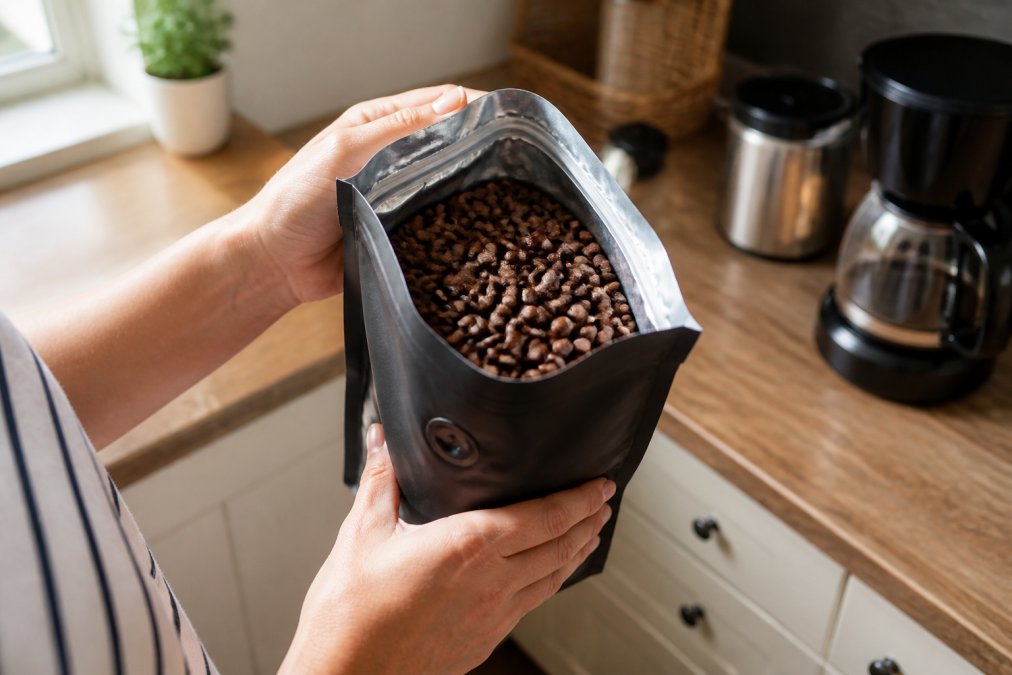
- Aroma on opening: a flat or papery smell means the volatile compounds are already gone.
- Bloom behavior: fresh grounds foam and bubble when water hits them as carbon dioxide escapes; stale grounds barely react.
- Surface area math: pre-ground coffee exposes far more surface to air than whole bean, so it degasses and oxidizes faster.
- Packaging: a one-way valve or vacuum seal slows the process; a plain paper bag does not.
Best Home Coffee Grinders for Beginners: What to Look For
For anyone weighing alternatives to pre-ground coffee beans, a home grinder unlocks the most control. The decision that matters most is burr versus blade.
For beginners, look for these features:
- Burr type: conical burrs are quieter and easier to clean; flat burrs give slightly more consistency.
- Grind settings: at least 15 steps, so you can move between French press, pour-over, and espresso.
- Adjustability while running: lets you fine-tune without stopping the motor.
- Static control: a marked issue with cheaper grinders, especially in dry kitchens.
How to Store Coffee Beans for Maximum Freshness
Most storage advice assumes you buy whole bean and finish the bag in two weeks. If you buy pre-ground because you do not own a grinder, or your household goes through a large bag quickly, the useful question is not "how do I keep beans fresh", it is "how do I slow the decline of coffee that is already ground and already oxidizing."
The Storage Rules That Actually Move the Needle
- Buy the smallest bag you will finish. A 12-ounce bag you empty in ten days beats a two-pound bag that sits for two months. This habit outperforms every container upgrade.
- Squeeze the air out, then seal. A one-way valve lets carbon dioxide escape without letting oxygen in, which is why valve bags beat plain containers. If your bag has no valve, press the excess air out before resealing.
- Keep it dark and cool. A cupboard beats a countertop jar. Light degrades the oils, and heat accelerates every chemical reaction you are trying to slow.
- Keep it dry. Moisture ruins coffee faster than oxygen. Never store grounds next to a kettle, above a dishwasher, or in a fridge that cycles through condensation.
Vacuum Sealing and Preservation Hacks for Bulk Buyers
A few practical notes on the tools:
- Vacuum sealers work well for pre-ground, but use the pulse setting if your machine has one. Full suction on fine grounds can pull dust into the seal and break it.
- Airtight canisters with a one-way valve are the next best option and easier to live with day to day.
- Freezing is viable only for long-term storage, and only in airtight, single-use portions. A bag you open and re-freeze repeatedly will collect moisture every cycle and taste worse than if you had left it in the cupboard.
- Do not refrigerate. The temperature swings and ambient odors do more harm than the cold does good.
For whole bean, the same rules apply but the timeline is more forgiving: a sealed bag in a cool cupboard holds peak flavor for several weeks, and a freezer portion extends that to a few months.
12 Pack Single Serve Coffee Capsules →
Cost and Quality: Weighing Your Alternatives
Cost and quality pull in opposite directions, and the right answer depends on how many cups you drink, how much you care about tasting notes, and, the part most guides skip, whether you can taste the difference.
| Alternative | Upfront Cost | Cost Per Cup | Quality Ceiling |
|---|---|---|---|
| Pre-ground coffee | Lowest | Lowest | Limited by staleness |
| Single-serve capsules | Low | Moderate | High if sealed well |
| Instant coffee | Low | Low | Consistent, not complex |
| Whole bean + grinder | Highest | Moderate | Highest |
| Subscription (pre-ground or whole bean) | Low | Moderate | High, if shipped fresh |
The 'Good Enough' Threshold
Freshness is not a binary, it is a curve, and the difference between fresh and pre-ground becomes imperceptible to most drinkers at some point on it.
The threshold depends on three things:
- How you brew. A French press or drip brewer is far more forgiving of stale grounds than espresso, because the longer contact time and coarser filtration mask the flatness. If you brew espresso, freshness matters more than it does for almost any other method.
- What you add. Milk, sugar, and flavor syrups flatten the aromatic differences that distinguish fresh from stale. If you drink your coffee with cream and sweetener, the quality gap between a fresh capsule and a week-old pre-ground bag may be smaller than the price gap.
- How you taste. Some drinkers are genuinely sensitive to the volatile compounds that fade first; others are not. The only way to know which you are is to brew the same coffee fresh and stale side by side and taste them blind.
Water Quality: The Overlooked Variable
Even excellent pre-ground coffee brewed with hard or heavily chlorinated water tastes dull, because minerals and chlorine flatten the compounds you paid for. This lever improves a cup regardless of which alternative you choose, and it is the cheapest to pull.
A few technical notes:
- Chlorine is the most common culprit in municipal water and the easiest to fix. A basic carbon filter pitcher removes it. If your tap water smells like a pool, that smell is in your cup.
- Hardness, dissolved calcium and magnesium, affects how efficiently water extracts coffee. Very hard water over-extracts and tastes chalky; very soft or distilled water under-extracts and tastes flat and hollow.
- Temperature matters as much as chemistry. Water just off a boil, around 195 to 205 degrees Fahrenheit, extracts evenly. Water that is too hot scorches the grounds and turns the cup bitter; water that is too cool leaves the coffee sour and underdeveloped.
Subscriptions as a Middle Ground
Subscription services sit between the extremes. They solve the roast date problem by shipping on a schedule, so you always have fresh stock without buying in bulk, the closest thing to set-and-forget for drinkers who cannot or will not grind at home.
Frequently Asked Questions
Can I buy pre-ground coffee beans and still get a fresh-tasting cup?
Yes, but you'll need to be selective. Look for bags with a roast date printed, not just a best-by date, and choose whole bean if possible. If you must buy pre-ground, transfer it to an airtight container and use it within a week. Pre-ground coffee has more surface area exposed to oxygen, so it stales faster than whole beans. For the freshest experience, consider alternatives like single-serve capsules that are sealed with no oxygen inside.
What are some alternative ways to grind coffee beans if I don't have a grinder?
You can use a blender or food processor for a coarse grind, though consistency will vary. A rolling pin or mortar and pestle works in a pinch for small batches. For best results, invest in a burr grinder, which gives you consistent particle size for even extraction. If you're not ready to grind, single-serve capsules or instant coffee offer a no-grind solution that still delivers a fresh cup.
How does pre-ground coffee lose its flavor compared to whole beans?
Grinding exposes the coffee's volatile aromatic compounds and oils to oxygen, accelerating oxidation. Pre-ground coffee can lose noticeable flavor within days, while whole beans stay fresh for weeks. The surface area of ground coffee is much larger, so degassing and staling happen faster. To slow this down, store pre-ground coffee in an airtight container away from light and heat, and use it quickly.
Is it worth buying a coffee grinder for home use?
If you drink coffee daily and care about flavor, a burr grinder is a worthwhile investment. It lets you grind right before brewing, preserving aroma and oils. Beginner-friendly burr grinders start around $40-$100. You'll also gain control over grind size for different brewing methods like French press or pour-over. If you prefer zero effort, high-quality single-serve capsules or instant coffee are solid alternatives to pre-ground.
How should I store whole coffee beans to maintain freshness?
Keep whole beans in an airtight container with a one-way valve, stored in a cool, dark place away from heat and moisture. Avoid the fridge due to condensation; the freezer works if you use a vacuum-sealed bag and let beans thaw before grinding. For maximum freshness, buy beans with a recent roast date and use them within two to four weeks. Small batches help you avoid stale coffee.