

Is Specialty Coffee Worth the Extra Cost? A 2026 Guide
Table of Contents
- Specialty Coffee vs Commercial Coffee: What Actually Separates Them
- The Cost Breakdown: What You Pay Per Cup
- How to Tell If Coffee Is Fresh Before You Buy
- How to Store Coffee Beans So They Stay Worth the Price
- Ethical Sourcing and What Your Money Supports
- Sensory Training for Beginners: Tasting What You Paid For
- How to Start Without Overcommitting
- Frequently Asked Questions
Last Updated: September 11, 2026
Specialty Coffee vs Commercial Coffee: What Actually Separates Them
Specialty coffee is coffee that scores 80 or higher on a 100-point scale set by the Specialty Coffee Association, a standard that measures bean quality, processing, and flavor clarity before the coffee ever reaches a roaster (sca.coffee). Commercial-grade coffee rarely clears that bar. We source beans that meet that standard because the gap shows up in the cup, not just on a label.
The real question, is specialty coffee worth the extra cost, comes down to what you’re actually buying: better raw material, a known roast date, and traceability back to the farm. None of that is marketing language. It’s a measurable difference in how the coffee was grown, handled, and shipped.
The 80-Point Cupping Score and Why It Matters
Cupping score is a standardized quality rating assigned by trained evaluators who assess fragrance, flavor, acidity, body, balance, and aftertaste. A coffee needs 80 points to qualify as specialty; anything below that is categorized as commodity coffee.
That number matters because it filters out defects before roasting. A bean with mold damage, insect damage, or inconsistent ripeness can’t hide behind a dark roast. The scoring process catches it early.
Arabica, Robusta, and the Flavor Gap
Arabica beans tend to carry more acidity and layered flavor notes; Robusta is bolder, more bitter, and higher in caffeine. Most specialty roasters lean Arabica, though a well-built blend can use both. Marilyn’s Morning Brew’s Italian Roast is a slow-roasted blend of specialty-grade Arabica and Robusta, which is why it lands darker and heavier than a single-origin pour-over.

The Cost Breakdown: What You Pay Per Cup
Per-cup math is where the "is it worth it" argument gets settled, and most articles never actually do the math. Here is the version with real numbers.
The standard specialty dose is 18 grams of dry coffee per cup. A 12-ounce bag holds 340 grams, which yields about 18 to 19 cups at that dose. A 2-pound bag (907 grams) yields about 50 cups. Once you know the yield, the per-cup cost is just bag price divided by cups.
| Coffee Type | Typical Bag Price | Cups Per Bag | Cost Per Cup |
|---|---|---|---|
| Grocery-store whole bean (2 lb) | $12-$18 | ~50 | $0.24-$0.36 |
| Grocery-store pre-ground (12 oz) | $6-$10 | ~18 | $0.33-$0.55 |
| Specialty whole bean (12 oz) | $18-$24 | ~18 | $1.00-$1.33 |
| Specialty whole bean (2 lb) | $30-$40 | ~50 | $0.60-$0.80 |
| Café drip coffee | N/A | N/A | ~$3.00 |
| Café latte | N/A | N/A | ~$5.00 |
The headline number is the gap between grocery beans and specialty beans: roughly $0.30 to $0.90 more per cup, depending on bag size and roast. That is the real premium, not the sticker price difference of $10 to $20 per bag, which sounds larger than it is once it is spread across 18 to 50 cups.
The second headline is the gap between specialty beans and café coffee. A $22 bag of specialty whole bean at $1.00 to $1.33 per cup is still roughly one-third the cost of a $3 café drip and one-quarter the cost of a $5 latte. If you already buy café coffee, brewing specialty at home is cheaper than what you are doing now, not more expensive.
The Diminishing Returns Threshold
Spending more on coffee stops improving your cup at a certain point. Once you are past the specialty threshold, the next dollar tends to buy rarity, not quality. A $40 competition-lot geisha can be extraordinary, but it will not taste four times better than a solid $22 daily drinker.
The practical ceiling for most home brewers sits in the $20 to $26 range per 12-ounce bag. Beyond that, you are paying for scarcity and story more than a better morning. The exception is a specific origin or process you already know you love, that is a preference purchase, not a quality purchase, and it is worth naming as such.
How to Tell If Coffee Is Fresh Before You Buy
Freshness is the single biggest variable you control after purchase. A roast date within the last two to four weeks is the target for filter brewing; espresso drinkers often prefer a slightly longer rest.
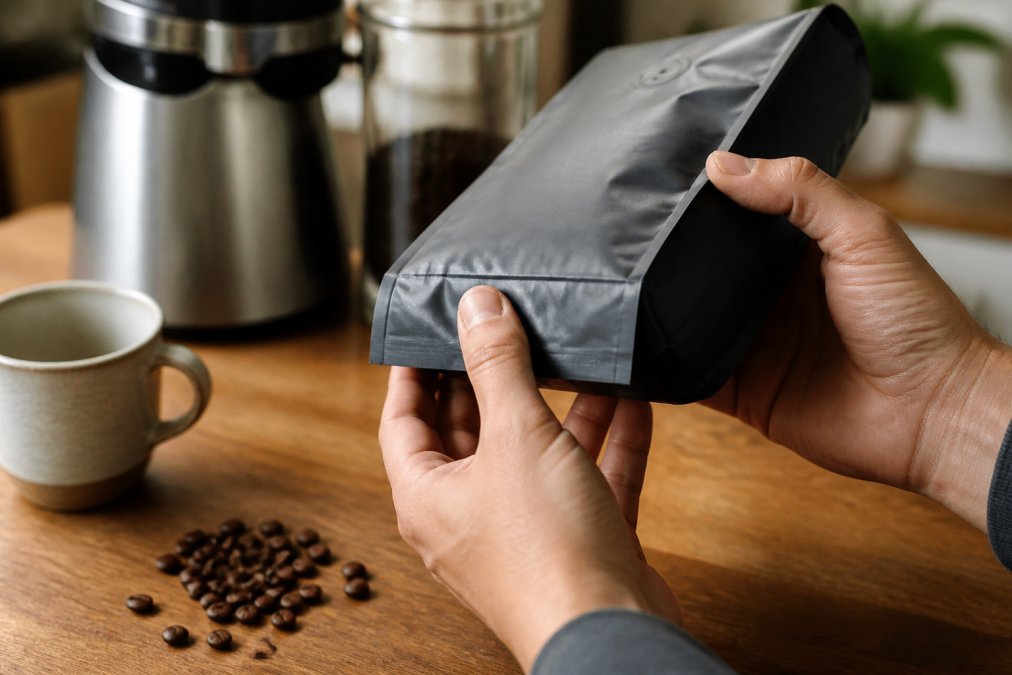
Here’s what to check before you commit:
- Roast date, not best-by date. Best-by dates are often a year out and tell you nothing about when the beans were roasted.
- Whole bean over pre-ground. Ground coffee loses aroma within days; whole beans hold up for weeks.
- Degassing valve on the bag. A one-way valve lets carbon dioxide escape without letting oxygen in.
- Smell test. Fresh beans smell sweet and complex. Stale beans smell flat or papery.
For background on how roast timing affects flavor, the Specialty Coffee Association’s standards on green coffee grading are worth reading.
How to Store Coffee Beans So They Stay Worth the Price
Storage decides whether you get two weeks of good coffee or two days. Oxygen, light, heat, and moisture are the four enemies; a sealed, opaque container in a cool cabinet handles all four.
For daily use, keep beans in an airtight canister away from the stove. For longer storage, portion beans into small bags and freeze them, then grind straight from frozen. Never store coffee in the fridge door, where temperature swings and odors ruin the beans.
Ethical Sourcing and What Your Money Supports
Money spent on traceable coffee tends to reach farmers more directly than money spent on commodity blends, but the mechanism matters more than the label. Here is how the main models actually work.
Fair trade sets a minimum floor price per pound of green coffee, plus a social premium paid on top that goes to the farmer cooperative rather than the individual grower. The floor protects farmers when the commodity market drops; the premium funds community projects chosen by the cooperative. The trade-off is that certification costs money and paperwork, which favors larger cooperatives over smallholder farms.
Direct trade skips the certification body and builds a longer-term relationship between the roaster and the grower, often at a price above the fair-trade floor. The trade-off is that "direct trade" is not a regulated term, any roaster can use it, so the only real test is whether the roaster can name the farm, region, and processing method.
Traceability is the practical test. If a roaster can tell you the farm, the region, the altitude, and the processing method, the supply chain is short enough to verify. If the bag says "100% Arabica" and nothing else, the coffee likely passed through several intermediaries before it reached the roaster.
Processing method is worth knowing for a second reason: it changes the flavor. Washed process coffees tend to taste cleaner and brighter because the fruit is removed before drying. Natural process coffees dry with the fruit still on the bean, which pushes the cup fruitier and heavier. Honey process sits between the two. None of these is better than the others, they are different, and knowing which you prefer is part of getting your money's worth.
Marilyn's Morning Brew sources from trusted farms and roasts to order. If a roaster can tell you the farm and the processing method, you can decide whether the premium is buying something you actually value.
Sensory Training for Beginners: Tasting What You Paid For
You don’t need a formal palate to taste the difference; you need vocabulary and repetition. Start by tasting two coffees side by side, one commercial and one specialty, and write down three words for each. Acidity, body, and aftertaste are the easiest starting points.
Over a few weeks, your notes will sharpen. Terms like flavor notes, aroma, and mouthfeel stop being abstract and start describing what’s actually in the cup. Cupping, the industry’s standard tasting method, is just a structured version of this exercise.
How to Start Without Overcommitting
Start with one bag, not a subscription. Pick a roast level you already know you like, buy whole bean, and brew it the way you normally brew. If the cup is noticeably better, scale from there.
Marilyn’s Morning Brew roasts to order, so the bag you receive was roasted days, not months, before it reached you. That’s the practical version of “freshness in every batch.”
If you want a starting point, the French Roast is a single-origin Central American dark roast with a straightforward, low-risk flavor profile. For something with a functional twist, the Coffee with Mushrooms Dark Roast blends specialty-grade coffee with Lion’s Mane, Cordyceps, and Reishi.


For a broader look at how roast level shapes flavor, the National Coffee Association’s guide to roasting is a solid reference.
Frequently Asked Questions
What does the Specialty Coffee Association (SCA) score mean?
The SCA rates coffee on a 100-point scale, and beans scoring 80 or above earn the specialty label. Certified graders assess aroma, acidity, body, flavor, aftertaste, balance, and uniformity. A score in the mid-80s signals solid quality; 90-plus is rare and commands high prices. This score gives you an objective benchmark beyond marketing claims, though it does not measure freshness, which depends on roast date and storage.
How does the roasting process affect the price of coffee?
Small-batch roasting costs more per pound because roasters produce less volume and often roast to order rather than stockpile inventory. Darker roasts also lose more moisture weight during roasting, meaning more raw beans go into each finished bag. When a roaster ships within days of roasting, you pay for that freshness window rather than shelf stability, which is a real cost difference from mass-market brands.
How do I know if coffee is fresh when ordering online?
Look for a printed roast date, not just a best-by date. Fresh coffee peaks roughly 5 to 21 days after roasting for most brewing methods. Whole beans stay fresh longer than pre-ground. Bags with a one-way degassing valve release carbon dioxide without letting oxygen in. If a roaster roasts to order and ships quickly, your beans arrive inside that peak window.
Is specialty coffee worth it if I'm not a coffee snob?
You do not need tasting vocabulary to notice the difference. Freshly roasted specialty beans typically taste smoother and less bitter than grocery store coffee that sat on a shelf for months. Start with a medium or dark roast and a simple drip brewer. If you drink one or two cups daily, the per-cup cost difference is often less than a dollar, which makes it a reasonable upgrade even without formal tasting knowledge.
The honest answer to whether specialty coffee is worth the extra cost depends on how you drink it. If coffee is a daily ritual rather than a caffeine delivery system, the per-cup math favors specialty almost every time. Marilyn’s Morning Brew roasts to order, sources from trusted farms, and ships fast, so the beans you open are the beans you paid for. Start with a single bag and taste the difference for yourself.