

Is Fresh Roasted Coffee Better for Pour Over?
Table of Contents
- Fresh Roasted Coffee and Pour Over: What Actually Changes in the Cup
- How to Tell If Coffee Is Fresh
- How Long to Rest Coffee Beans After Roasting
- Best Coffee Beans for Pour Over
- How to Store Whole Bean Coffee
- Freshness vs Storage and Packaging: What Matters More
- Troubleshooting Pour Over With Very Fresh Beans
- Conclusion: Finding Your Ideal Brewing Window
- Frequently Asked Questions
Last Updated: October 8, 2026
Fresh Roasted Coffee and Pour Over: What Actually Changes in the Cup
Is fresh roasted coffee better for pour over? Yes, but not in the way most people assume.
Fresh roasted coffee is coffee that has been roasted recently enough that its oils, sugars, and aromatic compounds have not yet degraded, typically within two to four weeks of the roast date. The roast date tells you when that clock started.
Here is the part most guides skip. Freshness is not a single moment. It is a window, and for pour-over that window opens later than it does for espresso.
How to Tell If Coffee Is Fresh
"Fresh" is the most abused word in coffee, so start with a working definition. Fresh roasted coffee is coffee whose roast date is recent enough that its aromatic compounds have not degraded and its carbon dioxide has mostly escaped, typically somewhere between 4 and 28 days off the roaster depending on roast level.
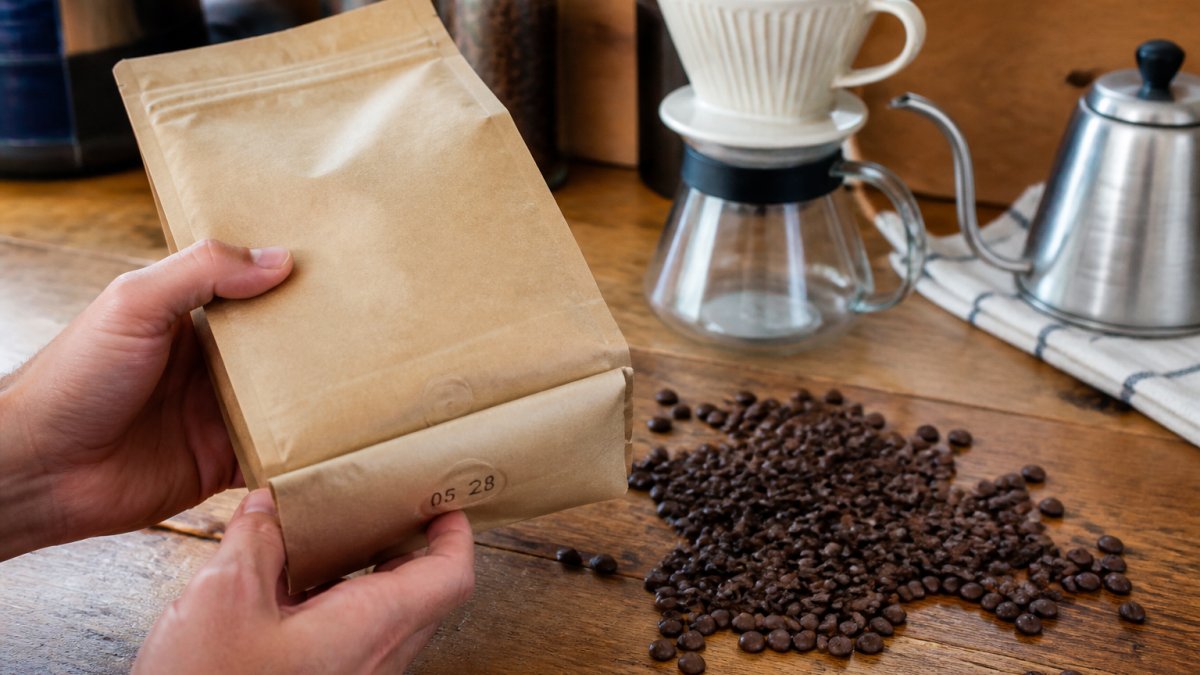
You can tell where a coffee sits in its freshness window by three signals: a printed roast date, how the bag smells when you open it, and how the bed behaves during the bloom. None of these require equipment beyond your kettle and your nose.
Reading the Roast Date and Bag
Look for a roast date, not a best-by date. A best-by date is usually set months after roasting, so it tells you when the coffee becomes unacceptable, not when it was at its best.
Whole beans stay fresh far longer than ground coffee because the surface area exposed to oxygen is much smaller. Once you grind, the clock speeds up dramatically.
A one-way degassing valve on the bag is a useful signal, but only a partial one. The valve lets carbon dioxide escape without letting oxygen in, which slows staling.
The Bloom Test in a Pour Over
The bloom is your freshness test, and it costs nothing. Pour a small amount of hot water over the grounds and watch. Fresh beans release carbon dioxide and the bed puffs up, bubbles, and smells intensely of the roast.
A vigorous bloom means active degassing, which means the coffee is young.
For pour-over specifically, the bloom is not just a freshness test, it is a functional step.
Signs Your Beans Are Stale
Staleness shows up before you brew. Watch for these signals:
- No bloom or a flat, lifeless bed when hot water hits the grounds.
- A dull, cardboard-like, or papery smell in the bag instead of a distinct roast or origin aroma.
- Oily, tacky bean surfaces on a roast that is not naturally dark, oils migrating to the surface often track with advanced staling.
- A cup that tastes flat, papery, or woody even when the grind and ratio are correct.
- A bag with no roast date at all. Without one, you cannot know whether the coffee is four days or four months old.
If two or more of these show up together, the beans are past their useful window for pour-over. No grind adjustment will bring back aromatic compounds that have already faded.
How Long to Rest Coffee Beans After Roasting
Most pour-over coffee tastes best between 7 and 21 days after the roast date, depending on roast level. Brew it sooner and carbon dioxide interferes with extraction; brew it much later and the aromatic compounds that make the cup interesting have faded.
This is the counterintuitive part. Coffee brewed the day after roasting is often worse than coffee brewed ten days after roasting. The beans are still releasing CO2 so aggressively that water struggles to reach the soluble compounds inside the particle.
Rest Time by Roast Level
Rest time is not one number. Darker roasts degas faster because the roasting process has already broken down more of the bean structure, while lighter roasts hold onto gas longer and need more patience.
| Roast Level | Earliest Good Cup | Peak Flavor Window | Notes |
|---|---|---|---|
| Light roast | 10-14 days | 14-28 days | Needs the longest rest; brightest acidity |
| Medium-light | 7-10 days | 10-21 days | Balanced; our Ethiopia Natural sits here |
| Medium roast | 5-7 days | 7-18 days | Most forgiving for pour-over |
| Dark roast | 3-5 days | 5-14 days | Degasses fast, fades fast |
If you want a starting point rather than a rule, wait seven days from the roast date, brew a cup, and note how it tastes. Then brew again three days later. The difference between those two cups tells you more about your beans than any chart can.

Best Coffee Beans for Pour Over
The best beans for pour-over are freshly roasted single-origin coffees with a medium or medium-light roast, because pour-over rewards clarity and nuance over body. But "best" also depends on when you plan to brew.
A medium roast gives you enough development for sweetness while preserving the acidity and aroma that a pour-over can actually showcase. Very dark roasts tend to taste similar to one another in a pour-over because the roast character overwhelms the origin. Very light roasts can be spectacular but demand patience, they often need the longest rest before the cup comes together.
Match the roast level to your timeline:
- Want to brew this week? Choose a medium or dark roast that has already rested 5-10 days. These degas faster and are ready sooner.
- Willing to wait two weeks? A medium-light or light roast will reward you with more acidity and origin character once it settles.
- Buying a large bag? Favor medium roasts, which hold their peak longer than dark roasts and are more forgiving as they age.
Our lineup leans toward medium and medium-light on purpose, because those roast levels sit in the sweet spot for pour-over once they have rested:
- Ethiopia Natural ($23.99): A medium-light roast with milk chocolate, fruity, and caramel notes from Sidama zone heirloom cultivars. Our pick for anyone chasing a fruit-forward, aromatic cup. Best after roughly 10-14 days of rest.
- Colombia ($23.99): Medium roast with dried orange, berry, and chocolate. The most versatile of the group and an easy everyday pour-over. Ready around day 7 and steady through day 18.
- Costa Rica ($23.99): Medium roast with sweet apple, raisin, and honey. Smooth and gentle, good for slow mornings.
- Guatemala ($23.99): Medium roast with dark chocolate, bright fruit, and butterscotch. The boldest of our medium roasts.
- Tanzania ($23.99): Medium-light roast with pear, floral, jasmine, and strawberry. Delicate, so brew it carefully and give it the full rest window.
One caveat worth repeating: roast level sets the general rest window, but the specific bean and roast profile shift it. A dense, high-grown light roast may need longer than the chart suggests, while a softer bean roasted a touch darker may be ready sooner. Use the roast level as your starting point, then let your own tasting notes over the first two weeks tell you when each bag peaks.
How to Store Whole Bean Coffee
Store whole bean coffee in an airtight, opaque container at room temperature, away from light, heat, and moisture (Storage and shelf life - NCA). That single habit preserves more flavor than any gadget you can buy.
Oxygen exposure is the main enemy. Every time you open a bag, fresh air replaces the gas cushion around the beans.
Skip the freezer unless you are storing a large amount long-term. Repeated trips in and out introduce moisture and condensation, and coffee absorbs odors from everything around it.
- Airtight, opaque container: blocks oxygen and light
- Room temperature: heat accelerates the loss of volatile compounds
- Whole beans until brew day: grinding early is the fastest way to stale coffee
- Small batches: buy what you will drink in two to three weeks
Freshness vs Storage and Packaging: What Matters More
Freshness beats packaging, but only just. Perfect packaging cannot rescue coffee that was roasted months ago, and even mediocre packaging cannot ruin beans roasted last week.
The hierarchy is simple. Roast date comes first, because it sets the ceiling on what the coffee can taste like. Storage comes second, because it determines how quickly you slide down from that ceiling.
This is why we roast to order rather than roasting in bulk and warehousing.
Specialty Coffee Association guidance on coffee freshness and storage
Troubleshooting Pour Over With Very Fresh Beans
Very fresh beans cause three specific problems in a pour-over, and each has a fix.
The cup tastes sour and hollow. Carbon dioxide is blocking extraction. Wait three to five more days, or grind slightly finer and extend the bloom to 45 seconds.
The bed drains too quickly. Fresh beans shed gas that lifts the water through the grounds.
The bloom overflows the dripper. This is a gas problem, not a technique problem. Use a larger dripper or bloom with less water in two stages.
National Coffee Association resources on brewing and coffee handling
Conclusion: Finding Your Ideal Brewing Window
Freshness is not a yes-or-no question, and that is the whole point. Freshly roasted coffee is better for pour-over than stale coffee, but only once it has rested long enough to stop fighting your brew water. Seven to twenty-one days after the roast date is where most pour-over cups land at their best.
The simple version: buy coffee with a roast date, rest it about a week, store it airtight, and adjust from there based on what you taste. That routine beats any single rule.
Frequently Asked Questions
Does pour-over coffee taste better with freshly roasted beans?
Yes, but not immediately after roasting. Freshly roasted coffee beans contain trapped carbon dioxide from the roasting process. If you brew them too soon, the CO2 interferes with water extraction, leading to an uneven and sometimes sour cup. Once the beans rest for 3 to 7 days, the CO2 escapes and the flavor compounds stabilize. At that point, pour-over highlights the sweetness, acidity, and aroma far better than stale beans ever could.
How soon after roasting should you brew coffee for pour-over?
Wait at least 3 to 4 days after the roast date for medium and medium-light roasts. Dark roasts degas faster, so 2 to 3 days is often enough. Light roasts are denser and hold CO2 longer, so they may need 7 to 10 days. Brewing within the first 24 hours usually produces a flat, foamy, and inconsistent pour-over because the beans are still releasing gas rapidly.
Can coffee be too fresh for pour-over?
Yes. Coffee roasted less than 2 to 3 days ago is often too fresh for pour-over. During the bloom, the beans release so much carbon dioxide that the water cannot properly saturate the grounds. This leads to channeling, where water bypasses some grounds and over-extracts others. The result is a cup that tastes simultaneously sour and bitter. Giving the beans a short resting period solves this problem entirely.
How can you tell if coffee beans are fresh?
Check the roast date on the bag, not just the expiration date. Fresh whole beans have a visible sheen from natural oils and a strong, sweet aroma when you open the bag. When you pour hot water over them in a pour-over, they should bloom, expanding and bubbling as CO2 escapes. If the beans look dry, smell faint, or barely bubble during the bloom, they are likely stale.
How long do roasted coffee beans stay fresh after opening?
Whole bean coffee stays at its peak for about 2 to 4 weeks after the roast date if stored properly. Once you open the bag, oxygen exposure accelerates staling. For the best pour-over results, keep the beans in an airtight container away from light, heat, and moisture, and grind them right before brewing. After 6 to 8 weeks, even well-stored beans lose most of their distinct flavor and aroma.
Finding that window takes a roaster willing to ship coffee close to the roast date rather than months after it. Marilyn’s Morning Brew roasts every batch to order, sources single-origin beans from trusted farms, and ships fast so your beans arrive with their freshness intact. Order the Ethiopia Natural or Colombia, note the roast date on the bag, and start your own rest-time countdown.