

6 Best Coffee Brewing Methods for Fresh Beans
Table of Contents
- Quick Comparison: 6 Coffee Brewing Methods at a Glance
- 1. Pour-Over: Clean Cups That Show Off Fresh Beans
- 2. French Press: Full-Bodied Immersion Brewing
- 3. Drip Coffee Machine: Convenience for Busy Mornings
- 4. AeroPress: Versatility in a Compact Package
- 5. Moka Pot: Stovetop Brewing With Bold Character
- 6. Cold Brew: Smooth, Low-Acid Coffee Without Heat
- Coffee Grind Size Chart for Brewing: Match Grind to Method
- Frequently Asked Questions
Last Updated: September 28, 2026
Quick Comparison: 6 Coffee Brewing Methods at a Glance
A coffee brewing method is the technique used to extract flavor from ground coffee with water, and it shapes everything from body to clarity. This guide from Marilyn’s Morning Brew breaks down the six best coffee brewing methods for fresh beans, with grind sizes, timing, and honest trade-offs.

Here are the six methods, side by side:
| Method | Grind Size | Brew Time | Body | Best For |
|---|---|---|---|---|
| Pour-over | Medium-fine | 3-4 min | Light, clean | Highlighting single origins |
| French press | Coarse | 4 min | Full, heavy | Rich, low-effort cups |
| Drip machine | Medium | 5-8 min | Medium | Busy mornings, batches |
| AeroPress | Fine to medium | 1-2 min | Versatile | Travel and experimentation |
| Moka pot | Fine | 4-5 min | Bold, intense | Stovetop espresso-style |
| Cold brew | Coarse | 12-18 hrs | Smooth, low-acid | Iced coffee, sensitive stomachs |
1. Pour-Over: Clean Cups That Show Off Fresh Beans
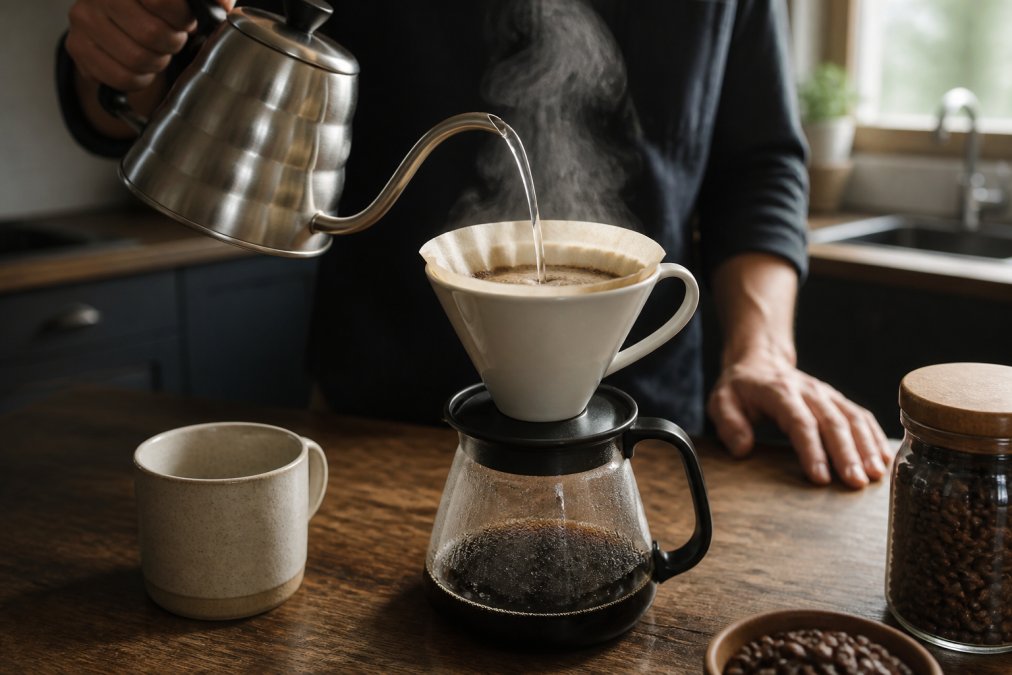
Pour-over is a manual method where hot water is poured over coffee grounds in a paper filter, producing a clean, bright cup. It is the best way to taste subtle notes in a single-origin bean, because the paper filter traps oils and sediment that would muddy the flavor.
Pros and Cons of Pour-Over
Pros:
- Clean, clear cup that highlights acidity and sweetness
- Full control over temperature, ratio, and timing
- Inexpensive to start with a basic dripper and filters
Cons:
- Requires attention; you cannot walk away
- One cup at a time, so it is slow for a crowd
- Paper filters are a recurring cost
2. French Press: Full-Bodied Immersion Brewing
The French press is a full-immersion brewer: coffee and water steep together, then a metal mesh plunger separates the grounds. Because no paper filter strips the oils, you get a heavier body and richer mouthfeel than pour-over, and it is forgiving for beginners since you need no gooseneck kettle or precise pouring.
Bean Pairing: Which Roasts Shine in a French Press
The immersion method amplifies body and sweetness but mutes acidity and delicate floral notes, making it a poor fit for light, fruit-forward single origins and a perfect fit for medium-dark and dark roasts.
| Roast Level | French Press Performance | Why |
|---|---|---|
| Light | Poor | Delicate acidity and floral notes get buried under heavy body |
| Medium | Good | Balanced sweetness and body come through |
| Medium-dark | Excellent | Chocolate, caramel, and nutty notes are amplified |
| Dark | Excellent | Low solubility prevents over-extraction bitterness |
Water Temperature and the French Press
The ideal water range is 195°F to 205°F. Water above 205°F can scorch dark roasts and pull out ashy notes, while water below 195°F under-extracts and leaves the cup sour and thin. Without a thermometer, boil water and let it sit 30 to 45 seconds before pouring.
Pros and Cons of French Press
Pros:
- Full-bodied, rich cup with heavy mouthfeel
- No filters to buy; the metal mesh is reusable
- Simple process with minimal technique
- Excellent for medium-dark and dark roasts
Cons:
- Sediment can settle in the cup
- Easy to over-extract if you leave it sitting
- Not ideal for very light roasts, which can taste muddy
- Requires a coarse, consistent grind to avoid grit
3. Drip Coffee Machine: Convenience for Busy Mornings
An automatic drip machine is the most hands-off option, using percolation to push hot water through a bed of medium-ground coffee.
Pros and Cons of Drip Machines
Pros:
- Set it and forget it; ideal for early mornings
- Brews multiple cups at once
- Consistent results once dialed in
Cons:
- Cheap machines brew at the wrong temperature
- Less control over flavor than manual methods
- Requires regular cleaning to avoid stale buildup
4. AeroPress: Versatility in a Compact Package
The AeroPress is a compact press that uses air pressure to push water through coffee, and it might be the most flexible brewer on this list: change grind size, water temperature, and steep time to make a clean, pour-over-style cup or a concentrated shot.
Pros and Cons of AeroPress
Pros:
- Fast brew time and quick cleanup
- Highly versatile; one device, many styles
- Portable and durable for travel
Cons:
Best Sellers Sample Pack: 6Bean →
- Brews one cup at a time
- The paper micro-filters are a small ongoing cost
- Recipes take some trial and error to dial in
5. Moka Pot: Stovetop Brewing With Bold Character
A moka pot brews by pushing steam pressure up through a bed of fine-ground coffee, producing a strong, concentrated cup between drip coffee and espresso. It needs a gas or electric range rather than a kettle.
Pros and Cons of Moka Pot
Pros:
- Bold, concentrated cup with rich character
- Durable and inexpensive to own long-term
- No filters or electricity required
Cons:
- Easy to burn the coffee if you walk away
- Requires a fine, consistent grind
- Can taste harsh with light roasts
6. Cold Brew: Smooth, Low-Acid Coffee Without Heat
Cold brew steeps coarse-ground coffee in cold water for 12 to 18 hours, yielding a smooth, low-acid concentrate. Because heat is never involved, the cup has less perceived bitterness and acidity, which many find easier on the stomach.
Pros and Cons of Cold Brew
Pros:
- Smooth, low-acid cup
- Concentrate keeps for days in the fridge
- Forgiving of small grind inconsistencies
Cons:
- Requires 12 to 18 hours of planning
- Uses more coffee per serving than hot methods
- Limited to cold drinks unless you reheat it
Coffee Grind Size Chart for Brewing: Match Grind to Method
The single biggest factor in how your coffee tastes is grind size, because it controls how fast water extracts flavor. Too fine and you get bitterness; too coarse and the cup tastes weak and sour.
| Method | Grind Size | Brew Time | Water Temp |
|---|---|---|---|
| Pour-over | Medium-fine | 3-4 min | 195-205°F |
| French press | Coarse | 4 min | 195-205°F |
| Drip machine | Medium | 5-8 min | 195-205°F |
| AeroPress | Fine to medium | 1-2 min | 175-205°F |
| Moka pot | Fine | 4-5 min | Stovetop |
| Cold brew | Coarse | 12-18 hrs | Cold |
Why Water Chemistry Matters More Than You Think
Most guides stop at grind size, but water is roughly 98% of your brewed coffee. The Specialty Coffee Association recommends TDS between 75 and 125 ppm, pH between 6.5 and 7.5, and enough calcium and magnesium to carry flavor without scaling equipment. If your tap water tastes good, it is probably fine; if it tastes like chlorine, a carbon filter pitcher removes most off-flavor.
Bean-to-Method Pairing: Match Roast Profile to Brewer
| Roast Level | Best Methods | Why |
|---|---|---|
| Light (city, city+) | Pour-over, AeroPress | High agitation and precise temperature pull out fruit and floral notes without scorching |
| Medium (full city) | Drip, AeroPress, pour-over | Balanced solubility works across most brewers |
| Medium-dark (full city+) | French press, moka pot, drip | Oils and body shine when extraction is gentle and fast |
| Dark (Vienna, French) | Moka pot, French press, cold brew | Low solubility means these methods avoid over-extraction bitterness |
If you want to experiment before committing to a full bag, the Best Sellers Sample Pack: 6Bean, Cowboy, Breakfast, Peru, Mexico, Bali at $24.99 lets you try six different profiles across these methods. For a clean pour-over that shows off fruit and caramel notes, a medium-light bean like Ethiopia Natural works well. For a full-bodied French press or moka pot cup, a medium-dark option like Bali Blue brings out deeper chocolate tones. Pair any of them with a White Glossy Mug at $14.30 to keep your morning setup simple.


Frequently Asked Questions
Which coffee brewing method preserves the most flavor?
Pour-over and AeroPress tend to preserve the most delicate flavor notes because paper filters trap oils and sediment while letting clarity and acidity shine through. For fresh beans with fruity or floral tasting notes, like Ethiopia Natural with its milk chocolate and caramel profile, these methods highlight what makes the roast special. French press and moka pot deliver bolder, heavier cups but can mask subtle notes. If flavor preservation is your priority, start with pour-over and adjust your grind size and water temperature to fine-tune extraction.
Does the brewing method affect the freshness of coffee beans?
The brewing method does not change how fresh your beans are, but it changes how much of that freshness you taste. Freshly roasted beans release carbon dioxide during degassing, usually for 3 to 7 days after roasting. Methods with a bloom step, like pour-over, let that gas escape so water extracts evenly. Immersion methods like French press trap more of the volatile aromatics. Either way, beans roasted to order and used within 2 to 4 weeks of the roast date give the best results across every brewing method.
Is a French press or pour-over better for fresh beans?
It depends on the cup you want. French press uses full immersion and a metal mesh filter, producing a full-bodied cup with more sediment and oils. Pour-over uses percolation through a paper filter, giving a clean cup with brighter acidity and clearer tasting notes. For medium and medium-light roasts with fruit or citrus notes, pour-over often shows more detail. For dark roasts with cocoa and caramel tones, like a dark roast blend, French press amplifies that richness. Try both with the same beans and compare.
How does grind size impact different coffee brewing methods?
Grind size controls how fast water extracts flavor from your coffee. Too coarse and you get a weak, sour cup; too fine and you get bitterness and astringency. A coffee grind size chart for brewing typically pairs coarse grinds with French press and cold brew, medium grinds with drip machines and pour-over, and fine grinds with AeroPress and moka pot. A burr grinder gives consistent particle size, which matters more than the specific setting. Adjust one notch at a time and taste the difference.
What is the best way to brew freshly roasted coffee at home?
Start with beans roasted within the last two weeks, ground just before brewing. Use a water to coffee ratio for perfect brew of about 1:15 to 1:17 by weight, meaning 15 to 17 grams of water for every gram of coffee. Heat water to between 195 and 205 degrees Fahrenheit. Pick a method that matches your routine: pour-over for clarity, French press for body, or a drip machine for convenience. A digital scale and a gooseneck kettle make the biggest difference in consistency.
Choosing a brewing method is really about matching technique to the kind of cup you actually want, and then giving fresh beans the treatment they deserve. At Marilyn’s Morning Brew, every batch is roasted to order and shipped fast, so the beans arrive close to peak flavor instead of sitting on a shelf. If you want coffee that tastes as good as the method you choose, get started with Marilyn’s Morning Brew and taste the difference freshness makes in every cup.