

How to Store Fresh Roasted Coffee Beans for Maximum Flavor
Table of Contents
- Why Proper Storage Preserves Coffee Freshness and Aroma
- The Four Enemies of Fresh Roasted Coffee
- Choosing the Best Coffee Storage Container
- Step-by-Step Storage Guide for Maximum Flavor
- How Long Do Coffee Beans Stay Fresh
- Should You Freeze Coffee Beans
- Common Coffee Storage Mistakes to Avoid
- Frequently Asked Questions
Last Updated: October 5, 2026
Why Proper Storage Preserves Coffee Freshness and Aroma
When you store fresh roasted coffee beans, they begin losing flavor immediately after roasting as oxygen breaks down the compounds that create rich, smooth taste. Heat, light, and moisture accelerate this degradation.
How you store beans after roasting determines whether you get a smooth, rich cup or a flat, stale one. Proper storage protects the aroma and flavor locked inside each bean.
Store fresh roasted coffee beans like fresh fruit, away from direct sunlight and heat. The difference between a great cup and a disappointing one often comes down to storage.
The Four Enemies of Fresh Roasted Coffee
Coffee has four main enemies that steal flavor and aroma. Understanding each one helps you make smarter storage choices.
Oxygen Exposure and Degassing
When beans are first roasted, they release carbon dioxide in a process called degassing, a sign the roast was done right. Once degassing is complete, oxygen becomes the enemy.
Oxygen causes oxidation, breaking down oils and aromatic compounds fastest in the first few days after roasting. This is why freshly roasted beans taste noticeably better than beans weeks old.
A one-way valve on a coffee bag lets gas escape during degassing but stops oxygen from getting back in. This is one of the smartest storage innovations for whole coffee beans.
Light Damage
Light exposure breaks down the compounds that give coffee its flavor and aroma. Store beans in a dark place like a cabinet or pantry. Opaque containers are always better than clear ones.
Heat and Temperature Fluctuations
Store beans at a consistent, cool temperature (60-70°F). Avoid areas near stoves, ovens, or windowsills where temperature swings cause beans to release moisture and flavor compounds faster.
Moisture and Humidity
Humid air causes beans to absorb water, speeding staleness and risking mold. Keep beans away from steamy kitchens and bathrooms in a cool, dry cabinet.
Choosing the Best Coffee Storage Container
The right container can extend freshness by weeks. Here's what actually matters when picking one.
Airtight Containers with One-Way Valves
A one-way valve is the gold standard for whole coffee beans. It lets carbon dioxide escape during degassing but stops oxygen from entering, balancing gas release with air exclusion.
Look for containers that:
- Have a working one-way valve
- Create a tight seal when closed
- Are made from food-safe material
- Have clear labeling for roast date
Opaque and Light-Blocking Options
Opaque containers block light completely, which noticeably affects flavor within days. Good options include stainless steel canisters, dark glass jars, ceramic containers, and opaque food-grade plastic. Avoid anything translucent.
Container Materials and Trade-Offs
For maximum freshness, stainless steel with an airtight seal is best, practical, durable, and light-blocking. Dark glass with a rubber seal is a good alternative if kept away from sunlight.
Step-by-Step Storage Guide for Maximum Flavor
Following these steps helps you get the most flavor from every bag of fresh roasted coffee.
Step 1: Allow Degassing After Roasting
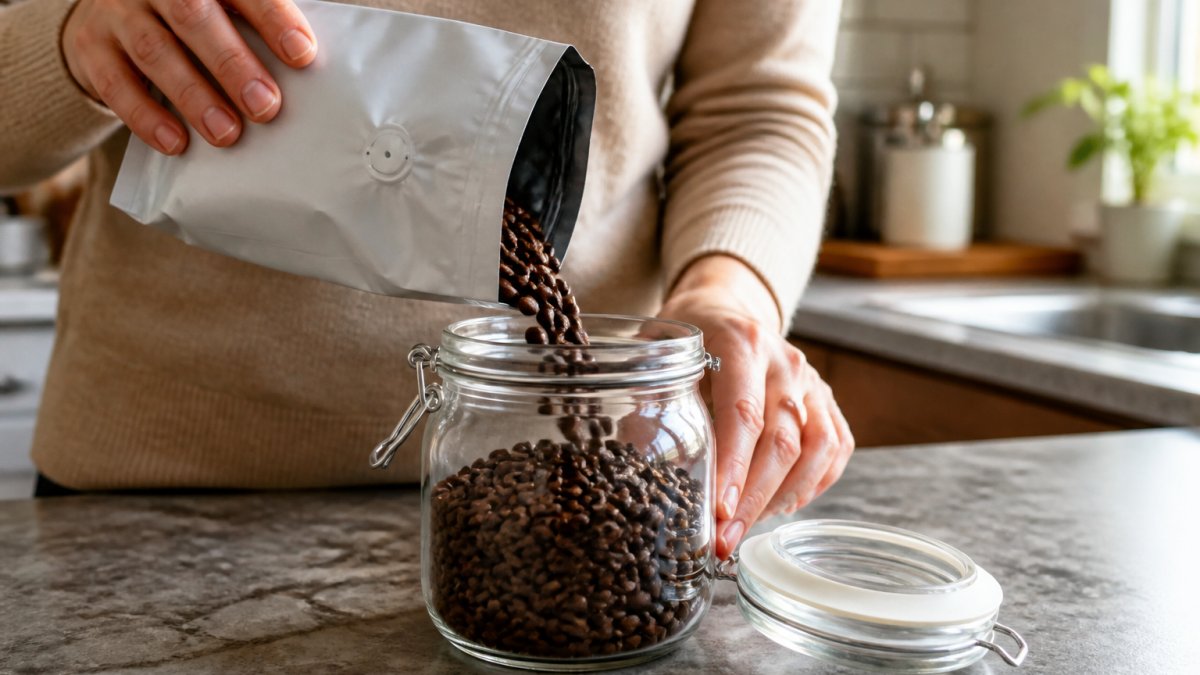
Fresh roasted beans need 12 to 24 hours to release carbon dioxide. Store them in a breathable bag with a one-way valve during this period, then transfer to long-term airtight storage.
Step 2: Select Your Storage Location
Pick a cool, dry, dark spot like a kitchen cabinet or pantry. Avoid stoves, ovens, windows, bathrooms, and temperature-changing areas. Consistency matters more than exact temperature.
Step 3: Portion and Seal Your Beans
Split large bags into smaller portions, each opening exposes beans to oxygen. Seal containers tightly after each use; a loose seal defeats the purpose.
How Long Do Coffee Beans Stay Fresh
Freshness depends on how quickly you use the beans, how well you store them, and where you are in the bean's lifecycle after roasting. Understanding the post-roast timeline helps you brew at peak flavor and know when beans have truly gone stale.
The Post-Roast Timeline: When Beans Are Ready to Brew
Fresh roasted beans aren't ready for brewing immediately. Degassing takes 12 to 24 hours (up to 48 hours for some profiles). Brewing too early results in uneven, sour, or overly bitter cups because escaping gas disrupts extraction.
Optimal brewing window: Most specialty roasters recommend brewing beans between 5 and 30 days after the roast date. The sweet spot for most home brewers is 7 to 14 days post-roast, when degassing is complete and the flavor profile has fully developed but oxidation hasn't yet begun to flatten the taste.
Freshness Timeline by Storage Method and Roast Age
| Days Post-Roast | Room Temp (Airtight) | Freezer (Airtight) | Flavor Profile |
|---|---|---|---|
| 0-2 days | Not recommended | Not recommended | Still degassing; too much CO₂ |
| 3-7 days | Peak flavor | Peak flavor (if thawed properly) | Bright, complex, full body |
| 8-21 days | Excellent | Excellent | Still excellent; slight mellowing |
| 22-35 days | Good (fading) | Good | Noticeably flatter; some complexity lost |
| 36-60 days | Fair (stale) | Fair | Thin, one-dimensional taste |
| 60+ days | Poor (stale) | Poor | Papery, bitter, or musty |
What this means in practice: If you buy beans and store them at room temperature in an airtight container, you have roughly 3 to 4 weeks before noticeable flavor loss. The first two weeks are best. After 30 days, even well-stored beans begin to taste noticeably flat compared to fresher stock.
If you freeze beans immediately after the degassing period (around day 3 post-roast), you can extend that peak-flavor window to 8 to 12 weeks, though some subtle complexity may be lost compared to room-temperature storage of the same age.
How to Identify Stale or Improperly Stored Beans
Stale beans show clear signs. Learning to spot them helps you know whether your storage method is working.
Visual: Fresh beans are glossy with visible oils; stale beans look dull and chalky. Humidity exposure shows discoloration or whitish film.
Aroma: Fresh beans smell strong and complex; stale beans smell weak, musty, or cardboard-like. Beans near odor sources absorb foreign smells.
Taste and crema: Fresh beans produce thick crema; stale beans produce thin or no crema and taste thin, bitter, or papery. Heat or light exposure causes burnt or flat flavors.
Mold or off-odors: Discard beans that smell musty, moldy, or rancid. Beans should never smell like freezer, plastic, or other foods.
Should You Freeze Coffee Beans
Freezing extends freshness significantly but only if done correctly. Temperature swings, condensation, and repeated thawing damage beans. Proper technique determines whether you gain weeks of freshness or waste beans.
When Freezing Makes Sense
Freeze beans if you buy in bulk, brew infrequently, or stock up seasonally, and only if your freezer maintains steady temperature (0°F or below). Don't freeze if you brew daily, have a frost-free freezer, open your freezer constantly, or lack airtight containers.
Step-by-Step Freezing and Thawing Instructions
Proper technique is critical. Each step prevents condensation, freezer burn, and flavor loss.
Step 1: Wait for degassing to complete. If freezing beans within a few days of roasting, wait 12 to 24 hours post-roast.
Step 2: Portion into weekly or bi-weekly amounts. Divide the bag into portions for one to two weeks of brewing. Smaller portions mean fewer openings and less condensation exposure over time.
Step 3: Choose airtight packaging. Vacuum-sealed bags are best for long-term freezing (3-4 months). Airtight plastic containers work well. Glass jars with rubber-gasket lids work but thaw slowly. Avoid regular freezer bags.
Step 4: Label with the original roast date
Write the roast date (not the freezing date) on each container with a permanent marker.
Step 5: Freeze in a stable location
Place containers in the coldest, most stable part of your freezer, usually the back of a shelf, not the door. Freezer doors experience the most temperature fluctuation because they're opened frequently.
Step 6: Thaw properly to prevent condensation. Move sealed containers from freezer to room temperature, do not open while cold.
Freezing vs. Room Temperature: A Quick Decision Guide
For most home brewers, room-temperature storage in an airtight container beats freezing, it's simpler and beans stay fresher longer when used regularly. Use freezing only to extend freshness when you can't use beans quickly.
Common Coffee Storage Mistakes to Avoid
These mistakes happen often. Knowing about them helps you store beans the right way.
Storing in the original bag after opening. Most coffee bags aren't designed for long-term storage once opened. The seal weakens each time you open it. Transfer to an airtight container instead.
Keeping beans in a clear container on the counter. This looks nice but exposes beans to light constantly. Move beans to an opaque container in a cabinet.
Storing near heat sources. The kitchen counter near the stove or a windowsill in sunlight are the worst spots. Beans need cool, consistent temperatures.
Using the refrigerator instead of the freezer. Refrigerators are humid and have temperature swings from opening and closing.
Buying too much at once. Fresh is the priority. A smaller bag you'll use quickly beats a large bag that sits around for months.
Skipping the roast date. Always check when beans were roasted.
Storing fresh roasted coffee beans properly is simple once you know what matters.
At Marilyn's Morning Brew, we roast beans fresh to order so they arrive at peak flavor. Our Travel Mug With A Handle in stainless steel is designed to maintain consistent temperature while you drink, and our ceramic mugs like the White Glossy Mug are perfect for savoring a fresh-brewed cup at home.


Frequently Asked Questions
How should you store coffee beans for maximum freshness?
Store fresh roasted coffee beans in an airtight container with a one-way valve in a cool, dry place away from direct sunlight and heat sources. Keep them at room temperature (around 60-70°F) and protect them from oxygen exposure, moisture, and temperature fluctuations. Most beans stay at peak flavor for 2-4 weeks after the roast date when stored this way. Grind just before brewing to preserve maximum aroma and flavor.
What is the best container for storing fresh-roasted coffee beans?
The best coffee storage container is airtight with a one-way valve, made from opaque or dark material to block light. Resealable bags with one-way valves work well for short-term storage (2-3 weeks), while opaque airtight containers offer better long-term protection. Avoid clear glass jars, paper bags without seals, and containers that allow air exchange. The one-way valve lets carbon dioxide from degassing escape without letting oxygen in, preserving freshness and flavor.
Should coffee beans be stored in the refrigerator or freezer?
Room-temperature storage in an airtight container is ideal for beans you'll use within 2-4 weeks. Freezing works well for longer storage (up to 3-6 months), but it requires careful portioning and thawing to avoid condensation damage. Never refrigerate beans, as the temperature fluctuations and moisture exposure degrade flavor. If you freeze, divide beans into small portions in airtight bags, thaw at room temperature for 30 minutes before opening, and use within a few days of thawing.
What are the main enemies of coffee bean freshness?
The four main enemies are oxygen (which causes oxidation and staling), light (which degrades oils and flavor compounds), heat (which accelerates aging), and moisture (which promotes mold and flavor loss). Temperature fluctuations also harm beans by causing condensation inside containers. Protecting beans from all four, through airtight, opaque containers in a cool, dry, stable location, preserves maximum flavor and aroma for weeks.