

How to Properly Store Loose Leaf Tea for Freshness
Table of Contents
- Why Proper Storage Matters for Loose Leaf Tea
- Best Containers for Loose Leaf Tea
- Creating the Ideal Storage Environment
- How Long Does Loose Leaf Tea Last
- Signs of Expired Loose Leaf Tea
- Step-by-Step: Storing Your Tea Properly
- Common Storage Mistakes to Avoid
- Frequently Asked Questions
Last Updated: September 26, 2026
Why Proper Storage Matters for Loose Leaf Tea
How you store loose leaf tea directly affects its flavor, aroma, and freshness. Tea leaves are delicate. They absorb moisture, odors, and light easily. Without proper care, your premium tea loses quality within weeks.
The main enemies of tea freshness are air exposure, light, moisture, and temperature swings. Each one degrades the tea differently. Air causes oxidation of the delicate compounds that give tea its flavor profile. Light breaks down chlorophyll and other beneficial compounds. Moisture promotes mold and speeds up flavor degradation. Temperature fluctuations stress the leaves.
At Marilyn's Morning Brew, we source teas from trusted farms worldwide. But that quality only lasts if you store loose leaf tea correctly once it arrives. A few simple steps protect your investment and ensure every cup tastes as good as the day it was shipped.
The difference between stale tea and fresh tea comes down to one thing: your storage environment. Get this right, and your tea stays vibrant for months. Get it wrong, and even premium leaves taste flat within weeks.
Best Containers for Loose Leaf Tea
The container you choose is the foundation of proper tea storage. Not all containers are equal.
Airtight Glass Jars with Sealed Lids
Glass jars with airtight seals are the gold standard for storing loose leaf tea. They protect your tea from air exposure while letting you see what you have.
Look for jars with rubber gaskets or snap-lock lids. These create a hermetic seal that keeps oxygen out. The seal is what matters most, not the material. A loose lid defeats the purpose.
Glass is inert. It won't absorb odors or leach chemicals into your tea. Unlike plastic, glass doesn't degrade over time or transfer flavors. Fill the jar, seal it tight, and your tea stays fresh.
One tip: fill the jar most of the way. Too much empty space means more air in contact with the leaves. Less air exposure means better airtight protection. If you have a large jar and only a small amount of tea, consider transferring it to a smaller sealed container instead.
Opaque vs. Clear Containers
This choice matters more than most people realize. Light sensitivity is one of the biggest threats to tea quality.
Clear glass jars look beautiful on a shelf. You can see your tea at a glance. But that transparency works against you. UV light and regular sunlight degrade the delicate compounds that give tea its flavor and aroma.
Opaque containers, whether tinted glass, ceramic, or metal, block light completely. Your tea can't degrade from light exposure if light can't reach it. This is why many premium teas come in opaque packaging.
If you prefer clear jars, store them in a dark cabinet or pantry. Never leave them on a sunny windowsill or under bright lights. The extra step of hiding them away defeats the convenience of seeing what you have, but it protects your tea.
For the best of both worlds, use opaque containers for storage and transfer small amounts to a clear jar only when you're actively brewing from that tea.
Metal Tins and Vacuum-Sealed Options
Metal tins offer excellent light protection and durability. They're opaque, so no light reaches your tea. Quality metal tins have tight-fitting lids that create a good seal.
The downside: you can't see inside without opening the lid. But if you label them clearly, this isn't a real problem.
Vacuum-sealed bags remove most air from the package. They're excellent for long-term storage and travel. Once sealed, they take up minimal space. The trade-off is you can't reseal them easily after opening. Once you break the seal, transfer the tea to an airtight jar.
For most home tea drinkers, a quality airtight glass jar strikes the best balance. It's affordable, effective, and practical.
Creating the Ideal Storage Environment
The right container is just half the solution. Where you store your tea matters equally.
Temperature Stability and Cool Dry Places
Tea prefers cool, stable temperatures. Ideally, store loose leaf tea between 50-70°F. Room temperature works fine if it stays consistent.
Avoid temperature swings. A pantry that stays cool year-round is better than a shelf near a heating vent or in direct sunlight. Thermal fluctuations stress the leaves and accelerate flavor degradation.
Never store tea in the kitchen near the stove or oven. Heat is tea's enemy. The same applies to areas near radiators or heating systems. Even if the container is sealed, heat speeds up chemical reactions inside that break down flavor compounds.
A cool, dark pantry is ideal. A bedroom closet works too. Even a basement shelf away from moisture sources is fine. The goal is stable, cool conditions with minimal temperature swings.
Managing Moisture and Humidity Levels
Moisture is one of the biggest threats to tea freshness. Humid environments promote mold and accelerate flavor loss.
Keep your tea in a dry place. Relative humidity should stay below 60% if possible. Many homes naturally stay around 40-50% humidity, which is fine.
Avoid storing tea in bathrooms or kitchens where humidity spikes. Steam from showers and cooking creates moisture in the air that can seep into containers over time.
If you live in a humid climate, consider adding a silica gel packet inside your airtight jar. These packets absorb excess moisture and keep the environment inside the jar dry. Replace them every few months. They're inexpensive and highly effective.
Never refrigerate or freeze loose leaf tea. The temperature swings when you open and close the door introduce moisture. Condensation forms on the leaves. This damages them far more than room temperature storage ever would.
Protecting Against Light Exposure
Light exposure degrades tea quality through photochemical reactions. UV light is especially damaging, but regular visible light also breaks down beneficial compounds over time.
Store your tea in a dark location. A pantry, cabinet, or closet is ideal. If you use clear glass jars, keep them in a dark cupboard rather than on an open shelf.
Some people store tea in the refrigerator thinking darkness and cool temperature are good. This is a mistake. Refrigerators are humid.
How Long Does Loose Leaf Tea Last
Tea doesn't expire like milk does. It doesn't become unsafe to drink. But it does lose flavor and aroma over time.
Shelf Life by Tea Type
Different teas age at different rates. This depends on how much the leaves were oxidized during processing.
Storage Duration and Flavor Degradation
Even in perfect conditions, tea gradually loses its vibrant flavor profile over time. The volatile oils that create aroma are the first to fade. Flavor follows.
Signs of Expired Loose Leaf Tea
Stale tea won't make you sick. But you'll notice the difference in your cup.
- The aroma is weak or absent when you open the container
- The brewed tea tastes flat or muted compared to how it tasted fresh
- The color of the brewed tea is noticeably lighter than it should be
- The leaves look dull or brittle instead of vibrant
- There's visible mold (discard immediately)
- The tea smells musty or like the storage container instead of like tea
Step-by-Step: Storing Your Tea Properly
Follow this process to store loose leaf tea correctly.
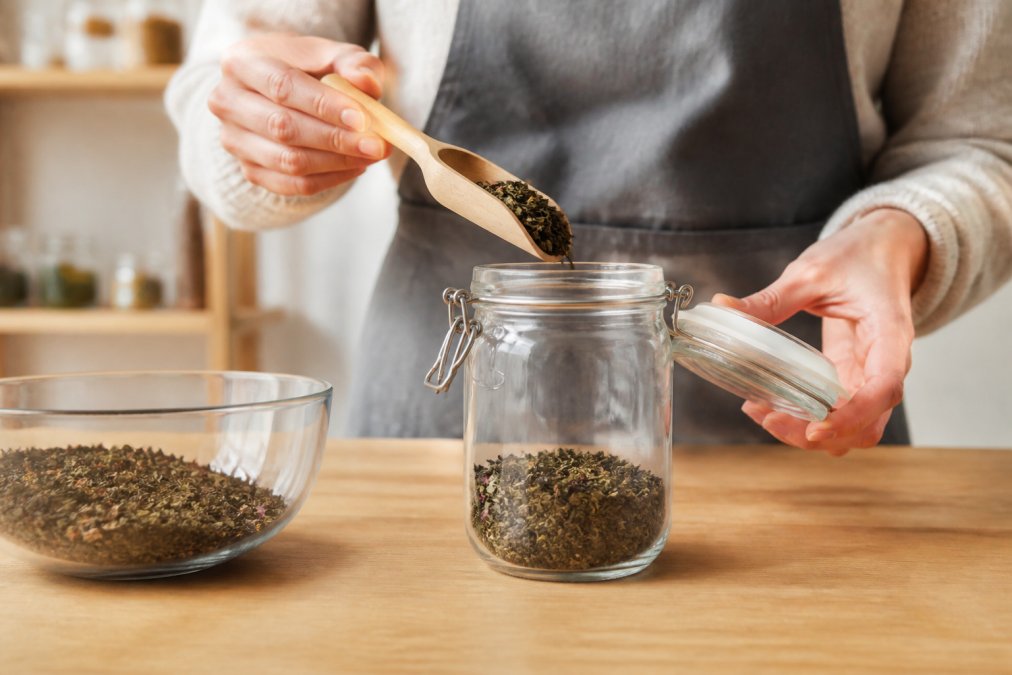
Step 1: Choose Your Container
Start with an airtight glass jar or opaque metal tin. The seal matters most. Test the lid, it should feel snug and require a bit of effort to open.
Step 2: Prepare the Storage Space
Choose a location that's cool, dark, and dry. A pantry shelf away from the stove works well. A kitchen cabinet away from heat sources is fine. A bedroom closet is excellent.
Step 3: Fill and Seal
Pour your tea into the container. Fill it most of the way, leave about an inch of space at the top to minimize air contact.
Step 4: Label and Monitor
Write the tea name and purchase date on a label. Stick it on the container. This matters more than you'd think. When you have multiple teas stored, you'll be glad you know which is which and how old it is.
Common Storage Mistakes to Avoid
Most people make one or two of these errors without realizing it's hurting their tea.
Frequently Asked Questions
Should loose leaf tea be refrigerated?
No. Refrigerators introduce moisture and temperature fluctuations that damage tea quality. Store loose leaf tea in a cool, dry place at room temperature instead. Freezing is also not recommended because condensation forms when the container warms up, exposing tea leaves to unwanted moisture that accelerates oxidation and flavor loss.
What is the best way to store loose tea leaves?
Use an airtight container made of opaque glass, ceramic, or metal to block light exposure. Keep it in a cool, dry location away from direct sunlight, heat sources, and strong odors. Maintain relative humidity below 60% and stable temperatures around 60-70°F. Seal the container tightly after each use to prevent air exposure and cross-contamination with other flavors.
How long can I store loose leaf tea before it loses freshness?
Most loose leaf teas stay fresh for 6-12 months in proper storage conditions. Black teas and oolong teas last longer, often 12-24 months, while green and white teas are more delicate and best consumed within 6-8 months. Herbal blends like Moroccan Mint typically last 6-12 months. Check for signs of staleness such as dull color, weak aroma, or flat flavor profile before brewing.
Does loose leaf tea ever go bad?
Loose leaf tea doesn't spoil in a way that makes it unsafe to drink, but it does deteriorate in quality. Over time, volatile oils evaporate, oxidation increases, and flavor degrades. Signs of expired loose leaf tea include a pale or dull appearance, musty or stale odor, loss of aroma intensity, and weak or flat taste. Properly stored tea maintains peak freshness much longer than tea exposed to light, heat, moisture, or air.
Proper storage keeps your tea fresh and flavorful for months. The investment in a quality airtight container and a good storage location pays for itself the first time you brew a cup of fresh tea months after purchase. Marilyn's Morning Brew's carefully sourced, roasted-to-order teas deserve proper care. Store loose leaf tea correctly, and you'll taste the difference every time you brew. Start with one quality container and a dark, cool spot in your home. Your next cup of tea will thank you.