

Is Organic Loose Leaf Tea Worth the Extra Cost?
Table of Contents
- The Real Cost Per Cup of Loose Leaf Tea
- Why Loose Leaf Costs More Than Tea Bags
- Organic vs Conventional Tea: Pesticides and Safety
- Flavor, Quality, and What You Actually Taste
- How to Store Loose Leaf Tea for Freshness and Value
- Resteeping: The Hidden Money-Saver
- Is It Worth It? The Honest Verdict
- Frequently Asked Questions
Last Updated: September 21, 2026
The Real Cost Per Cup of Loose Leaf Tea
When you compare loose leaf tea to tea bags on price alone, loose leaf looks expensive. A bag of premium loose leaf runs $16.99 to $22.99 at Marilyn's Morning Brew, while grocery store tea bags cost a fraction of that. But price per ounce tells only half the story. The real question is cost per cup, and that's where loose leaf wins.
A single serving of loose leaf tea uses about 2.5 to 3 grams of tea. That's roughly one teaspoon per 8-ounce cup. A 2-ounce bag (which costs around $16.99 to $22.99) yields 10 to 15 cups depending on how strong you brew it. That works out to $1.13 to $2.30 per cup before you factor in resteeping.
Tea bags, by contrast, deliver less leaf per bag and lower quality leaf at that. The dust and fannings packed into bags steep faster but deliver weaker flavor, so you're paying for convenience, not value. A box of 20 tea bags might cost $3 to $5, or about 15 to 25 cents per cup, but you're getting a thinner, less flavorful brew.
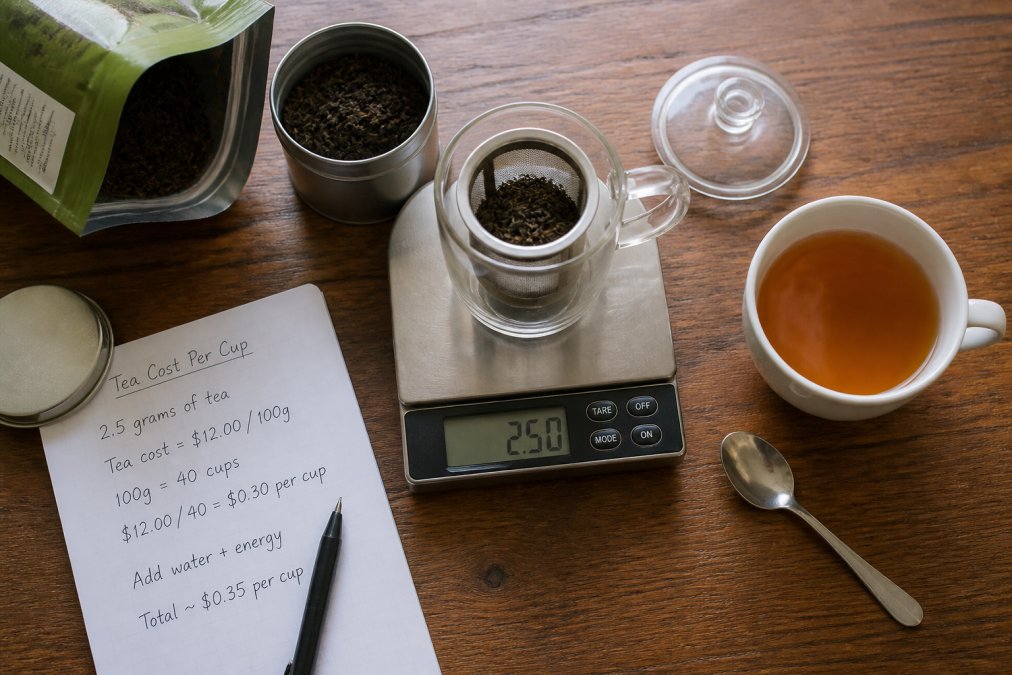
The cost-per-cup calculation shifts dramatically when you add resteeping. Loose leaf tea leaves can be steeped 2 to 4 times, sometimes more depending on the tea. That means one 2-ounce bag could yield 20 to 60 cups over several infusions. Suddenly your cost per cup drops to 28 to 85 cents, and the flavor often improves with each steep as the leaves fully open.
Tea bags? They're designed for one use. Resteeping a used tea bag produces watery, flavorless tea. Once it's done, it's done.
Why Loose Leaf Costs More Than Tea Bags
Loose leaf tea costs more upfront because you're buying whole leaves instead of dust and scraps. Here's what drives the price difference.
Tea production creates three grades of leaf. The top grade, whole leaves and buds, commands premium prices because they deliver superior flavor, aroma, and brewing control. These leaves unfurl slowly, releasing flavor gradually over multiple infusions. The middle grade, called "fannings," consists of broken leaf pieces. The bottom grade, "dust," is what falls off during processing. Most commercial tea bags contain fannings and dust because they're cheap to source and steep quickly.
When you buy loose leaf from Marilyn's Morning Brew, you're getting whole leaf or large broken pieces. The processing costs more. The sourcing is more selective. The packaging preserves freshness better. None of this is cheap.
There's also a supply chain reality: loose leaf tea requires more careful handling. Bags need to protect the leaf from moisture and light. Shipping costs more per ounce because loose leaf takes up more space than compressed tea bags.
But here's what most guides get wrong: the price premium reflects quality, not markup. A $22.99 bag of Matcha from Marilyn's Morning Brew isn't priced that way because it's loose leaf. It's priced that way because Matcha is stone-milled from carefully selected tea leaves and stems, crafted for traditional preparation and mindful daily rituals. The loose leaf format is secondary to the quality of the source material.

Organic vs Conventional Tea: Pesticides and Safety
This is where the "extra cost" question gets complicated. Organic loose leaf tea costs more than conventional loose leaf, sometimes 20 to 40 percent more depending on the blend. The question isn't whether organic tea is more expensive. It's whether that premium buys you something real.
Conventional tea farming relies on synthetic pesticides and fertilizers. These inputs are cheaper than organic methods, which is why conventional tea undercuts organic pricing. The pesticide residue question matters because tea leaves are steeped directly in hot water. Unlike fruits or vegetables where you might wash or peel away some residue, tea leaves dissolve into your cup.
Research from the FDA's pesticide monitoring program tracks pesticide residues in imported teas. Most teas, organic and conventional, test below legal limits. That said, conventional teas show detectable residue more often than organic teas do. The difference is measurable but not dramatic for most commercial products.
Organic certification matters here. USDA organic standards prohibit synthetic pesticides and most synthetic fertilizers. An organic tea must meet these standards to carry the label. That doesn't mean organic tea is pesticide-free, organic farming uses approved pesticides like sulfur and copper, but it means the certification process is audited and verified.
For loose leaf tea, organic certification adds another layer of assurance. The whole-leaf format means you're consuming more of the plant material than you would from tea dust in a bag. If pesticide residue concerns you, loose leaf organic tea reduces that exposure more than conventional tea dust.
Marilyn's Morning Brew offers organic teas like the Hibiscus Berry Tea, which contains organic hibiscus flowers, organic rosehips, organic orange peel, organic rooibos, organic blueberry flavor, organic passionfruit flavor, and organic mango flavor. Our Earl Grey also features organic ingredients, including Ceylon OP, bergamot essential oil, and cornflowers.

The honest verdict: organic tea costs more because certification is expensive, organic farming yields are lower, and sourcing organic tea requires more selective purchasing. You're paying for a verifiable standard, not a guarantee of zero risk. If pesticide residue concerns you, organic loose leaf is worth the premium. If you're indifferent to the certification, conventional loose leaf tea is safe at legal residue levels.
Flavor, Quality, and What You Actually Taste
Here's what separates a $16.99 loose leaf tea from a $3 box of tea bags: the flavor profile and the brewing control you get.
Whole leaf tea delivers more complex flavor because the leaf structure stays intact. When you steep whole leaves, they unfurl gradually, releasing flavor compounds in stages. The first infusion captures bright, delicate notes. The second and third infusions bring out deeper, earthier flavors as the leaves fully open. This progression is what makes resteeping rewarding, you're not just stretching your dollar, you're actually tasting different notes from the same leaf.
Tea bag dust, by contrast, steeps fast and exhausts quickly. The small particles release flavor rapidly, then plateau. A second infusion from a tea bag tastes watered-down because the dust has already given up most of its compounds. You get one good cup, then diminishing returns.
Quality loose leaf tea also reflects terroir, the growing conditions, elevation, harvest timing, and processing method. A high-quality Earl Grey from Marilyn's Morning Brew uses Ceylon black tea with blue cornflowers and bergamot oil. That specificity matters. You're tasting Ceylon's flavor profile (floral, slightly astringent, medium body) combined with the brightness of bergamot. A generic tea bag labeled "Earl Grey" might use cheaper tea with synthetic bergamot flavoring. The difference is obvious when you taste them side by side.

The Moroccan Mint blend, old green tea meets fresh mint, demonstrates this too. The green tea base provides a smooth, vibrant blend. The brewing control lets you adjust steeping time to emphasize one flavor over the other.
How to Store Loose Leaf Tea for Freshness and Value
Storage directly impacts your cost per cup because poor storage degrades tea faster, forcing you to replace it sooner.
Loose leaf tea stays fresh longest in airtight containers away from light, heat, and moisture.
Resteeping: The Hidden Money-Saver
Resteeping is where loose leaf tea's value proposition becomes undeniable. A single serving of loose leaf tea can be steeped 2 to 4 times, sometimes more. Each infusion extracts different flavor compounds, so you're not just stretching your dollar, you're actually getting a better product with each steep.
Is It Worth It? The Honest Verdict
Is organic loose leaf tea worth the extra cost? The answer depends on three factors: how much tea you drink, whether you resteep, and what you value.
Frequently Asked Questions
Is loose leaf tea more cost-effective than tea bags?
Yes, when you account for resteeping. A single serving of loose leaf tea can steep 2-3 times, cutting your effective cost per cup by 50-66%. A $22.99 tin of Matcha or Moroccan Mint yields roughly 30-40 cups at full strength, or 60-100 cups if you resteep, that's $0.23-$0.76 per cup. Conventional tea bags typically cost $0.30-$0.50 per single-use bag and cannot be resteeped effectively.
What does USDA Organic certification actually guarantee for tea?
USDA Organic certification means the tea was grown without synthetic pesticides, herbicides, or fertilizers. Tea plants absorb minerals and compounds from soil, so organic farming reduces pesticide residue in your cup.
Does organic loose leaf tea taste better than conventional tea?
Taste depends on terroir, harvest timing, and processing, not just organic status. Loose leaf tea also allows full leaf expansion, which releases more aroma and subtle flavor notes than broken fannings in tea bags. You may notice a cleaner, more complex flavor profile, especially with blends like Earl Grey or Moroccan Mint.
How long does loose leaf tea stay fresh, and does storage affect the cost-per-cup value?
Properly stored loose leaf tea stays fresh for 6-12 months in an airtight container away from light, heat, and moisture. Poor storage reduces flavor intensity, forcing you to use more tea per cup to achieve the same taste, cutting your effective value by 20-40%. Store your tea in opaque, airtight containers in a cool, dark cupboard. Proper storage protects your investment and ensures every cup delivers the premium flavor and aroma you paid for.
If you're ready to experience the difference that premium loose leaf tea makes, explore Marilyn's Morning Brew's carefully sourced collection. Each blend is roasted to order and selected from trusted farms, ensuring maximum flavor and freshness in every cup. Start with the Earl Grey or Moroccan Mint, both priced at $22.99, and brew them twice to see how the flavor evolves. That's when you'll understand whether loose leaf is worth the extra cost for your routine.