

How to Properly Rest Coffee Beans After Roasting
Table of Contents
- Why Resting Coffee Beans After Roasting Matters
- Coffee Degassing After Roasting: Understanding the Process
- How Long to Rest Coffee Beans After Roasting
- How Long to Rest Coffee for Espresso
- How to Store Freshly Roasted Coffee Beans
- Step-by-Step Resting Process for Home Roasters
- Common Mistakes When Resting Roasted Coffee
- Frequently Asked Questions
Last Updated: October 10, 2026
Why Resting Coffee Beans After Roasting Matters
Resting coffee beans after roasting is one of the most overlooked steps in getting a great cup. Most people assume freshly roasted beans are ready to brew immediately. They're not.
What Happens Inside the Bean During Roasting
When heat hits green coffee beans, a chemical transformation occurs. The beans expand, crack, and release moisture. Sugars caramelize. Acids break down. Hundreds of flavor compounds develop. This is what creates the taste you're after.
But the roasting process doesn't stop when the beans cool. Chemical reactions continue inside the bean for days after roasting. The bean is still changing.
The Role of Carbon Dioxide Release
One of the biggest things happening after roasting is carbon dioxide release. During the roast, the bean absorbs heat and pressure. This creates CO2 inside the bean. Once roasting stops and the beans cool, that gas needs to escape.
This process is called degassing. It's essential. If you brew coffee too soon, the CO2 interferes with water extraction. Your coffee tastes sour, thin, or bitter. The flavors don't come through properly.
Letting beans rest allows this gas to escape naturally. As the CO2 leaves, water can penetrate the bean more evenly during brewing. This means better extraction and better flavor.
Coffee Degassing After Roasting: Understanding the Process
Degassing is the gradual release of carbon dioxide from roasted coffee beans. This happens automatically after roasting ends. The process takes time, and the timeline depends on roast level, bean density, and storage conditions.
During the first 24 hours after roasting, degassing happens fastest. You might see or smell the gas escaping. After 3-4 days, the pace slows. By day 7-10, most of the CO2 has left. But some degassing continues for weeks.
The beans are also absorbing oxygen and losing moisture during this time. Flavor compounds are stabilizing. The bean's internal structure is settling. All of this takes time.
This is why specialty coffee roasters always print a roast date on the bag. It tells you exactly when the beans were roasted. At Marilyn's Morning Brew, we roast to order specifically so your beans arrive fresh.
Understanding degassing helps you understand why timing matters. Rest the beans, and you unlock the roaster's full work. Skip this step, and you're wasting premium coffee.
How Long to Rest Coffee Beans After Roasting
The simple answer: most coffee needs 3-7 days of rest after roasting before brewing. But the exact timing depends on several factors.
The Ideal Freshness Window for Most Brewing Methods
For drip coffee makers and pour-overs, the sweet spot is 5-7 days after roasting. At this point, most degassing is complete. The flavors have stabilized. Water extracts evenly.
For French press brewing, you can start at 4-5 days. The immersion method is more forgiving of residual CO2.
For cold brew, you can start even sooner, around 2-3 days. The cold water extraction process is slow. The extra time doesn't hurt.
The key is understanding the freshness window. Coffee doesn't have a sharp cutoff where it goes from "good" to "bad." Instead, it has a peak window where flavors are most vibrant.
For most brewing methods, this window runs from day 5 through day 21 after roasting. Within this range, the coffee tastes excellent. Before day 5, degassing is still active. After day 21, the beans start losing brightness and complexity.
Roast Level and Resting Time
Light roasts need less rest than dark roasts. Light roasted beans produce less CO2 during roasting. Degassing happens faster. You can often brew light roasts by day 3-4.
Medium roasts follow the standard timeline: 5-7 days before brewing.
Dark roasts produce the most CO2. They need the most time to degas. Wait 7-10 days before brewing dark roasted beans. This is especially true for espresso blends, which are typically dark roasted.
The roast level also affects flavor development.
When you buy from Marilyn's Morning Brew, each roast is labeled with its roast level. Our Brazil Santos is a medium roast. Our Bali Blue is a medium-dark roast. Our Ethiopia Natural is a light roast. Check the roast level, and you'll know roughly how long to rest before brewing.

How Long to Rest Coffee for Espresso
Espresso is different. Espresso demands precision. The extraction happens fast, under 30 seconds. Every variable matters.
Most espresso roasts need 8-14 days of rest before pulling shots. This is longer than drip coffee. Why? Espresso machines force hot water through the grounds at high pressure. If CO2 is still escaping from the beans, it creates resistance. The pressure builds unevenly. You get channeling, water finding paths of least resistance through the coffee puck.
Channeling ruins the shot. The water extracts some parts of the coffee over-extracted and other parts under-extracted. The result tastes thin, bitter, and unbalanced.
By waiting 8-14 days, you give the beans time to fully degas. The shot pulls smoothly. The water distributes evenly. You get a balanced, syrupy espresso with clean flavor.
If you're impatient and pull shots at day 3-4, expect problems. The shots will gush. The espresso will taste sour and thin. Wait the full time, and you'll understand why espresso roasters emphasize the roast date so heavily.
How to Store Freshly Roasted Coffee Beans
Storage conditions affect how long beans stay fresh. Good storage extends the freshness window. Poor storage shrinks it fast.
Container and Packaging Choices
The best container is opaque, airtight, and cool. This protects the beans from light, oxygen, and temperature swings.
Whole beans stay fresh longer than ground coffee. Grinding exposes far more surface area to oxygen. Ground coffee starts fading within days. Whole beans stay vibrant for weeks.
One-way valve bags are ideal. These bags let CO2 escape during degassing but prevent oxygen from entering. If your beans arrive in a bag with a valve, keep them in that bag. It's doing its job.
If you transfer beans to a container, use an airtight glass jar or a container with a tight seal. Avoid clear containers. Light degrades coffee quickly. Store in a dark cupboard, not on the counter.
Never store beans in the refrigerator or freezer. Room temperature is ideal.
Temperature, Light, and Humidity Control
Heat speeds up staling. Keep beans away from direct sunlight and heat sources like ovens or radiators.
Light damages coffee. UV rays break down the compounds that create flavor and aroma. Store beans in a dark place.
Humidity matters too. A cool, dry cupboard is perfect.
If you buy beans regularly, buy only what you'll use in 2-3 weeks.
Step-by-Step Resting Process for Home Roasters
If you roast your own beans at home, follow this process to rest them properly.
Immediate Post-Roast Handling
After the roast ends, cool the beans quickly. Spread them on a sheet pan or cooling tray. Don't pile them in a thick layer. Air needs to flow around every bean.
Let them cool to room temperature. This takes 10-20 minutes depending on the roast level and ambient temperature.
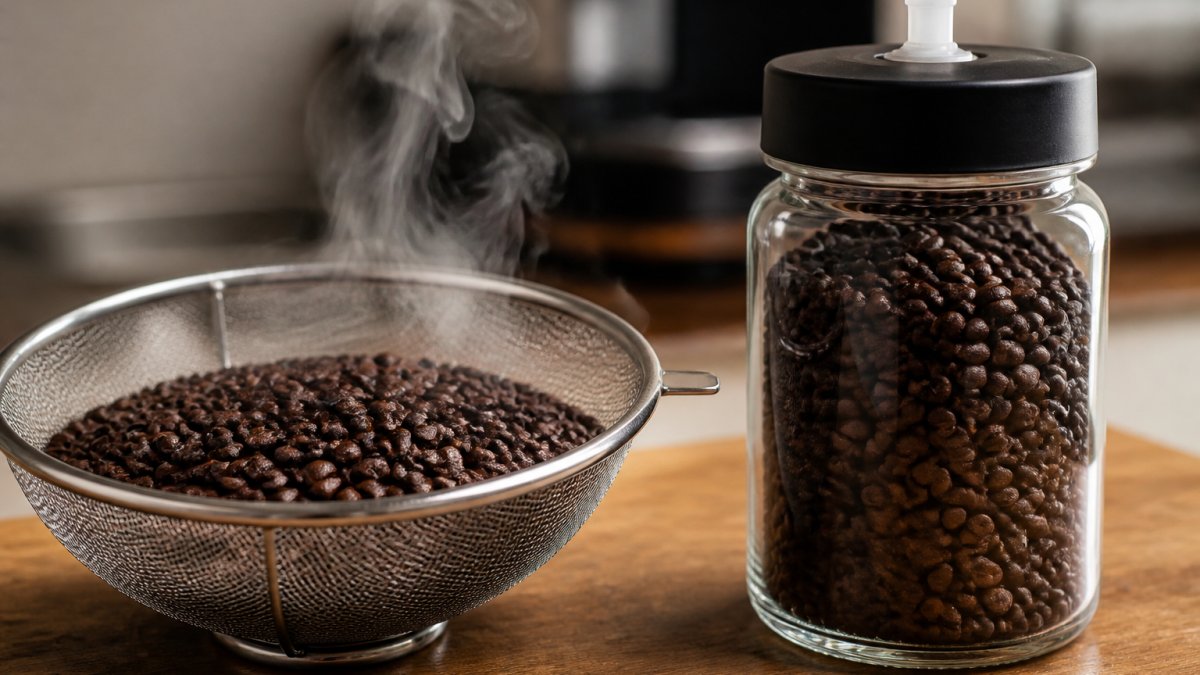
Once cooled, transfer the beans to a breathable container. A mesh strainer or colander works. You want air to circulate. Leave them uncovered for the first 24 hours. This lets CO2 escape freely.
After 24 hours, transfer to an airtight container with a one-way valve if you have one. If not, use an airtight jar.
Daily Monitoring and Readiness Signs
Check your beans daily. Smell them. Feel them. You're looking for signs that degassing is slowing.
On day 1-2, the beans feel warm and smell intensely of roasted coffee.
By day 3-4, the smell becomes more nuanced. The beans feel cooler.
By day 5-7, the aroma stabilizes. The beans smell like coffee you'd want to brew. They feel room temperature.
For light roasts, you can start brewing around day 3-4. For medium roasts, wait until day 5-6. For dark roasts, wait until day 7-10.
The best test is simple: grind a few beans and smell them.
Common Mistakes When Resting Roasted Coffee
Brewing too soon. This is the most common mistake. People roast beans and brew immediately. The result is sour, thin coffee. Wait at least 3-5 days. Your patience pays off.
Storing in the wrong container. Clear containers, unsealed bags, and warm locations all accelerate staling. Use airtight, opaque containers in cool places.
Grinding too early. Grinding days before brewing wastes freshness. Grind just before brewing. Whole beans stay fresh far longer.
Ignoring roast date. If you buy from a roaster, check the roast date. If there's no date, find a different roaster. The roast date is your roadmap for when to brew.
Confusing roast date with best-by date. Roast date tells you when the beans were roasted. Best-by date is a general guideline. The roast date is what matters. Use it to calculate your ideal brewing window.
Storing in the freezer. Temperature swings from freezing and thawing damage beans. Room temperature storage is better.
Keeping beans too long. After day 21-30, coffee fades noticeably. Don't buy massive quantities and store them for months. Buy smaller amounts more frequently. Fresher beans always taste better.
The process of rest coffee beans after roasting isn't complicated. It's just a matter of understanding the process and being patient. At Marilyn's Morning Brew, we roast to order specifically so your beans arrive fresh and ready to rest. Our single-origin coffees, like our Ethiopia Natural with its fruity, caramel notes, reach their peak flavor when you follow proper resting and storage practices. Order your beans, rest them 5-7 days, and brew. You'll taste the difference that freshness makes. Get started with Marilyn's Morning Brew and experience coffee the way it's meant to taste.
| Roast Level | Minimum Rest Days | Ideal Rest Days | Best Brewing Method |
|---|---|---|---|
| Light | 2-3 days | 3-5 days | Pour-over, drip |
| Medium | 4-5 days | 5-7 days | Drip, French press |
| Dark | 7-10 days | 8-14 days | Espresso, dark roasts |
Frequently Asked Questions
How long should coffee beans rest after roasting before I brew them?
Most coffee tastes best when brewed 3 to 14 days after roasting. Resting allows carbon dioxide to escape and flavors to stabilize.
Can I brew coffee immediately after roasting?
Brewing immediately after roasting produces unbalanced, harsh-tasting coffee. Waiting at least 12 to 24 hours allows initial degassing to occur, but the full flavor profile develops only after several days of rest. Patience during the resting period directly improves your cup quality.
What is the difference between roast date, bagging date, and best-by date?
The roast date marks when the beans were roasted and is the most important for freshness assessment. The bagging date is when the beans were packaged, which may be days or weeks after roasting. The best-by date is a manufacturer estimate of peak quality, typically 3 to 4 weeks from the roast date. Always prioritize the roast date to determine freshness, as it directly indicates how long the beans have been degassing and aging.
How should I store freshly roasted coffee beans while they rest?
Store beans in an airtight container that blocks oxygen and moisture. Keep the container in a cool, dark place away from direct sunlight, heat, and humidity. Avoid the refrigerator or freezer. A pantry or kitchen cabinet works well. Check the container daily for signs of moisture or mold, and ensure the seal remains tight after the resting period ends.