

Coffee Roast Date Explained: A Guide to Freshness
Table of Contents
- What Is a Coffee Roast Date?
- Coffee Roast Date vs Best-by Date: Key Differences
- Why Roast Dates Matter for Coffee Freshness
- How Long to Rest Coffee After Roasting Before Brewing
- How Long Coffee Beans Stay Fresh After Roasting
- How to Store Coffee Beans to Maximize Freshness
- Reading Roast Dates: What the Numbers Mean
- Frequently Asked Questions
Last Updated: October 9, 2026
What Is a Coffee Roast Date?
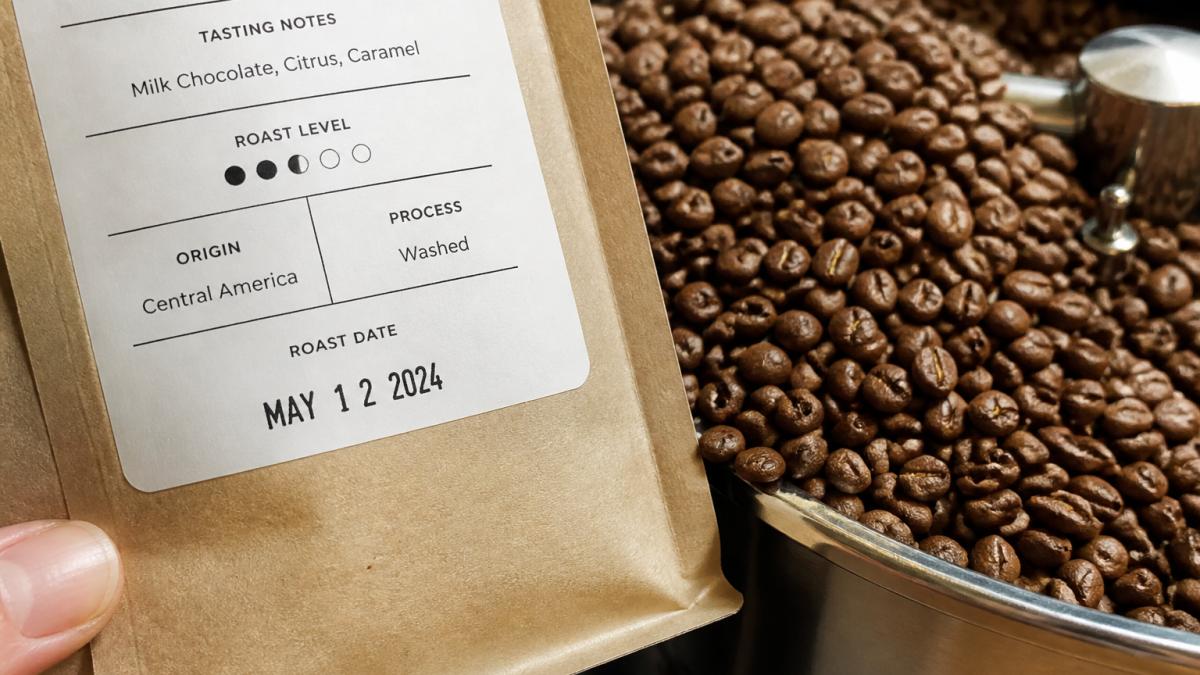
A coffee roast date is the date when coffee beans were roasted. It tells you how fresh your beans are and when they're at peak flavor.
Every bag from Marilyn's Morning Brew includes a roast date printed clearly on the label, so you know exactly how fresh your beans are when they arrive.
The roast date is your most reliable guide to quality: it shows the coffee was recently roasted to order, which is how specialty coffee should be handled.
Coffee Roast Date vs Best-by Date: Key Differences
The roast date and best-by date serve completely different purposes, and knowing the difference helps you choose smarter.
A roast date tells you when the beans were roasted. A best-by date (also called an expiration date) tells you when the roaster thinks the coffee will start to decline in quality. The roast date is a starting point. The best-by date is an ending point.
Here's the practical difference:
- Roast date: "These beans were roasted on October 1st"
- Best-by date: "We recommend using these beans by November 15th"
The best-by date is usually 3 to 6 months after the roast date, depending on packaging and storage. It doesn't mean your coffee goes bad that day, just that the flavor profile starts to fade.
Roast Date vs Bagging Date
Some bags show both a roast date and a bagging date. They're not the same thing.
The roast date is when the beans were roasted; the bagging date is when they were sealed into a bag.
When you see both, trust the roast date, it tells you how fresh your coffee actually is. Coffee loses flavor every day after roasting, not after bagging.
At Marilyn's Morning Brew, we roast to order and bag immediately, so both dates are essentially the same, your beans spend as little time between the roaster and your cup as possible.
Why Roast Dates Matter for Coffee Freshness
Freshness is everything in specialty coffee. The moment beans are roasted, they begin to change.
When coffee is roasted, heat transforms green beans into the dark, flavorful beans you recognize, and the beans release carbon dioxide.
After about 2 weeks, oils in the beans start to oxidize: the aroma becomes less vibrant and the cup tastes flatter.
A coffee roast date explained properly shows that fresher isn't always better right away, but there is a window where coffee tastes its absolute best.
How Long to Rest Coffee After Roasting Before Brewing
Many people think fresh roasted coffee is ready to brew immediately, one of the most common mistakes coffee drinkers make.
Freshly roasted beans need time to rest. If you brew too soon, escaping CO2 interferes with water absorption and extraction, and your cup tastes sour, thin, and underdeveloped.
Here's the practical timeline:
- First 24 hours: Beans are still actively degassing. Brewing now produces poor extraction.
- 24 to 48 hours: Flavors are beginning to stabilize. Coffee is drinkable but not optimal.
- 3 to 7 days: The ideal window for most brewing methods. Flavors are balanced and complex.
- After 7 days: Coffee is still good, but the bright, fresh character begins to fade.
The sweet spot depends on your brewing method: espresso works best at 5 to 9 days, pour-over and French press at 4 to 14 days, and cold brew tolerates older beans because the longer extraction compensates.
When you order from Marilyn's Morning Brew, your coffee arrives roasted to order, ensuring maximum flavor, aroma, and freshness for every cup.
How Long Coffee Beans Stay Fresh After Roasting
Coffee doesn't spoil like milk or bread, it just loses brightness and complexity over time. Knowing how long beans stay fresh helps you plan orders and brewing.
Properly stored beans in an airtight container stay flavorful for about 3 to 4 weeks after roasting. After that they're still drinkable, but the flavor profile has shifted noticeably.
Exposed to air, moisture, light, or heat, beans lose freshness much faster, a bag left open on the counter can taste stale within days.
Freshness Windows by Brewing Method
Different brewing methods extract coffee differently, so the ideal freshness window varies:
| Brewing Method | Ideal Freshness Window | Why |
|---|---|---|
| Espresso | 5-9 days | Tight seal requires stable CO2 levels |
| Pour-over | 4-14 days | Medium extraction time works with slight oxidation |
| French press | 4-14 days | Longer steep time extracts well from slightly older beans |
| Cold brew | 7-21 days | Extended steeping masks some oxidation effects |
| Automatic drip | 4-14 days | Standard extraction similar to pour-over |
There's no single "best" freshness window, it depends on how you brew. Espresso drinkers should order more frequently to stay in the 5 to 9 day range; cold brew drinkers can order less often and still get great flavor.
How to Store Coffee Beans to Maximize Freshness
Storage is the difference between vibrant and flat coffee, and it's the variable you control after the roast date is printed. The right storage slows the chemical changes that begin the moment beans leave the roaster; the wrong storage accelerates them.
What's actually happening inside the bag
After roasting, beans release carbon dioxide in a process called degassing, losing a significant portion of their mass in the first few days.
This is why most quality coffee bags include a one-way valve: a small disc or slit that lets CO2 escape without letting air back in. It's a freshness feature, not a gimmick, a working valve vents pressure while blocking oxygen.
Once oxygen gets in, it reacts with the oils on the bean surface, producing stale, cardboard-like flavors. Heat, light, and moisture speed up the reaction, so your storage goal is simple: minimize all four.
The storage rules that actually matter
- Use an airtight container with a one-way valve or a tight seal. A sealed jar or the original valve bag both work. Avoid clear containers that expose beans to light.
- Keep beans cool and dry. Store in a pantry or cabinet, not on a sunny counter or next to the stove. Room temperature is fine for most home setups.
- Use whole beans, not ground. Grinding increases surface area exposed to oxygen, so ground coffee stales much faster. Grind just before brewing.
- Buy smaller quantities more often. A bag consumed within 3 to 4 weeks stays fresher than a large bag that sits for months.
- Skip the fridge. Moisture and temperature fluctuations in the refrigerator damage beans more than room-temperature storage. The freezer is a different story (see below).
The freezer question
Freezing is the one storage method that genuinely extends freshness, but only if done correctly. The goal is to avoid repeated temperature swings that introduce moisture.
- Freeze in airtight, single-use portions. Divide beans into bags sized for one week of brewing so you only thaw what you'll use.
- Thaw completely before opening. Opening a frozen bag lets condensation form on the beans. Let the sealed bag come to room temperature first.
- Don't refreeze. Each freeze-thaw cycle degrades quality. Once thawed, treat the beans as fresh and use them within a week or two.
How packaging and storage connect to the date
The roast date tells you where you are on the freshness curve; storage determines how steep that curve is. Two bags roasted the same day can taste dramatically different a week later depending on storage.
When you order from Marilyn's Morning Brew, your beans arrive in a bag with a one-way valve that lets CO2 escape without letting air in.
Reading Roast Dates: What the Numbers Mean
Coffee roast dates appear in different formats depending on the roaster, and the format is often the biggest source of confusion on a bag. Learning to decode each one lets you assess freshness in seconds.
The four formats you'll actually see
1. Standard calendar date (month/day/year) The most common format, seen as 10/01/26 or October 1, 2026, straightforward at a glance.
2. Julian date (day of year) Some specialty roasters print a three-digit number for the day of the year: January 1st is 001, December 31st is 365 (366 in a leap year).
3. "Roasted on" prefix A few roasters spell it out: "Roasted on" followed by a date, the clearest format, with no ambiguity.
4. "Best by" only Some bags show only an expiration-style date with no roast date at all, the hardest format, since you must reverse-engineer the roast date from a best-by window that varies by roaster.
Decoding ambiguous formats
The trickiest cases are two-digit years and dates that could be read two ways:
- Two-digit years: 10/01/26 almost always means October 1, 2026, not 1926. If the year looks implausible, assume the current or most recent year.
- Day/month vs. month/day: A date like 03/10/26 is ambiguous. If the first number is 13 or higher, it must be the day (there's no 13th month). If both numbers are 12 or lower, check the roaster's location conventions or look for a spelled-out month elsewhere on the bag.
- No year at all: Some roasters print only month and day, assuming you'll know the year. If the date is in the future relative to today, it's almost certainly last year's date.
- Julian date plus year: A label reading "274-26" means day 274 of 2026, or roughly October 1, 2026.
What to do when there's no roast date
If you can't find a roast date anywhere on the bag, you have three options:
- Look for a best-by date and subtract. Most roasters set best-by windows 3 to 6 months after roasting, so a best-by of April 1 suggests a roast date around October 1 to January 1. Imprecise, but it narrows the range.
- Check for a lot code or batch number. Some roasters encode the roast date in a production code; ask them to decode it.
- Treat the absence as a signal. A company that hides its roast date probably isn't confident about freshness. In specialty coffee, transparency about roast dates is standard practice, not a premium feature.
At Marilyn's Morning Brew, we print the roast date clearly on every bag in month/day/year format. No guessing. No decoding. You know exactly how fresh your beans are when they arrive.
Frequently Asked Questions
What does the roast date on a coffee bag mean?
The roast date indicates the exact day your coffee beans were roasted. This date is critical because it marks the beginning of the freshness window. Unlike packaged foods with expiration dates, roasted coffee is best consumed within a specific timeframe after roasting. Knowing the roast date lets you purchase coffee at peak freshness and brew it during its ideal window.
How long do coffee beans stay fresh after the roast date?
Whole beans typically remain fresh for 2 to 4 weeks after roasting if stored properly in an airtight container away from light and heat. After 4 weeks, beans don't spoil but lose aroma and develop a flat, stale taste.
What is the difference between a roast date and a best-by date?
A roast date tells you when the beans were roasted and marks the start of peak freshness. A best-by date is a manufacturer's estimate of when quality begins to decline noticeably. The roast date is factual and precise; the best-by date is subjective. For specialty coffee, the roast date is more useful because it lets you calculate your ideal brewing window. Coffee doesn't expire on the best-by date, it simply tastes less vibrant.
How should you store coffee beans to keep them fresh?
Store whole beans in an airtight container away from direct sunlight, heat, and moisture. Keep them at room temperature. Opaque containers work best to block light. If your bag has a one-way valve, you can store it sealed as-is for short periods. Proper storage extends freshness and helps you get the most from roasted-to-order coffee like Marilyn's Morning Brew's offerings.