

How to Make Cold Brew Coffee Concentrate at Home
Table of Contents
- What You'll Need: Equipment and Tools
- Selecting the Best Coffee Beans for Cold Brew
- Understanding the Cold Brew Coffee Ratio
- Step-by-Step Brewing Instructions
- How Long to Steep Cold Brew for Best Results
- Straining and Storage for Maximum Freshness
- How to Dilute and Serve Your Concentrate
- Common Mistakes to Avoid
- Frequently Asked Questions
Last Updated: October 1, 2026
What You'll Need: Equipment and Tools
Making cold brew coffee concentrate at home requires minimal equipment. You probably own most of it already.

Start with a clean glass jar. A quart-sized mason jar works perfectly. It's durable, lets you see the brewing process, and seals tight for storage.
Next, grab a fine-mesh sieve or cheesecloth. You'll use this to strain the grounds from your concentrate. A sieve gives you faster, cleaner results. Cheesecloth works too, but takes longer and can leave sediment behind.
You'll also need:
- A kitchen scale (optional but helpful for precise ratios)
- A measuring cup or spoon
- A second jar or container for storing your finished concentrate
- Filtered water (tap water works, but filtered water produces cleaner flavor)
- A spoon or whisk for mixing
That's it. No expensive equipment needed. The simplicity is part of why so many people love making cold brew at home.
Selecting the Best Coffee Beans for Cold Brew
The beans you choose determine everything about your final concentrate. Cold brew extracts differently than hot brewing, so bean selection matters more than most people realize.
Look for freshly roasted beans. Stale beans produce flat, dull concentrate.
Medium to dark roasts work best for cold brew. These roasts have already developed their full flavor profile, and the slow extraction process won't over-extract bitter compounds.
Consider the origin. Single-origin beans from specific farms give you distinct flavor profiles:
- African beans: bright, fruity, floral notes
- Central American beans: balanced, smooth, nutty
- South American beans: rich, chocolate, caramel tones
Blended beans offer consistency and balanced flavor.
Avoid pre-ground coffee. Grinding your beans yourself, right before brewing, preserves the essential oils and flavor compounds that make cold brew special. Pre-ground coffee loses potency sitting in bags.
Understanding the Cold Brew Coffee Ratio
The cold brew coffee ratio is the foundation of your concentrate. Get this right, and everything else falls into place.
The most common ratio is 1 part coffee to 4 parts water by weight. This produces a strong, balanced concentrate.
But ratios vary based on your preferences. Some people prefer stronger concentrate (1:3 ratio) for bold flavor. Others like milder concentrate (1:5 ratio) for a lighter taste.
Here's how different ratios affect your final concentrate:
| Ratio | Strength | Best For | Dilution |
|---|---|---|---|
| 1:3 | Very strong | Bold coffee lovers | Dilute 1:2 or 1:3 with water/milk |
| 1:4 | Strong, balanced | Most people | Dilute 1:1 or 1:2 with water/milk |
| 1:5 | Lighter | Mild preference | Dilute 1:1 with water/milk |
Use weight, not volume, for accuracy. A scale removes guesswork.
Step-by-Step Brewing Instructions
Making cold brew concentrate is straightforward. Follow these steps for consistent, delicious results.
Step 1: Grind Your Coffee to a Coarse Consistency
Grind size matters more than most people realize. Coarse grind is essential for cold brew.
Coarse grounds look like breadcrumbs or sea salt. They're much larger than espresso grounds or drip coffee grounds.
Use a burr grinder if possible. Blade grinders produce inconsistent sizes, mixing fine dust with larger chunks. Inconsistent grind size leads to uneven extraction and sediment in your final concentrate.
Grind your beans just before brewing. Ground coffee loses flavor compounds within hours. Fresh grinding preserves the essential oils that make your cold brew taste vibrant and smooth.
Step 2: Combine Coffee and Filtered Water
Pour your coarse-ground coffee into your clean mason jar first. Then add your filtered water slowly, stirring as you pour.
Use filtered water if you can. Tap water works, but filtered water produces cleaner flavor without mineral or chlorine notes. The slower extraction process of cold brewing amplifies any off-flavors in your water, so water quality matters.
Stir thoroughly. Make sure all the dry grounds are fully saturated. Some grounds will float at first, that's normal. Stir for about 30 seconds to ensure even contact between coffee and water.
Step 3: Mix Thoroughly and Cover
Stir the mixture one more time after a few minutes. Some grounds settle to the bottom. Stirring redistributes them and ensures even extraction throughout the brewing period.
Cover your jar tightly. Use the mason jar's lid, or cover with plastic wrap and a rubber band. A tight seal prevents oxidation and keeps dust and debris out.
Store your jar at room temperature. Avoid direct sunlight. A kitchen counter, pantry, or cupboard works perfectly.
How Long to Steep Cold Brew for Best Results
Steeping time determines the strength and flavor profile of your concentrate. Timing is flexible, but there's a sweet spot.
The standard steeping time is 12 hours at room temperature. This produces balanced, smooth concentrate without over-extraction.
Some variables change your ideal steeping time:
- Room temperature: Warmer rooms (70-75°F) extract faster. Cooler rooms (60-65°F) extract slower. Adjust timing accordingly.
- Grind size: Finer grinds extract faster. Coarser grinds extract slower. Stick with coarse grind to keep timing predictable.
- Ratio strength: Stronger ratios (1:3) can steep slightly shorter. Weaker ratios (1:5) may need slightly longer.
Taste your concentrate after 8 hours. If it tastes too weak, wait longer. If it tastes too strong or bitter, strain it immediately.
Most people find 12 hours produces the best balance. Eight hours is too short for full extraction. Twenty-four hours can over-extract and produce harsh flavors.
Straining and Storage for Maximum Freshness
Straining separates your concentrate from the grounds. This step determines the clarity and smoothness of your final product.
Use your fine-mesh sieve first. Pour your cold brew through the sieve into a clean jar or container.
For extra clarity, strain again through cheesecloth. This second strain removes fine sediment and produces silky-smooth concentrate.
Discard the spent grounds.
Store your finished concentrate in an airtight container. Glass works best.
Refrigerate your concentrate immediately after straining. Cold storage slows oxidation and preserves flavor.
Label your jar with the brewing date.
How to Dilute and Serve Your Concentrate
Your cold brew concentrate is strong. Dilution is essential for balanced flavor and proper caffeine levels.
The standard dilution ratio is 1 part concentrate to 1 part water or milk. This produces a smooth, balanced cold brew. Adjust based on your strength preference:
- Strong preference: 1 part concentrate to 0.5 parts water (very bold)
- Standard: 1 part concentrate to 1 part water (balanced)
- Mild preference: 1 part concentrate to 2 parts water (lighter)
Pour your concentrate over ice. Add your chosen liquid, water, milk, oat milk, or cream. Stir well. The ice melts slightly as you drink, naturally diluting the concentrate further.
For hot coffee, heat your water or milk first. Pour concentrate into a mug, add hot liquid, and stir. This method works year-round and delivers smooth, rich flavor without the bitterness of reheating.
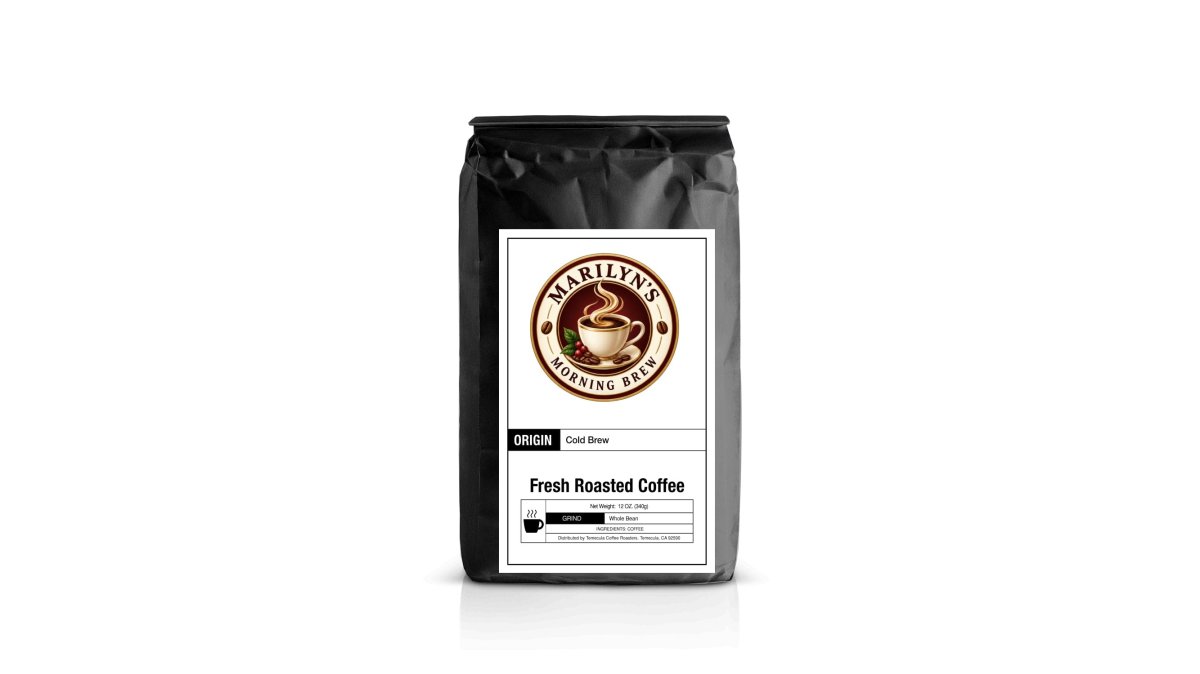
Try our Cold Brew Coffee blend from Marilyn's Morning Brew for premium concentrate that delivers maximum flavor and aroma. Pair your morning cold brew with one of our ceramic mugs, the White Glossy Mug or Mug With Color Inside make every sip feel special.


Experiment with flavor additions:
- Vanilla extract or vanilla syrup
- Cinnamon or cardamom
- A pinch of sea salt
- Honey or maple syrup
- Coconut cream
Cold brew concentrate's smooth, rich base accepts these additions beautifully without becoming bitter or harsh.
Common Mistakes to Avoid
Understanding what goes wrong helps you brew perfect cold brew every time.
Using fine grind instead of coarse grind is the most common mistake.
Not using filtered water produces concentrate with chlorine or mineral notes.
Steeping too long creates harsh, over-extracted concentrate. Twelve hours is ideal.
Forgetting to stir during brewing leads to uneven extraction.
Storing at room temperature instead of refrigerated causes oxidation and flavor degradation.
Using stale beans produces flat, dull concentrate. Fresh beans roasted within two weeks deliver vibrant flavor. Marilyn's Morning Brew roasts beans to order to guarantee maximum freshness when they arrive at your door.
Skipping the second strain leaves sediment in your concentrate.
Making cold brew coffee concentrate at home transforms your morning routine.
Start with our Cold Brew Coffee blend from Marilyn's Morning Brew. We source from trusted farms worldwide and roast to order, ensuring maximum flavor and aroma in every batch. Fast, reliable delivery means your fresh beans arrive ready to brew. Get started today and discover how premium cold brew concentrate elevates your daily ritual.
Frequently Asked Questions
What is the ideal cold brew coffee ratio for concentrate?
The golden ratio for cold brew concentrate is 1 part coffee to 4 parts filtered water by weight. This produces a strong, shelf-stable concentrate you can dilute later. For example, use 1 cup of coarse grounds with 4 cups of water. Some prefer 1:3 for extra strength, while 1:5 yields a milder concentrate. Adjust based on your taste preference and how you plan to serve it.
How long should cold brew steep to develop optimal flavor?
Cold brew typically requires 12 to 24 hours of steeping time at room temperature. Steeping longer than 24 hours can introduce excessive bitterness and sediment. Once your steeping time is complete, strain immediately to stop the extraction process and preserve the concentrate's clean flavor profile.
How long does homemade cold brew concentrate stay fresh?
Properly stored in an airtight container in the refrigerator, cold brew concentrate remains fresh for up to 2 weeks. The immersion method and lack of heat slow oxidation, making it shelf-stable longer than hot-brewed coffee. Store in glass jars away from direct light for best results. Always check for off flavors or sediment before use; if either is present, discard the batch.
What type of coffee grind works best for cold brew concentrate?
A coarse grind is essential for cold brew concentrate. Coarse grounds slow extraction during the long steeping period, preventing over-extraction and excessive bitterness. The particle size should resemble breadcrumbs or sea salt. Avoid fine or medium grinds, which can produce sediment and muddy flavors. Freshly roasted beans ground just before brewing deliver the best flavor and acidity balance.