

Brew Unique Coffee Flavors at Home: A Step-by-Step Guide
Table of Contents
- What You'll Need: Choosing the Right Coffee Base and Tools
- The Flavor-Building Framework: How to Brew Unique Coffee Flavors
- How to Spice Coffee Grounds Before Brewing
- Natural Coffee Flavor Enhancers and Sweet Combinations
- Flavor Profiles by Brewing Method
- Troubleshooting: Common Mistakes and Safe Ingredient Handling
- Mixing Coffee Blends and Roasts for Unique Tastes
- Frequently Asked Questions
Last Updated: October 6, 2026
What You'll Need: Choosing the Right Coffee Base and Tools
To brew unique coffee flavors at home, start by picking the right foundation. Your choice of beans and equipment shapes everything that comes next.
Selecting specialty-grade beans for flavor building
Specialty-grade beans are your best starting point for building custom flavors.
Single-origin coffees work best when you want a clean canvas for your additions. An Arabica bean from a specific farm will have its own natural sweetness or brightness that pairs well with spices, honey, or chocolate notes.
The roast level matters more than you might think. Light roasts highlight acidity and floral notes. Medium roasts balance sweetness with body.
At Marilyn's Morning Brew, we start with specialty-grade single-origin beans roasted in small batches to preserve their natural character. When you're building unique flavors, you want beans that already taste good on their own.
Grinding and brewing equipment essentials
You need two key pieces of equipment: a grinder and a brewing method.
A burr grinder (not a blade grinder) gives you control over grind size, which directly affects extraction and flavor. Blade grinders crush beans unevenly, leading to over-extraction in some particles and under-extraction in others.
Your brewing method determines how much time your coffee spends in contact with water:
- Pour-over or drip coffee: 3-5 minutes contact time, produces bright flavors
- Espresso: 25-30 seconds contact time, produces concentrated, rich flavors
- Cold brew: 12-24 hours contact time, produces smooth, mellow flavors
Each method extracts different compounds from your beans, which means the same flavoring addition will taste different depending on your brewing choice. Cold brew, for example, naturally suppresses bitterness, so chocolate and caramel additions shine without harsh edges.
You'll also want a kitchen scale. Weighing your coffee and water removes guesswork and makes your recipes repeatable.
The Flavor-Building Framework: How to Brew Unique Coffee Flavors
A repeatable system beats random experimentation. Here's the framework we use at Marilyn's Morning Brew to build consistent, balanced flavors.
Understanding coffee-to-water ratios and extraction
The coffee-to-water ratio is your starting control point. A standard ratio is 1:16 (one part coffee to 16 parts water by weight). This produces a balanced cup with good body and clarity.
If your flavors taste muted, your coffee might be under-extracted. Try a stronger ratio like 1:15 or even 1:14 (more coffee, same water). If your additions taste harsh or bitter, you're likely over-extracting. Dial back to 1:17 or 1:18 (less coffee, same water).
Extraction happens over time. The longer water sits with coffee grounds, the more compounds dissolve into your cup. This is where brewing method matters:
- Under-extracted coffee tastes sour and thin
- Properly extracted coffee tastes balanced and clean
- Over-extracted coffee tastes bitter and harsh
When you're adding flavors, proper extraction ensures your base coffee isn't fighting against your additions. A balanced, well-extracted cup gives you a clean palette to work with.
Timing your flavor additions for maximum impact
When you add your flavoring matters as much as what you add.
For spices added to dry grounds before brewing, they infuse during extraction. The hot water pulls their oils and flavors directly into your cup.
For liquid additions like honey or syrups, add them after brewing while the coffee is still hot. Hot coffee dissolves sweeteners completely and distributes flavors evenly.
For flavored oils or extracts (like vanilla or almond), add them to your cup after brewing, one drop at a time.
Cold brew is different. Since it steeps for hours, add spices directly to the grounds before brewing. They'll have plenty of time to infuse without bitterness.
How to Spice Coffee Grounds Before Brewing
Spices transform coffee from simple to complex. The key is using the right amount and the right technique.
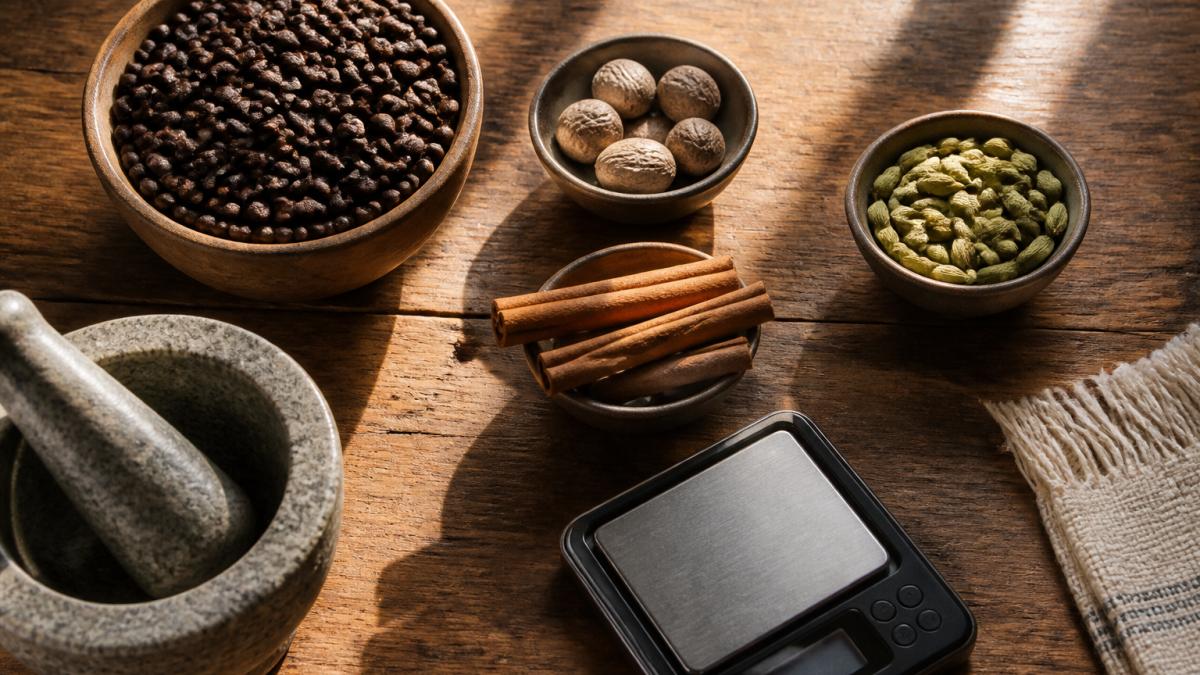
Cinnamon, nutmeg, and cardamom: precise measurements
Start small with spices. A quarter teaspoon of ground cinnamon per 12 ounces of brewed coffee is a solid baseline. Nutmeg is stronger, use one-eighth teaspoon. Cardamom is the strongest of the three, use just a pinch (one-sixteenth teaspoon) to start.
Whole spices work better than pre-ground. Whole cinnamon sticks, nutmeg pods, and cardamom seeds stay fresher longer and taste more vibrant. You can crack them slightly before adding to your grounds to release more flavor.
Here's a simple ratio for a single cup:
- 15 grams of coffee grounds
- One small cinnamon stick, lightly cracked
- Two or three cardamom pods, lightly crushed
- One small piece of nutmeg (about the size of a pea)
Mix these together dry before brewing. They'll infuse during extraction without adding bitterness.
Blooming and infusing spices into hot water
Blooming is a technique that extracts spice flavors before your main brew. It works especially well for pour-over and drip methods.
Add your spices directly to your coffee grounds in the filter. Pour just enough hot water (around 200 degrees Fahrenheit) to wet the grounds and spices. Wait 30 seconds.
Then pour the rest of your water normally. The spice flavors are already in your cup, and your coffee extracts at the right pace.
For cold brew, skip blooming. Cold water extracts spices more slowly, which is actually an advantage, you get gentle flavor without harshness.
Natural Coffee Flavor Enhancers and Sweet Combinations
Beyond spices, there are dozens of ways to layer flavor into your cup.
Honey, caramel, and chocolate pairings with brewing methods
Honey is the simplest addition. One teaspoon per cup dissolves completely in hot coffee and adds natural sweetness without the artificial taste of refined sugar.
Caramel is trickier.
Chocolate pairs best with darker roasts and espresso. Add a small pinch of unsweetened cocoa powder (one-sixteenth teaspoon) to your grounds before brewing, or stir in chocolate syrup after brewing.
Pour-over coffee brings out brightness, so pair it with honey or vanilla. Espresso is already concentrated, so chocolate and caramel additions won't get lost.
Flavored Coffees Sample Pack →
Citrus, vanilla, and unexpected ingredient combinations
Citrus seems odd in coffee, but lemon zest adds brightness that cuts through richness. Add one-quarter teaspoon of fresh lemon zest to your grounds before brewing.
Vanilla is the safest addition. One drop of vanilla extract per cup (added after brewing) adds sweetness and depth without overpowering. Real vanilla is better than imitation, though both work.
Unexpected combinations that actually work:
- Orange zest plus dark chocolate
- Almond extract plus cinnamon
- A tiny pinch of sea salt plus caramel
- Cardamom plus a drop of rose water
The salt addition might sound strange, but a tiny amount (just a few grains) enhances sweetness and rounds out harsh edges. It's a professional technique used in high-end coffee shops.
Start with one-quarter teaspoon of any new ingredient per 12 ounces of brewed coffee. Taste, then adjust. You're building flavor, not masking it.
Flavor Profiles by Brewing Method
Your brewing method shapes which flavors shine and which disappear.
Pour-over and drip coffee: bright, balanced flavors
Pour-over and drip methods extract coffee evenly over 3-5 minutes. This timing pulls out the beans' natural sweetness and acidity without bitterness.
These methods work best with lighter spices and bright additions:
- Lemon or orange zest for citrus brightness
- Honey for clean sweetness
- Vanilla extract for subtle depth
- Cinnamon for warmth without heaviness
Medium roasts show off their natural flavor in pour-over. You'll taste the coffee itself, with your additions playing a supporting role. This is ideal if you want to showcase the beans' origin character while adding complexity.
Espresso and cappuccino: rich, concentrated blends
Espresso extracts in 25-30 seconds under pressure. This short time pulls out oils and creates a thick, concentrated shot with natural crema (the golden foam on top).
Espresso can handle bold additions because the base is already intense:
- Dark chocolate or cocoa nibs
- Caramel syrup
- Brown sugar
- Cardamom or nutmeg
A cappuccino (espresso plus steamed milk) softens the intensity. The milk carries flavors evenly through the cup. Chocolate and caramel additions work especially well because the milk rounds out their edges.
Cold brew and iced coffee: smooth, extended extraction
Cold brew steeps for 12-24 hours. The long contact time extracts sweetness and body while leaving bitterness behind. The result is naturally smooth and mellow.
Cold brew is forgiving with additions because nothing gets over-extracted. You can use more spice than you'd normally risk:
- Whole cinnamon sticks
- Multiple cardamom pods
- Cocoa nibs
- Honey or maple syrup
Add your spices to the grounds before steeping. They'll infuse slowly and evenly over the long brew time. Cold brew also works beautifully with citrus, the natural sweetness balances the brightness perfectly.
Troubleshooting: Common Mistakes and Safe Ingredient Handling
Even with a solid framework, things can go wrong. Here's how to fix the most common problems.
Over-extraction, bitter flavors, and temperature control
Bitter coffee usually means over-extraction. Your water stayed in contact with grounds too long, or it was too hot, or both.
If your pour-over tastes bitter, check your grind size. Too fine, and water moves slowly through the grounds, extracting too much. Grind coarser and try again. If your espresso tastes bitter, your shot pulled for more than 30 seconds.
Temperature matters. Ideal brewing temperature is 195-205 degrees Fahrenheit. Hotter water extracts faster and pulls out more bitterness. Cooler water under-extracts and tastes sour.
Your additions can also taste bitter if the base coffee is over-extracted. Fix the coffee first, then add your flavors.
When to use whole beans, pre-ground, or freshly ground
Whole beans stay fresh longest. Buy whole beans and grind them just before brewing. Ground coffee starts losing flavor within 15 minutes of grinding.
Pre-ground coffee from a bag loses flavor quickly once opened. If you buy pre-ground, use it within two weeks and store it in an airtight container away from light and heat.
Freshly ground is always best. Grind just before brewing, even if it takes an extra two minutes. The flavor difference is significant.
For spice additions, always use fresh spices. Old cinnamon and nutmeg lose their punch. Buy small quantities and replace them every six months.
Mixing Coffee Blends and Roasts for Unique Tastes
Blending beans is an underrated way to create unique flavors.
A 70/30 blend of medium-roast and dark-roast beans combines the brightness of the medium with the chocolate notes of the dark.
Single-origin blends work too. Mix a sweet, fruity Arabica with a heavier, earthier bean. The combination creates balance and depth.
Start with small batches. Mix 100 grams of one bean with 50 grams of another. Grind and brew.
Marilyn's Morning Brew offers a Flavored Coffees Sample Pack with six different flavor profiles, French Vanilla, Hazelnut, Cinnabun, Caramel, Mocha, and more.

Brewing unique coffee flavors at home is simpler than most people think.
Frequently Asked Questions
Can I add spices to my coffee grounds before brewing?
Yes. Add spices directly to your grounds before brewing, using about 1/8 teaspoon of cinnamon or nutmeg per cup. For best results, use freshly ground spices and let them bloom with hot water for 30 seconds before pouring. This method works well with pour-over and drip methods. Some spices like cardamom are stronger, start with a pinch and adjust to taste.
What are the best natural ingredients to add to coffee for unique flavors?
Honey, vanilla extract, cocoa nibs, and citrus zest create natural, complementary flavors. Cinnamon and nutmeg add warmth; lemon or orange zest adds brightness. For cold brew, infuse ingredients directly into the grounds during the 12-24 hour steep. Start with small amounts, 1/4 teaspoon of extract or a light sprinkle of spice per cup, and adjust based on your taste preference.
How do roast profiles affect the ability to add unique flavors?
Medium roasts hold added flavors best because they retain more origin characteristics while staying smooth. Dark roasts have bold, smoky notes that can overpower delicate flavors like vanilla or citrus. Light roasts highlight acidity, which pairs well with spices and cocoa. For maximum flavor development, use freshly roasted specialty-grade beans.
What is the best way to make coffee shop-style drinks at home?
Start with a quality espresso or strong brew base (use a 1:2 coffee-to-water ratio for espresso). Steam or heat milk separately, then combine. For flavored drinks like lattes or cappuccinos, add natural syrups or spices to the milk before combining, or sprinkle them directly into the cup. Specialty-grade arabica beans deliver the rich, balanced flavor that café drinks depend on. Experiment with caramel, hazelnut, or cinnamon for signature variations.