

Why Your Coffee Tastes Bitter: Causes and Fixes
Table of Contents
- Understanding Over-Extraction and Bitter Coffee
- How to Fix Over-Extracted Coffee
- The Role of Grind Size in Bitter Coffee
- Coffee Grind Size Chart for Beginners
- Ideal Water Temperature for Coffee Brewing
- Bean Quality, Roast Level, and Residue Buildup
- Water Chemistry and Mineral Content
- Frequently Asked Questions
Last Updated: October 3, 2026
Understanding Over-Extraction and Bitter Coffee
Bitter coffee causes stem from over-extraction. This happens when hot water pulls too many compounds from your coffee grounds. The result is a harsh, unpleasant taste that ruins your morning cup.
Over-extraction occurs when water stays in contact with grounds too long. It draws out bitter organic compounds and oils. These compounds taste acrid and unpleasant. The good news: this problem is fixable once you understand what causes it.
Understanding these causes means you can brew better coffee starting tomorrow.
What Over-Extraction Does to Your Cup
When you over-extract, your coffee becomes astringent and harsh. The flavor profile shifts from smooth and rich to bitter and unpleasant. You lose the nuanced notes that make specialty coffee worth drinking.
Over-extracted coffee also tends to feel thin or overly dry on your palate. This is because the extraction process has pulled out more than just flavor. It's pulling out compounds that create body and mouthfeel.
The extraction yield matters here. Most coffee experts target an extraction yield between 18% and 22%. Below that, your coffee tastes sour. Above that, it tastes bitter. Finding the sweet spot is the key to a better cup.
How to Fix Over-Extracted Coffee
The fix depends on what caused the problem. But most solutions involve one simple change: reduce contact time between water and grounds.
Quick Adjustments for Your Next Brew
Start with these fixes. They work for most brewing methods:
- Shorten your brew time by 15-30 seconds and taste the difference
- Use coarser grounds so water flows through faster
- Lower your water temperature to 195-205°F instead of boiling
- Use less coffee in your brew ratio (try 1:16 instead of 1:15)
- Check your equipment for buildup that slows water flow
Try one change at a time. This way you'll know which adjustment fixed the problem. Most people find relief within their next two or three brews.
The Role of Grind Size in Bitter Coffee
Grind size controls water flow rate through your grounds, which directly determines contact time and extraction. Finer grounds slow water down; coarser grounds speed it up. This is the single most common cause of bitter coffee, and it's also the easiest to fix, but the fix depends on your brewing method.
Why Grind Size Matters
When grounds are too fine, water takes longer to percolate through the bed. This extends contact time beyond the ideal window (typically 2-4 minutes depending on method). Extended contact pulls out excessive bitter compounds and tannins. The result is harsh, astringent coffee.
The extraction yield target is 18-22% of the coffee's soluble material. Below 18%, your coffee tastes sour and thin. Above 22%, it tastes bitter and dry. Grind size is your primary lever for hitting this target.
Method-Specific Grind Adjustments
Different brewing methods require different grind sizes because they have different contact times and water flow mechanics:
French Press (4-minute immersion): Use coarse grounds (breadcrumb-sized, roughly 0.75-1 mm). Fine grounds will over-extract during the 4-minute steep. If your French press coffee tastes bitter, your grind is too fine. Move your grinder up 2-3 notches and re-test.
Pour Over (2-3 minute flow): Use medium grounds (sand-like, roughly 0.5-0.75 mm). Pour-over is sensitive to grind size because water flows through quickly. If coffee tastes bitter, grind coarser by one notch. If it tastes sour, grind finer by one notch. Make one adjustment per brew and taste before changing again.
Drip Machine (5-8 minute cycle): Use medium-fine grounds (fine sand texture, roughly 0.4-0.6 mm). Drip machines have slower water flow than pour-overs, so slightly finer grounds work here. If your drip coffee is bitter, your grind is likely too fine for your specific machine. Coarsen by one setting.
Espresso (25-30 second extraction): Use fine grounds (powder-like, roughly 0.2-0.4 mm). Espresso requires fine grounds because water is forced through under pressure in seconds. Bitter espresso usually means grind is too coarse (not fine enough), allowing water to rush through and over-extract. Grind finer.
Turkish (3-5 minute stovetop): Use extra-fine grounds (talc powder texture). Turkish coffee relies on fine grounds to create the characteristic body and crema. Bitter Turkish coffee is rare because the method naturally under-extracts; if it occurs, it's usually from stale beans, not grind size.
How to Adjust Your Grinder
Most home grinders have numbered settings (1-15 or 1-40). Moving up one notch makes grounds coarser; moving down makes them finer. Start with one adjustment per brew. Taste before making a second change, grind size changes take one full brew cycle to evaluate.
If you don't know your grinder's starting point, begin at the middle setting for your brew method and adjust from there. Burr grinders (conical or flat) give more consistent results than blade grinders, which produce uneven particle sizes and make it harder to diagnose extraction problems.
Coffee Grind Size Chart for Beginners
Use this guide to match your grind to your brewing method:
| Brewing Method | Grind Size | Particle Size | Brew Time |
|---|---|---|---|
| French Press | Coarse | Breadcrumb-sized | 4 minutes |
| Pour Over | Medium | Sand-like | 2-3 minutes |
| Drip Machine | Medium-Fine | Fine sand | 5-8 minutes |
| Espresso | Fine | Powder-like | 25-30 seconds |
| Turkish | Extra Fine | Talc powder | 3-5 minutes |
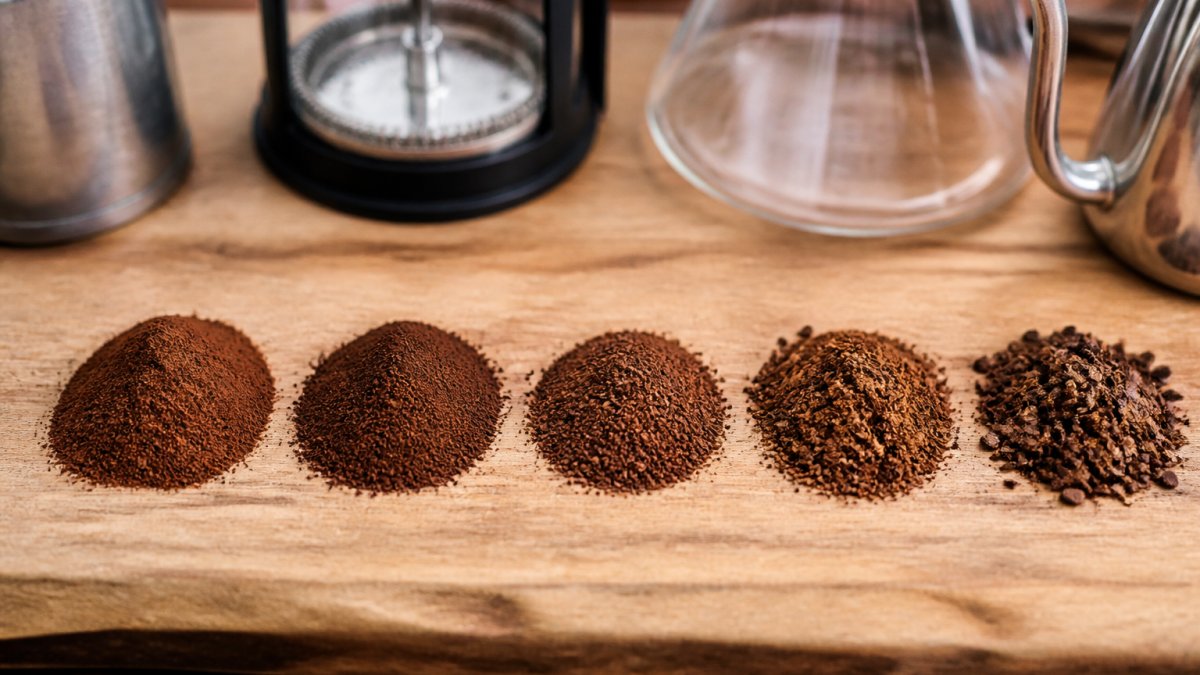
Understanding how bitter coffee causes extraction problems: the coarser your grind, the faster water flows through. The faster the flow, the less time for extraction. Less extraction time means less bitterness.
Start with medium grounds if you're unsure. This works for most home brewing methods. Then adjust up or down based on your taste.
Ideal Water Temperature for Coffee Brewing
Water temperature affects extraction speed. Hotter water extracts faster. Cooler water extracts slower.
The ideal range is 195-205°F. This temperature extracts enough flavor without pulling out excessive bitter compounds. Boiling water (212°F) extracts too quickly and harshly.
If your coffee tastes bitter, try lowering your temperature by 5-10 degrees. Many people find this solves the problem immediately. Your kettle doesn't need to reach a rolling boil.
Temperature also affects how different compounds dissolve. Some flavor compounds need heat to dissolve. Others dissolve too readily in very hot water. The 195-205°F range balances these factors.
Let your water cool for 30 seconds after boiling. This simple step brings temperature down to the ideal range. It's one of the easiest fixes for bitter coffee.
Bean Quality, Roast Level, and Residue Buildup
The beans you start with matter. Stale beans produce flat, bitter coffee. Fresh beans produce vibrant, smooth coffee.
Why Freshness Matters
Coffee beans oxidize over time. This oxidation creates harsh flavors. Beans roasted more than 4-6 weeks ago taste noticeably worse.
This is why Marilyn's Morning Brew roasts to order. You get maximum flavor and aroma in every cup.
Darker roasts naturally taste more bitter than lighter roasts. This is by design. If you prefer smoother coffee, try a lighter roast. Our Italian Roast and 6 Bean Blend are dark roasts that balance richness with smoothness.


Equipment Cleanliness and Scale
Residue buildup in your equipment makes coffee taste bitter. Old coffee oils and mineral deposits accumulate over time. These create harsh, stale flavors.
Clean your coffee maker regularly. For drip machines, run water through without grounds once a week. For pour-over equipment, rinse thoroughly after each use.
Scale buildup is common in areas with hard water. Mineral deposits slow water flow and affect extraction. Descale your equipment every 1-2 months using a commercial descaling solution.
A simple routine keeps your equipment fresh:
- Rinse equipment immediately after brewing
- Deep clean weekly with hot water
- Descale monthly if you have hard water
- Replace filters regularly
Clean equipment brews better coffee. It's that simple.
Water Chemistry and Mineral Content
Water chemistry is one of the most overlooked causes of bitter coffee, yet it directly controls extraction efficiency. The mineral content in your water, primarily magnesium and calcium, determines how readily coffee compounds dissolve during brewing.
How Minerals Affect Extraction
Magnesium and calcium ions in water act as carriers for flavor compounds. They help extract desirable notes while buffering against over-extraction. Water with too few minerals (soft water, below 50 parts per million total dissolved solids) extracts too quickly and harshly, pulling out bitter compounds before balanced flavors develop. Water with too many minerals (hard water, above 200 ppm) extracts too slowly, leaving your coffee thin and sour, or forcing you to extend brew time, which then causes bitterness.
The sweet spot is 75-150 ppm total dissolved solids, with a calcium-to-magnesium ratio around 2:1. This range supports even extraction and brings out the coffee's intended flavor profile.
Diagnosing Your Water
If you live in a hard-water area (common in the Midwest and Southwest), mineral buildup affects both your equipment and your extraction. You'll notice:
- White or gray scale deposits inside your kettle or coffee maker
- Bitter coffee even when grind size and brew time are correct
- Faster equipment degradation and slower water flow
Soft-water areas (common in the Pacific Northwest and Northeast) present the opposite problem: extraction happens too fast, and your coffee tastes sharp or astringent even with longer brew times.
You can test your water hardness with inexpensive test strips (available at hardware stores) or request a water quality report from your local water utility, most provide these free upon request.
Practical Solutions
If your tap water is very soft (below 50 ppm), use filtered water that retains some minerals, or add a pinch of mineral-rich salt to your brewing water. If your water is very hard (above 200 ppm), use filtered water or bottled water specifically labeled for coffee brewing.
For hard water, descaling your equipment every 4-6 weeks prevents mineral accumulation that slows water flow and forces over-extraction. Use a commercial descaling solution (citric acid or white vinegar works in a pinch) and run it through your entire brew system.
Many home brewers overlook water chemistry because they assume their tap water is "fine." But if you've corrected grind size, temperature, and brew time and still experience bitterness, water quality is the next diagnostic step. Switching to filtered water for one week is a low-cost way to test whether this is your culprit.
Frequently Asked Questions
How do I fix bitter coffee after brewing?
Bitter coffee usually results from over-extraction. Start by reducing your brew time by 15-30 seconds, using a coarser grind size, or lowering your water temperature by 5-10 degrees. If your equipment hasn't been cleaned recently, run hot water through it to remove old residue and oils. Freshly roasted beans from a trusted source like Marilyn's Morning Brew, roasted to order, also help.
Does grind size affect coffee bitterness?
Yes. Finer grinds expose more surface area to water, increasing extraction speed and the risk of over-extraction. Coarser grinds slow extraction, reducing bitterness. Match your grind to your brew method: espresso requires fine grounds, drip coffee needs medium, and French press uses coarse. Starting with medium and adjusting upward is safest for beginners.
What water temperature should I use to avoid bitter coffee?
Ideal water temperature for coffee brewing is between 195-205°F. Water hotter than 205°F accelerates extraction and pulls out harsh, bitter compounds. If you don't have a thermometer, let boiling water cool for 30 seconds before pouring. Cooler water (below 195°F) under-extracts, leaving your coffee sour or weak instead.
Can water quality cause bitter-tasting coffee?
Yes. Hard water with high mineral content (total dissolved solids) can cause over-extraction and bitter flavors. If you have very hard tap water, consider using filtered water or bottled water for brewing. Conversely, distilled water may under-extract. Most filtered tap water or standard bottled water works well for balanced, smooth coffee.