

Fresh Roasted Coffee for Productivity: 2026 Guide
Table of Contents
- Why Fresh Roasted Coffee Beats Grocery Store Beans for Focus
- The Science of Freshness: How Roast Date Affects Caffeine and Cognition
- Caffeine and Cognitive Performance at Work: What the Research Shows
- How to Store Coffee Beans for Freshness (and Why It Matters for Energy)
- Choosing the Best Coffee Subscription for Home Office Productivity
- Brewing Methods and Timing: Maximizing Fresh Roasted Coffee Benefits
- Avoiding the Afternoon Crash: Pairing Fresh Coffee with Sustainable Work Habits
- Frequently Asked Questions
Last Updated: September 16, 2026
Why Fresh Roasted Coffee Beats Grocery Store Beans for Focus
Fresh roasted coffee is coffee that reaches your kitchen within days of leaving the roaster, not months. That single detail changes how it tastes, how it smells, and how reliably it supports mental alertness through a working day. This guide from Marilyn's Morning Brew covers the benefits of fresh roasted coffee for productivity, from the chemistry of degradation to brewing and timing tactics you can use tomorrow morning.
Here's the uncomfortable part most guides skip: the bag on a grocery shelf may have been roasted weeks or months before you open it. Coffee is a perishable product. Once roasted, beans begin losing volatile aroma compounds to oxidation, and the flavor flattens long before the caffeine disappears. You still get a stimulant effect, but you lose much of what makes coffee pleasant and, arguably, much of what makes it a reliable productivity tool rather than just a delivery vehicle for caffeine.
Below, we'll show you exactly how roast date, storage, and brewing method interact, and how to build a routine that keeps energy steady instead of spiking and crashing.
The Science of Freshness: How Roast Date Affects Caffeine and Cognition
Freshness in coffee is not about caffeine content. It is about the volatile compounds that create aroma and flavor, and those degrade fastest in the first weeks after roasting.
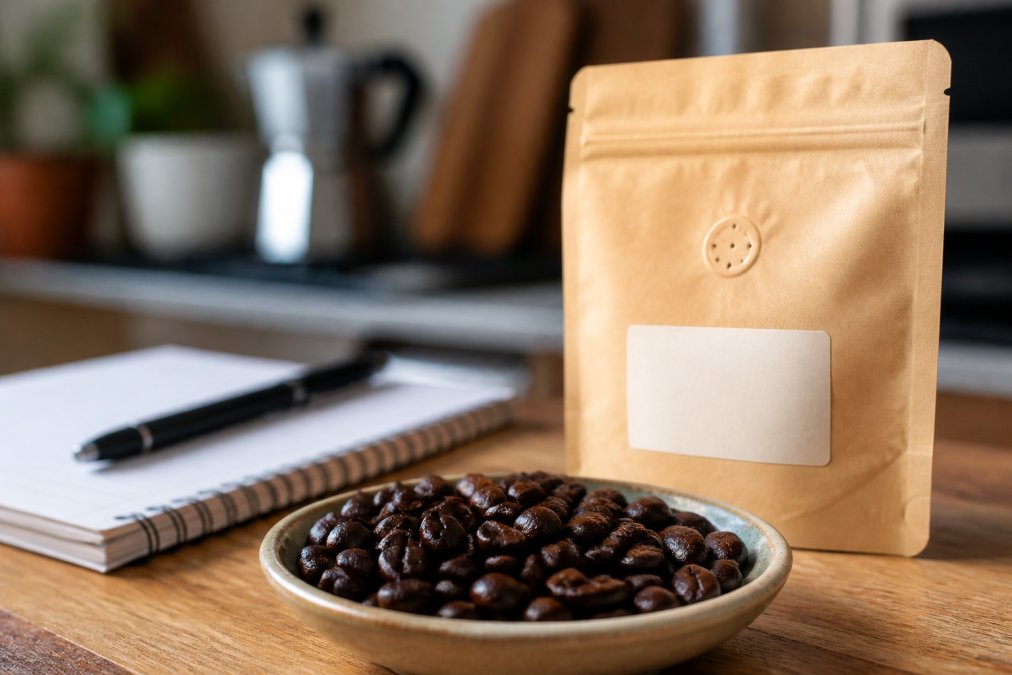
Roasting triggers the Maillard reaction and caramelization, which develop hundreds of aromatic compounds. Those compounds are volatile, meaning they evaporate and oxidize over time. The USDA Agricultural Research Service overview of food chemistry and oxidation explains how lipid oxidation alters food quality during storage, and coffee beans contain oils that undergo exactly this process.
Here is the mechanism most guides skip. Coffee beans contain lipids, roughly 10 to 16 percent of a roasted bean by weight, and those lipids sit near the surface, especially in darker roasts where the bean structure has expanded and cracked. Oxygen attacks the double bonds in those fatty acids in a chain reaction called autoxidation. The reaction produces aldehydes and ketones, the same class of molecules responsible for the stale, cardboard, or rancid notes in old coffee. It also consumes the very compounds that give fresh coffee its character: the volatile thiols and furans that carry fruity, nutty, and caramel aromas are among the first to go.
What does that mean for caffeine? Total caffeine content stays fairly stable in stored beans, so a stale bean is not weaker in a chemical sense. What changes is the sensory profile, and, importantly, the polyphenol content. Chlorogenic acids, the main polyphenol family in coffee and the source of much of its antioxidant activity, are not immune to oxidation. As the bean's oils oxidize, chlorogenic acids and their lactones degrade alongside them. A cup brewed from beans roasted weeks ago delivers less of these compounds than a cup brewed within a week or two of the roast date.
That matters for productivity in two ways. First, the sensory experience is not a luxury, it is part of the mechanism. Flat, oxidized coffee is less enjoyable, and enjoyment drives consumption. If your morning cup tastes dull, you drink less of it, savor it less, and get less of the ritual benefit that supports focus. Second, the compounds that degrade are the same ones researchers associate with the mood and alertness effects that go beyond caffeine alone. You still get a stimulant effect from stale beans, but you lose much of what makes coffee a reliable productivity tool rather than just a delivery vehicle for caffeine.
Caffeine and Cognitive Performance at Work: What the Research Shows
Caffeine works by blocking adenosine, the neurotransmitter that builds up through the day and makes you feel sleepy. By occupying adenosine receptors, caffeine reduces the perception of fatigue and supports mental alertness, concentration, and reaction time. The FDA guidance on caffeine and how much is too much notes that most adults can consume up to 400 milligrams of caffeine per day without negative effects, which is roughly four 8-ounce cups of brewed coffee.
- Adenosine blocking reduces the buildup of sleep pressure
- Dopamine signaling supports motivation and reward, which helps with task initiation
- Neurotransmitter balance influences mood and focus stability
How to Store Coffee Beans for Freshness (and Why It Matters for Energy)
The best way to store coffee beans is in an airtight, opaque container at room temperature, away from light, heat, and moisture. Whole beans stay fresh longer than ground coffee because less surface area is exposed to oxygen.
Here's a simple storage checklist:
- Transfer beans to an airtight, opaque container within a day of opening
- Keep the container in a cool, dark cabinet, not above the stove
- Buy whole beans and grind immediately before brewing
- Buy in quantities you'll finish within two to three weeks
- Avoid clear glass jars on sunny counters
Choosing the Best Coffee Subscription for Home Office Productivity
The best coffee subscription for home office work is one that roasts to order and ships fast, because freshness is a supply chain problem before it's a brewing problem. If beans sit in a warehouse for two weeks before shipping, the roast date advantage disappears.
| Option | Roast | Price | Best For |
|---|---|---|---|
| Breakfast Blend + | Medium | $23.99 | Everyday balanced cup |
| Max Caf Blend | High caffeine | $23.99 | Heavy focus days |
| Coffee with Mushrooms Dark Roast | Dark | $20.99 | Functional blends |
Brewing Methods and Timing: Maximizing Fresh Roasted Coffee Benefits
Brewing method changes extraction, and extraction changes how the caffeine and flavor compounds reach your cup. For productivity, the goal is a clean, consistent extraction you can repeat every morning without thinking.
- Pour-over: Best control over extraction; ideal for highlighting fresh, bright flavors. Takes 3-4 minutes.
- French press: Full immersion, heavier body, easy to batch. Steep 4 minutes, then press.
- Drip machine: Most consistent for daily volume; use a burr grinder and fresh beans.
- Espresso: Concentrated and fast; requires a good grinder and fresh beans to avoid sour or bitter shots.
Avoiding the Afternoon Crash: Pairing Fresh Coffee with Sustainable Work Habits
The afternoon crash is rarely caused by coffee alone. It comes from a stack of habits: caffeine too late in the day, poor sleep, skipped meals, and long stretches without movement. Fresh roasted coffee can support energy levels, but it cannot outrun a bad routine. What most guides miss is that the crash is partly a blood-sugar and hydration story, and fresh coffee gives you a cleaner lever to work with than stale coffee does.
A practical crash-mitigation strategy:
- Cut caffeine after early afternoon. Caffeine has a half-life of roughly five hours, so a 3 p.m. cup can still be active at bedtime. For most adults, a cutoff around 1 to 2 p.m. protects sleep without sacrificing the morning lift.
- Pair coffee with protein or fat. A cup on an empty stomach tends to produce a sharper spike and a harder drop. Twenty to thirty grams of protein alongside the cup is a reasonable target.
- Hydrate deliberately. Coffee is a mild diuretic, and dehydration mimics fatigue, the two are easy to confuse at 3 p.m. A common approach is one glass of water per cup of coffee, plus water with lunch.
- Take a real break. A five-minute walk does more for afternoon focus than a second cup. Movement restores blood flow and clears some of the adenosine that has built up since morning.
- Protect sleep. The single biggest determinant of tomorrow's focus is tonight's sleep. No amount of fresh coffee compensates for a short night.
Frequently Asked Questions
What is the 15-15-15 coffee rule?
The 15-15-15 rule is a simple guideline: drink your coffee within 15 minutes of brewing, wait at least 15 minutes after waking before your first cup, and stop drinking caffeine at least 15 hours before bed. This approach helps you get the most from fresh roasted coffee without disrupting sleep. It works because caffeine takes about 15 to 20 minutes to peak in your bloodstream, so sipping slowly right after brewing keeps energy steady rather than spiking and crashing.
Does fresh roasted coffee actually improve cognitive function?
Fresh roasted coffee retains higher levels of antioxidants and volatile compounds that support mental alertness. As beans age, oxidation reduces these beneficial compounds, so the cup you brew from a fresh roast delivers more of what supports focus and concentration. Pairing fresh coffee with a consistent routine, like a mid-morning cup before a deep-work block, helps you avoid the fatigue that builds when caffeine delivery is inconsistent.
How should I store coffee beans to maintain peak productivity?
Store whole beans in an airtight, opaque container at room temperature, away from light, heat, and moisture. Avoid the refrigerator because condensation damages beans each time you open the container. For longer storage, freeze beans in a vacuum-sealed bag and grind them straight from frozen. Buying smaller quantities more often, like a subscription that ships weekly or biweekly, keeps your supply fresh without long storage periods that degrade flavor and caffeine quality.
How can a coffee subscription improve my daily work routine?
A subscription delivers fresh roasted coffee on a schedule you choose, so you never run out or rely on stale grocery store beans. For remote workers, this removes the friction of last-minute store runs and ensures a consistent morning cup. Marilyn's Morning Brew roasts to order and ships directly, which means the beans arrive within days of roasting. You can set recurring deliveries that match your consumption, whether you drink one cup daily or several.