

How to Maintain a Home Coffee Station: 2026 Guide
Table of Contents
- Why a Maintenance-First Coffee Station Beats an Aesthetic One
- Daily Coffee Bar Cleaning Checklist
- Weekly Maintenance: Descaling, Grinder Care, and Water Reservoir Hygiene
- How to Descale a Coffee Maker Without Damaging It
- Best Coffee Beans for Home Workers (and How to Store Them)
- Monthly Deep Clean and Organization Systems That Actually Stick
- Messes, Pests, and Ergonomics: Troubleshooting the Problems Nobody Talks About
- Frequently Asked Questions
Last Updated: September 14, 2026
Why a Maintenance-First Coffee Station Beats an Aesthetic One
A home coffee station is a dedicated countertop area where you store, brew, and clean up after making coffee, and how well you maintain it determines whether your equipment lasts years or months. This guide from Marilyn’s Morning Brew covers the daily, weekly, and monthly routines that keep a station working, not just looking good.
Most setups you see online are styled for photos: hidden grinder, spotless drip tray, no scattered grounds. Real stations get messy. The difference between a station that survives five years and one that dies in eighteen months isn’t the equipment, it’s the maintenance schedule you follow.
Below, we’ll walk through daily, weekly, and monthly tasks, plus the troubleshooting nobody writes about. The weekly descaling step alone will save you a repair bill.
Daily Coffee Bar Cleaning Checklist
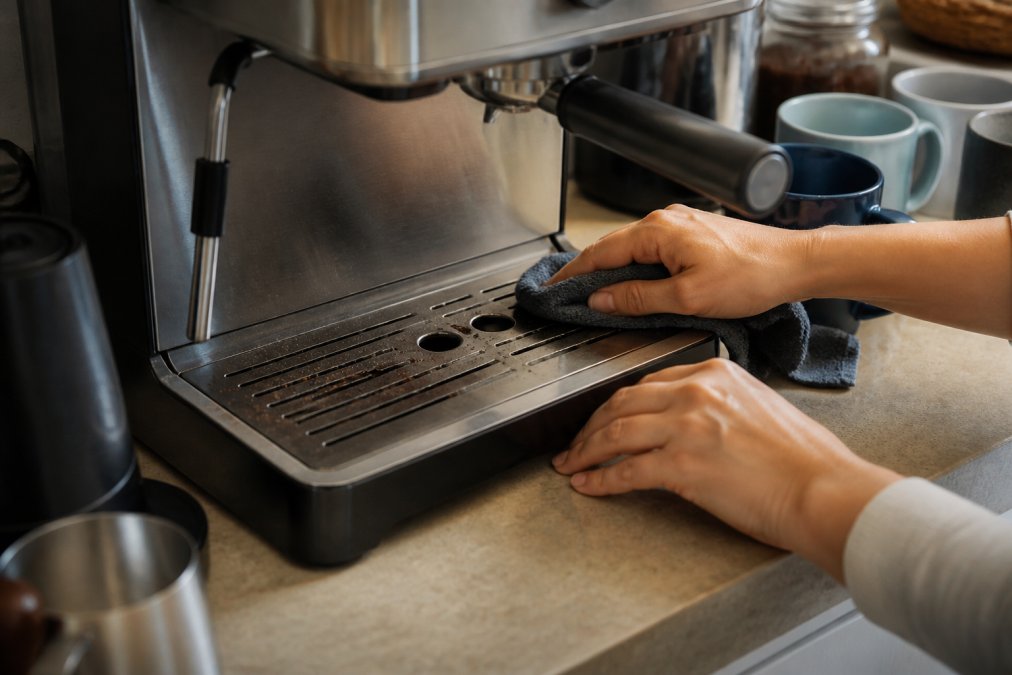
The daily routine takes under five minutes and prevents most long-term damage. A daily coffee bar cleaning checklist covers five tasks: rinse the filter basket, empty and wash the drip tray, wipe the countertop, purge the steam or milk wand, and refresh the water reservoir.
Here’s the sequence that works:
- Knock out the spent grounds and rinse the filter basket under warm water.
- Empty the drip tray and wash it with dish soap. Coffee residue hardens overnight.
- Wipe down the countertop and machine housing with a damp microfiber cloth.
- Purge the steam nozzle or milk wand immediately after steaming, then wipe it.
- Dump and refill the water reservoir rather than topping it off.
That last point matters: topping off leaves stale water at the bottom that affects taste and encourages mineral buildup.
Weekly Maintenance: Descaling, Grinder Care, and Water Reservoir Hygiene
Weekly maintenance is where home coffee station ownership separates from casual brewing. Three tasks belong on this schedule: grinder care, water reservoir sanitization, and a scale check that tells you whether descaling is due. The depth is in the mechanism and the interval.
Grinder care. Coffee bean oils coat the burrs, chute, and hopper walls, then oxidize and turn rancid, which is why a grinder that smelled great in week one tastes flat by week six. The fix depends on burr type:
- Flat burrs (common in espresso grinders) trap oils in the flat faces and need more frequent cleaning than conical burrs.
- Conical burrs (common in drip and pour-over grinders) shed oils more easily but collect fines in the chute.
Run a grinder cleaning tablet through the burrs on the interval your manual specifies, commonly weekly for high-volume espresso and biweekly for drip. Between tablets, brush the chute with the grinder’s stiff brush. Never wash burrs with water; moisture pits the steel.
Water reservoir sanitization. Empty the reservoir, wash it with warm soapy water, rinse until clear, and air dry it upside down before refilling. A damp reservoir grows biofilm along the waterline within days, and that film feeds the mineral scale that follows.
While the reservoir dries, check the waterline. A chalky white band is calcium carbonate scale, your early warning that descaling is due. If you see it, move descaling up rather than waiting for the monthly slot.
The filter basket and carafe. A carafe that only gets rinsed develops a brown tannin ring dish soap won’t lift. A baking soda and water paste with a non-scratch sponge lifts it without scratching the glass. For stainless steel carafes, skip abrasive pads, they leave micro-scratches that stain faster next time.
A note on pest prevention, which most weekly routines skip. Coffee grounds, sugar, and milk residue invite ants and pantry moths. The weekly reset is the moment to pull the station away from the wall, vacuum behind it, and check that every sugar and bean container seals. A station near a window or exterior door needs this weekly; an interior corner can stretch to every other week.
How to Descale a Coffee Maker Without Damaging It
Descaling is the process of dissolving mineral scale from the internal water paths of a coffee maker using a mild acid solution. It is the most important maintenance task for machine longevity, and the one most often done wrong.
The safe method uses white vinegar or a manufacturer-approved descaling solution. Here is the process:
- Empty the water reservoir completely.
- Mix a solution of equal parts white vinegar and water, or use the descaling product per its label.
- Pour the solution into the reservoir and run a brew cycle without coffee grounds.
- Let the machine sit for 30 minutes so the acid works on the scale.
- Run a second cycle with the same solution, then discard it.
- Run two or three full cycles with clean water to flush all traces of vinegar.
- Wipe down the exterior and rinse the carafe and filter basket.
Where people go wrong is skipping the flush cycles. Residual vinegar leaves a sour taste that ruins the next several pots and can affect espresso steam nozzle performance.
For espresso machines specifically, follow the manufacturer’s descaling instructions rather than a generic method. Many have aluminum or brass components that react badly to prolonged acid exposure.
The U.S. Department of Agriculture's food safety guidance on cleaning and sanitizing is a useful reference for how thoroughly you should rinse food-contact surfaces after any acid-based cleaning.
Best Coffee Beans for Home Workers (and How to Store Them)
The best coffee beans for home workers are freshly roasted whole beans stored in an airtight, opaque container away from light, heat, and moisture. Remote workers brewing multiple times a day benefit most from beans that hold their flavor across a full workday.
Storage is where most people undo good bean selection. The common mistakes:
- Storing beans in the hopper of the grinder for weeks at a time
- Keeping beans in the original bag, which is rarely airtight once opened
- Freezing and refreezing the same container
- Leaving canisters on an open shelf in direct sunlight
Opaque canisters with a tight seal work best. Label them with the roast date so you rotate stock and brew the oldest first.
This is where ordering matters. Beans roasted to order arrive closer to peak flavor than beans that sat on a shelf, and for a home worker going through a bag every week or two, that difference is noticeable in the cup. Marilyn’s Morning Brew roasts each batch to order, so beans reach your countertop within days of roasting rather than months.
If you’re setting up the station itself, a sturdy mug matters more than people admit. The White Glossy Mug is microwave and dishwasher safe, which means one less hand-wash item in your daily routine.

Monthly Deep Clean and Organization Systems That Actually Stick
Monthly deep cleaning handles what daily and weekly tasks miss: the grinder hopper, exterior crevices, drip tray housing, and storage shelf. Organization systems only stick when they match your workflow, so build around where you naturally set things down rather than where a photo says they should go.
A workable monthly checklist:
- Disassemble and wash the grinder hopper and lid
- Wipe inside the drip tray housing, not just the tray
- Wash all canisters and let them dry fully before refilling
- Check the water filter and replace per manufacturer interval
- Wipe down the shelf or cabinet where supplies are stored
- Discard any beans older than your rotation window
Match the cleaner to the material. Most guides flatten this into "use vinegar and baking soda", fine for glass and ceramic, wrong for some metals:
- Stainless steel: warm water, mild dish soap, and a soft cloth. Avoid chlorine bleach, which pits stainless over time.
- Aluminum and brass (found inside many espresso machines): avoid prolonged acid exposure. Vinegar soaks that are fine for a drip carafe can corrode these components.
- Plastic reservoirs and hoppers: avoid abrasive pads, which scratch and give scale a place to grip.
- Sealed stone and quartz countertops: wipe spills promptly; acidic cleaners left to sit can dull the finish.
For a gentler routine, a paste of baking soda and water handles most coffee oils and tannin stains without harsh chemicals. For sanitizing food-contact surfaces, the U.S. Environmental Protection Agency's Safer Choice program lists products reviewed for safer chemical ingredients, which is a reasonable starting point if you want to move away from conventional cleaners.
Troubleshooting the messes that keep coming back. Recurring problems usually have a mechanical cause, not a discipline problem:
- Grounds scatter across the counter because of static and because the grinder chute sits too high above the basket. Grinding a few seconds longer, or tapping the grinder before removing the basket, reduces the scatter.
- Spills under the machine usually mean the drip tray is full or the carafe was pulled out mid-brew. Check the tray before every brew, not after.
- Espresso oil stains on light countertops respond to a baking soda paste; milk residue responds better to warm soapy water first, because the fat needs to break down before the protein lifts.
Ergonomic maintenance, which almost no guide covers. If your station sits at countertop height and you brew several times a day, you’re bending and reaching repeatedly, and that adds up. Keep the most-used items at waist to chest height, store heavy items like bulk bean bags lower, and if your station lives in a low cabinet, weigh whether the daily bending is worth the storage savings.
Messes, Pests, and Ergonomics: Troubleshooting the Problems Nobody Talks About
Eco-friendly cleaning agents deserve a mention too. White vinegar and baking soda handle most coffee station cleaning without harsh chemicals. For sanitization, check manufacturer guidance on what’s safe for your machine’s exterior finish before spraying anything on it.
The U.S. Environmental Protection Agency's Safer Choice program lists cleaning products reviewed for safer chemical ingredients, which is a reasonable starting point if you want to move away from conventional cleaners.
Maintaining a home coffee station is really a question of consistency. The equipment that lasts isn’t the most expensive one; it’s the one whose owner actually empties the drip tray, purges the steam wand, and descales on schedule. Marilyn’s Morning Brew exists for the part of that routine you can’t do yourself: sourcing beans from trusted farms and roasting each batch to order so the coffee in your grinder is as fresh as the day it was roasted. With fast, reliable delivery and a simple ordering process, keeping the station stocked is one less thing to think about. Get started with Marilyn’s Morning Brew and build a coffee routine that holds up past the first month.
Frequently Asked Questions
How often should you deep clean your coffee maker?
Deep clean your coffee maker monthly if you brew daily. That includes running a descaling solution or white vinegar through the system, scrubbing the filter basket, and soaking removable parts like the carafe and drip tray. If your water is hard, descale every two to three weeks instead. Weekly maintenance keeps residue from building up between deep cleans.
What are the best storage solutions for coffee beans?
Store beans in an airtight, opaque canister away from heat, light, and moisture. A vacuum-sealed container or a ceramic canister with a silicone gasket works well. Keep the canister on a shelf, not next to the coffee maker where steam hits it. Buy beans roasted to order in smaller batches so you finish them within two to three weeks of the roast date.
What makes a great coffee station at home?
A great home coffee station has three things: proximity to a water source, clear zones for brewing and storage, and a cleaning routine you will actually follow. Keep your water reservoir accessible, place canisters within arm's reach, and leave space for a drip tray and towel. Add a small trash bowl for grounds so spills stay contained and cleanup takes seconds.
What is the average life of a coffee machine?
Most home espresso machines last five to ten years with regular descaling and water filter changes. Drip coffee makers typically last five to seven years. The biggest killers are mineral scale buildup and neglected milk wands. Descaling on schedule and rinsing the steam nozzle after every use will push your machine toward the upper end of that range.