

Best Small Batch Coffee Roasters Online: 2026 Guide
Table of Contents
- What Makes a Coffee Roaster Truly Small Batch
- Why Roast Date Matters More Than the Label
- How to Tell If Coffee Is Fresh Before You Buy
- Single-Origin vs. Blends: Which Small Batch Coffee Fits Your Cup
- How to Store Coffee Beans for Maximum Freshness
- Subscription Models and Pricing: What to Expect from Small Batch Roasters Online
- Sourcing Transparency and Ethical Practices to Look For
- Conclusion
- Frequently Asked Questions
Last Updated: September 23, 2026
What Makes a Coffee Roaster Truly Small Batch
Small batch coffee means beans roasted in limited quantities, usually to order, so each batch gets closer attention than mass-produced grocery store coffee. At Marilyn's Morning Brew, every order is roasted after you place it: freshness you can taste.
- Roasting happens in small quantities, often weekly or per order
- The roast date is printed clearly on the bag, not just a "best by" date
- Beans trace back to a named farm, cooperative, or region
- The roaster can tell you the processing method and altitude
Why Roast Date Matters More Than the Label
Roast date tells you more about freshness than any marketing claim. Coffee starts losing its best qualities within weeks of roasting, so a bag roasted two days ago tastes noticeably different from one roasted two months ago.
How to Tell If Coffee Is Fresh Before You Buy
You can tell if coffee is fresh by checking the roast date first, then the packaging and beans. Fresh coffee has a clear roast date within the last few weeks, a one-way degassing valve, and beans that smell vivid when opened.
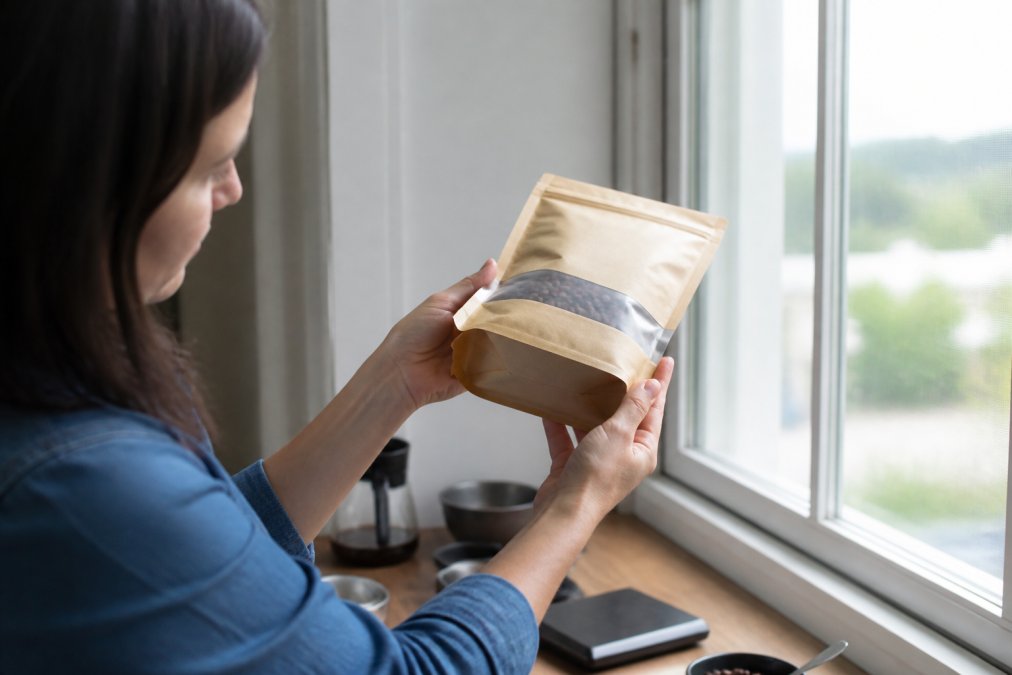
- Roast date: Ideally within 2-4 weeks of purchase
- Packaging: A one-way valve lets carbon dioxide escape without letting oxygen in
- Aroma: Fresh beans smell sweet and complex, not flat or papery
- Beans: Whole beans hold freshness far longer than pre-ground coffee
Single-Origin vs. Blends: Which Small Batch Coffee Fits Your Cup
The choice between single-origin and blended coffee comes down to clarity versus consistency. Single-origin coffee comes from one region, farm, or cooperative and highlights that place's flavor profile. Blends combine beans from multiple origins for a balanced, repeatable cup. What matters is how processing method and roast profile change what ends up in your cup, and which beans work with your brewer.
How Processing Method Shapes Flavor
Processing is the step between picking and drying the cherry, and it shapes flavor as much as origin does. The four methods you'll see most often on small-batch bags:
- Washed: Fruit is removed before drying. Produces clean, bright cups with clear acidity and defined tasting notes. Common in Kenya, Ethiopia, and Colombia.
- Natural: Cherries dry whole around the seed. Produces heavier body, fermented fruit sweetness, and berry or wine-like notes. Common in Ethiopia and Brazil.
- Honey: Some fruit mucilage stays on during drying. Sits between washed and natural, with sweetness and a rounder body than a washed coffee from the same farm.
- Wet-hulled (giling basah): Used in Sumatra and Sulawesi. Produces the earthy, cedar, dark-chocolate, syrupy profile people associate with Indonesian coffee.
How Roast Profile Changes the Same Bean
Roast level is a dial, not a category. A light roast preserves origin character, acidity, and delicate aromatics, but can taste sour or thin if underdeveloped. A medium roast balances origin character with caramelized sweetness and body. A dark roast foregrounds dark chocolate, smoke, and a bittersweet finish.
Matching Beans to Your Brew Method
Most guides skip this, and it's where bean choice pays off. The same coffee can be excellent in one brewer and forgettable in another.
- Pour-over (V60, Chemex, Kalita): Rewards light and medium roasts with high clarity. Washed African coffees shine here because the brewer amplifies acidity and aromatics. Natural-process coffees can work but may taste muddled if the brew runs slow.
- French press: Full immersion and a metal mesh filter let oils and fines through, so it favors medium and medium-dark roasts with body. Brazilian and Sumatran coffees, or a balanced blend, tend to outperform delicate washed lots here.
- Espresso: Needs a bean with enough structure to hold up under pressure. Medium and medium-dark blends built for espresso are the safe choice; light-roast single origins can be excellent but demand a capable grinder and careful dialing. A blonde or espresso blend is the lower-risk starting point.
- Drip machine: Forgiving and consistent. A medium-roast blend or a medium single-origin from Central or South America works well without much fuss.
- Cold brew: Coarse grind and long steep favor medium and dark roasts with chocolate and nut notes; bright washed coffees can taste hollow after 12-plus hours of extraction.
A Practical Way to Decide
- Choose single-origin if you enjoy noticing how a washed Ethiopian differs from a natural one, or how a Kenyan lot changes from one harvest to the next.
- Choose a blend if you want a dependable daily cup that works with milk, espresso, or a drip machine without much thought.
- Try both with a sample pack before committing to a full bag.
How to Store Coffee Beans for Maximum Freshness
To store coffee beans for maximum freshness, keep them whole, sealed, and away from light, heat, moisture, and air.

Here's what actually works:
- Keep beans in an opaque, airtight container at room temperature
- Store the bag in a cool, dark cupboard, not above the stove or in the fridge
- Buy in quantities you'll finish within a few weeks
- Grind right before brewing, not in advance
Subscription Models and Pricing: What to Expect from Small Batch Roasters Online
Small batch roasters online typically sell through one-time purchases, sample packs, and recurring subscriptions. Pricing reflects smaller quantities and fresher roasting, so expect to pay more per bag than grocery store coffee and get more out of it.
The Four Models You'll Actually See
- One-time purchases: Buy a single bag whenever you want, no commitment. Best if you like variety or drink coffee slowly.
- Sample packs: Small quantities of several coffees to explore before committing. Usually the cheapest way to test a roaster's style.
- Recurring subscriptions: Deliveries on a schedule you choose, often weekly, biweekly, or monthly. Usually the best per-bag price, but you're committing to a cadence.
- Roaster's choice / rotating subscriptions: The roaster picks what ships each cycle. Good for discovery, less good if you've found one coffee you love and want it every month.
Subscriptions save a few dollars per bag versus one-time purchases, but the real value is the freshness cycle: the roaster knows when your next bag ships and roasts to that schedule instead of guessing at warehouse demand.
Best Sellers Sample Pack: 6Bean →
What Drives the Price
Four things move the number on the bag:
- Green coffee cost. Competition-grade lots and micro-lots from named farms cost more than commodity beans, and that shows up at retail.
- Roast loss. Coffee loses roughly 12 to 20 percent of its weight during roasting, depending on profile. A darker roast loses more, so the same green coffee yields less finished product.
- Packaging and shipping. One-way degassing valves, resealable bags, and small-parcel shipping all cost more per unit than palletized grocery distribution.
- Batch size. Roasting 12 kilograms at a time costs more per pound than roasting 120 kilograms at a time. That's the tradeoff you're paying for.
Direct-to-Consumer Logistics and Freshness
Buying direct from a roaster changes the supply chain in a way that's easy to overlook. Grocery store coffee moves roaster to distributor to warehouse to shelf, and the roast date can be weeks or months old by the time you buy it. Direct-to-consumer skips the middle steps: the roaster roasts, packs, and ships to you, usually within days.
- Ship in recyclable or compostable mailers and bags
- Offer consolidated or less-frequent shipping options
- Roast to order so nothing ships that wasn't going to be sold anyway
- Use ground shipping rather than expedited air when the freshness window allows it
Roaster-to-Consumer Transparency
When you buy direct, more of your dollar reaches the roaster and, in well-run operations, the producer. That's not automatic, but it's structurally more likely than in a supply chain with multiple intermediaries taking a cut.
A Sample Price Structure
Marilyn's Morning Brew keeps it simple. Sample packs run $24.99 for six 2-ounce packs, and full single-origin bags are $23.99, roasted to order and shipped fast. There's no complicated tier system to decode.
| Option | What You Get | Price | Best For |
|---|---|---|---|
| Best Sellers Sample Pack | Six 2 oz packs: 6Bean, Cowboy, Breakfast, Peru, Mexico, Bali | $24.99 | Trying the house favorites |
| Single Origin Favorites Sample Pack | Six 2 oz single-origin packs | $24.99 | Exploring regional flavor differences |
| Single-Origin Bags | One full bag, roasted to order | $23.99 | Committing to a favorite |
| Blonde Blend | Sweet blend from Central America and Africa | $23.99 | Sweet espresso and milk drinks |
Sourcing Transparency and Ethical Practices to Look For
Sourcing transparency means a roaster can tell you where the beans came from, who grew them, and how they were processed, a strong signal of an operation that cares about more than volume.

Here's what to check:
- A named grower, cooperative, or region
- Processing method listed (washed, natural, honey, wet-hulled)
- Altitude and varietal information when available
- A roaster willing to answer questions about sourcing directly
Conclusion
The gap between good coffee and forgettable coffee comes down to freshness and sourcing, two things a small-batch roaster can control in ways a warehouse operation can't. Marilyn's Morning Brew roasts every batch to order, sources beans from named farms and cooperatives, and ships fast so the coffee reaches you close to its roast date. If you want a cup that tastes like it was made with care, start with a sample pack and see the difference for yourself.
Frequently Asked Questions
What defines a small batch coffee roaster?
A small batch roaster typically roasts in quantities under 50 pounds at a time, often much less. This allows for closer attention to each roast profile and faster turnaround from roast to shipment. Small batch production also means beans are less likely to sit in inventory for weeks before reaching you. Look for roasters that print the roast date on the bag and ship within days of roasting.
How can you tell if coffee beans are truly fresh?
Check the roast date, not just the best-by date. Freshly roasted coffee smells sweet and complex when you open the bag, and whole beans feel firm and dry. If the bag has no roast date or only a vague expiration date, that is a red flag. For drip brewing, aim to use beans within two to four weeks of the roast date for the best flavor.
Are coffee subscriptions worth it for small batch beans?
Subscriptions work well if you drink coffee daily and want a steady supply of freshly roasted beans without reordering each time. They often cost less per bag than one-time purchases and let you set your delivery frequency. Start with a sample pack if you are unsure which roast level or origin you prefer, then commit to a subscription once you know what you like.
What should I look for when buying coffee online?
Prioritize roasters that list the roast date, origin, processing method, and altitude on the bag. These details tell you how fresh the coffee is and what flavor profile to expect. Also check whether the roaster ships within a day or two of roasting. If you want to try multiple origins before committing, a sample pack is a low-risk way to explore.